Water Extraction Versus Demolition After Water Damage
A wet ceiling, soaked carpet, or water-stained wall can make demolition feel like the fastest answer. But water extraction versus demolition is not a choice between doing something and doing nothing. The right response is usually a carefully sequenced process: remove the water, stabilize the property, measure the moisture impact, dry salvageable materials, and remove only what cannot safely or effectively be restored.
That distinction matters. Unnecessary demolition can increase disruption and rebuilding time. Waiting too long to remove damaged materials, however, can allow moisture, odors, and contamination to spread. Property owners need a restoration team that can make practical decisions based on the source of the water, the materials affected, how long they were wet, and whether the structure can be dried back to a safe condition.
Water Extraction Versus Demolition: The Real Decision
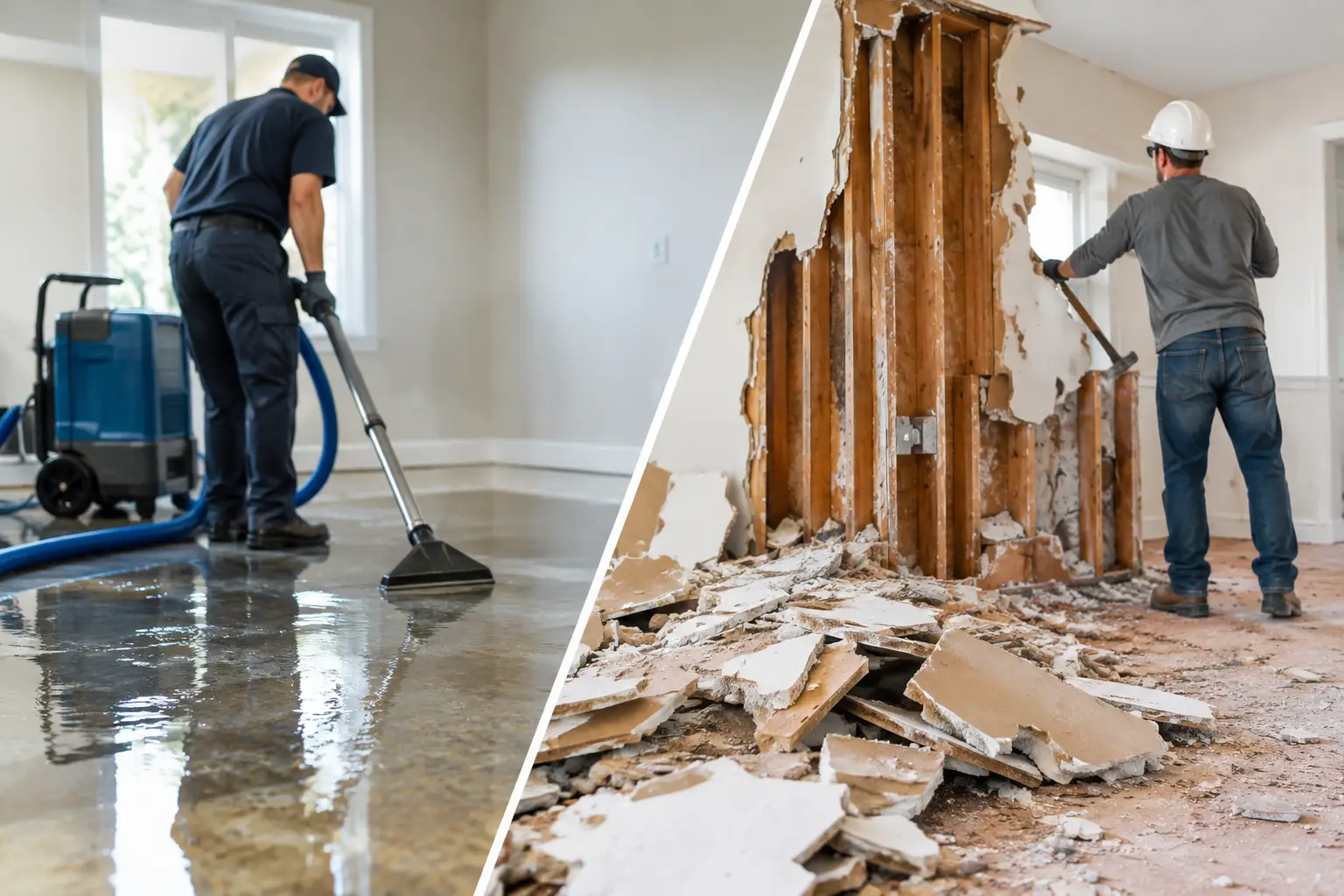
Water extraction is the emergency removal of standing water and excess moisture from a property. Depending on the situation, it may involve pumps, extraction equipment, specialized drying systems, dehumidification, and targeted moisture monitoring. Its purpose is to stop water from moving farther into flooring, walls, contents, and structural components.
Demolition means removing materials such as wet drywall, insulation, flooring, baseboards, cabinets, or ceiling materials. In restoration work, demolition should be selective rather than automatic. The goal is not to tear out everything that got wet. It is to remove materials that cannot be properly cleaned or dried, have lost structural integrity, or may create an ongoing health or property concern.
For many clean-water losses caught quickly, effective extraction and drying can save a surprising amount of the property. For a long-standing leak behind cabinets or a sewage backup affecting porous materials, selective removal may be necessary from the start. The source and category of the water matter as much as the visible damage.
When Water Extraction Can Save Materials
Fast extraction gives walls, floors, and contents their best chance of recovery. Water does not stay on the surface. It wicks into drywall, under flooring, through carpet padding, into insulation, and behind baseboards. The sooner excess water is removed, the more options there may be to dry materials in place.
Hard surfaces and some structural materials are often candidates for restoration when the water source was clean, the damage was discovered promptly, and drying can be verified throughout the affected area. Certain hardwood floors, tile assemblies, concrete slabs, framing, and non-porous contents may respond well to professional extraction and drying methods.
Carpet can sometimes be restored after a clean-water event if it is extracted quickly and the padding and subfloor can be addressed appropriately. That does not mean every wet carpet should stay. If water has been present too long, reached the padding and subfloor extensively, or came from a contaminated source, removal may be the more responsible choice.
The same principle applies to drywall. A small, quickly discovered clean-water leak may allow drying techniques that preserve the wall. Once drywall becomes saturated, begins to swell, loses strength, or contains wet insulation behind it, targeted removal can be necessary to expose the affected cavity and dry the framing correctly.
When Selective Demolition Is the Safer Path
Demolition becomes appropriate when drying alone cannot return materials to a stable condition. This is especially common when water is contaminated, materials are porous and heavily saturated, or the loss went unnoticed for days or weeks.
A professional restoration plan may call for removal when materials show signs of deterioration, such as crumbling drywall, delaminated flooring, warped cabinets, swollen baseboards, or compromised ceilings. Wet insulation is another frequent concern because it can retain moisture and prevent the wall or ceiling assembly from drying properly.
Water source is critical. A burst supply line is generally very different from a sewer backup, toilet overflow involving waste, or floodwater intrusion. Contaminated water can carry bacteria and other harmful substances into porous materials. In those cases, the work must focus on controlled removal, cleaning, disinfection where appropriate, and safe drying - not simply preserving materials at all costs.
Safety can also require immediate removal or stabilization. A sagging ceiling, water near electrical components, damaged structural materials, or a slip hazard should be addressed promptly. Do not enter an area with standing water if there is any possibility that electricity is involved. Shut off power only if it is safe to do so, then seek emergency help.
Why “Dry” Does Not Always Mean Dry
A floor may feel dry underfoot while moisture remains below it. A wall can look normal even as wet insulation or framing is trapped behind the surface. This is why a fan pointed at a wet area is not a complete drying plan.
Professional water mitigation relies on more than appearance. Technicians identify the extent of water migration, extract water from affected areas, place drying equipment strategically, and monitor the drying process. The purpose is to address moisture where it actually traveled, not just where it was first noticed.
El Paso’s dry climate can help with some conditions, but it does not eliminate the risk of hidden moisture inside building materials. Water from a failed appliance, plumbing break, roof leak, or storm intrusion can remain trapped in enclosed spaces even when the indoor air feels dry. A prompt, documented response helps prevent a short-term water event from becoming a much larger reconstruction project.
A Practical Response After Water Damage
Property owners do not need to decide immediately whether a wall or floor should be removed. They do need to act quickly. If it is safe, stop the source of water, move valuables out of the affected area, and avoid walking through contaminated water.
Take photos or video of the visible damage before cleanup begins, especially if an insurance claim may be involved. Keep damaged items when practical until they have been documented or you have received direction from your insurer. Then contact a qualified restoration company that can begin emergency mitigation and explain what can likely be saved.
A responsible team should communicate why each step is recommended. If material removal is necessary, the explanation should connect to the water source, the condition of the material, moisture conditions, and the ability to dry the affected assembly. If a material can be preserved, the plan should still include monitoring so the decision is supported by the drying results.
How Restoration and Reconstruction Work Together
The strongest recovery plans do not treat mitigation and rebuilding as unrelated jobs. Extraction, drying, selective demolition, cleaning, and documentation should create a clear path to reconstruction when reconstruction is needed.
For example, removing only the lower portion of damaged drywall may preserve unaffected wall areas while allowing access to wet insulation and framing. Once the structure is dry and stable, the repair can move forward with fewer surprises. By contrast, broad demolition without a clear drying strategy can create unnecessary rebuilding work, while insufficient removal can leave moisture hidden behind finished surfaces.
This is where an end-to-end provider can reduce stress. GEM Disaster Recovery Corp helps property owners stabilize water damage, document the mitigation process, coordinate with insurance as appropriate, and manage reconstruction in Texas when the property needs repair after drying. That continuity can be especially valuable for homeowners, property managers, and business owners who do not want to coordinate separate emergency, cleanup, and rebuilding crews during a crisis.
The Best Choice Depends on What the Water Reached
Water extraction versus demolition is not about choosing the cheapest-looking option or the most aggressive one. It is about making a defensible decision that protects the property, its occupants, and the recovery timeline. Fast extraction may save carpet, flooring, drywall, and contents when conditions are favorable. Selective demolition may be essential when materials are contaminated, saturated, deteriorated, or blocking proper drying.
When water damage happens, focus first on stopping the source and getting qualified help on site. The best outcome usually comes from preserving what can be saved, removing what cannot, and giving the property the careful attention it needs to become safe, dry, and ready for repair.