Carpet Cleaning After Water Damage: Can It Be Saved?
A wet carpet can look like a manageable cleanup job right after a leak. Then the odor appears, the padding stays damp, or water begins wicking up the walls. Carpet cleaning after water damage is not simply about removing stains or restoring appearance. It is about identifying the water source, drying every affected layer, and deciding whether the materials can be safely saved.
For homeowners, property managers, and business owners in El Paso, that decision needs to happen quickly. The sooner moisture is removed, the better the chance of protecting the carpet, subfloor, furnishings, and indoor air quality.
Can Wet Carpet Be Saved?
Sometimes, yes. A carpet affected by a clean water supply line leak may be salvageable when professional drying begins promptly and the water has not remained in the materials for long. In these situations, restoration professionals can often extract water, lift sections of carpet, dry the pad and subfloor, sanitize as appropriate, and reinstall the carpet once moisture readings confirm the area is dry.
But saving carpet is not always the safest or most cost-effective choice. The type of water, how long it sat, the amount of saturation, and the condition of the carpet backing and pad all matter. A carpet may feel dry on top while the padding beneath it remains wet. That hidden moisture is where mold growth, odor, and damage to the flooring system can begin.
A useful rule is this: clean water creates a better opportunity for restoration, but time still matters. Water can migrate beyond the visible wet area, travel under baseboards, and soak into nearby materials within hours.
The Water Category Changes the Answer
Not all water damage is equal. Restoration professionals classify water based on its source and potential contamination.
Clean water typically comes from a broken supply line, overflowing sink with clean water, or appliance issue involving a fresh water line. Even clean water can become contaminated after moving through building materials or sitting untreated.
Gray water may come from washing machines, dishwashers, or other sources containing chemicals or limited contaminants. The carpet and pad may require more extensive cleaning, and replacement is often considered depending on the exposure and delay.
Black water includes sewage backups, toilet overflows containing waste, floodwater, and other highly contaminated sources. Porous materials exposed to black water, including carpet and padding, generally should be removed and disposed of. Surface cleaning cannot reliably make contaminated padding or carpet backing safe again.
This is one reason a quick visual inspection is not enough. Before anyone decides to shampoo a wet carpet, the source of water must be identified.
What Professional Carpet Cleaning After Water Damage Includes
Standard carpet cleaning is designed to remove everyday soil, spills, and odors. Water-damage restoration is a different process. It starts with stabilization, not cleaning.
First, the water source must be stopped if it is still active. Technicians then inspect the affected area, identify the water category, document conditions, and use moisture-detection equipment to determine how far water has traveled. This helps prevent a common problem: drying only the carpet surface while leaving moisture in the pad, subfloor, wall base, or adjacent rooms.
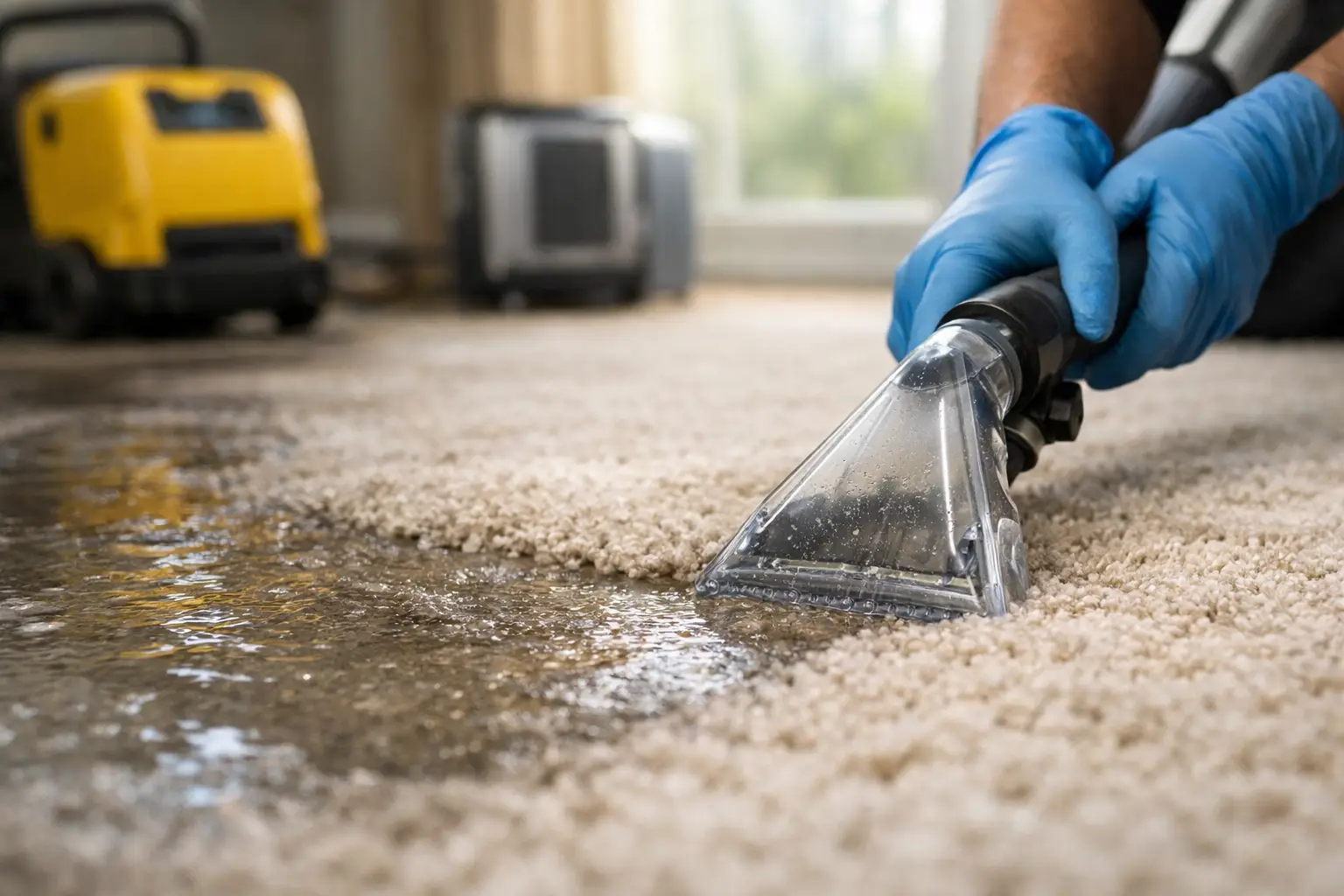
Next comes extraction. Powerful extraction equipment removes as much water as possible from the carpet and pad. Removing liquid water is far more efficient than trying to evaporate it with fans alone. Depending on the situation, the carpet may be carefully lifted so air can move underneath it and the subfloor can be dried.
Drying equipment, including air movers and commercial dehumidifiers, is then placed strategically. Technicians monitor moisture levels throughout the process rather than relying on how the carpet feels underfoot. Proper drying is complete only when affected materials have returned to an acceptable moisture condition.
Cleaning and deodorizing come after the area is stabilized and drying is underway or complete. If the carpet is salvageable, the process may include hot water extraction, cleaning treatments appropriate to the contamination level, and odor control. If the pad cannot be adequately dried or cleaned, replacing the pad while preserving the carpet may be a practical middle-ground option.
Why the Carpet Pad Is Often the Deciding Factor
The carpet itself gets most of the attention because it is visible. The pad underneath is usually the bigger concern.
Carpet padding acts like a sponge. Once saturated, it can hold a substantial amount of water against the subfloor. Some pad materials lose their shape or break down after getting wet. Even if the carpet can be cleaned, a damp or contaminated pad can continue producing odor and supporting mold growth.
In a limited clean-water event caught immediately, a pad may sometimes be dried successfully. In many cases, however, removal and replacement of the pad is the more reliable option. This is particularly true when water has been standing, when the affected area is large, or when the source is gray or black water.
A professional assessment should also consider what is below the pad. Concrete, tile, wood subflooring, and engineered flooring assemblies respond differently to moisture. Wood-based materials can swell, warp, or delaminate if they stay wet too long.
The First 24 to 48 Hours Matter
Mold does not wait for a convenient time to appear. Under favorable conditions, microbial growth can begin within 24 to 48 hours after water intrusion. In El Paso, dry outdoor conditions do not eliminate this risk indoors. A closed room, soaked padding, and limited airflow can create the moisture conditions mold needs.
That is why waiting for a carpet to air dry is risky. Opening windows may help in some circumstances, but it does not replace controlled extraction, dehumidification, and moisture monitoring. It can also introduce humid air or dust depending on the weather and conditions outside.
If water has reached electrical outlets, electronics, ceilings, walls, or multiple rooms, avoid entering the area until it is safe to do so. Shut off power only if it can be done safely, and do not use household vacuums to remove standing water.
What You Can Do Before Help Arrives
After confirming the area is safe and the water source has been stopped, move dry furniture and valuables away from the wet area when possible. Place aluminum foil or wood blocks under furniture legs that cannot be moved to limit staining and moisture transfer. Remove small items from the carpet and take photos or video of the damage for your insurance documentation.
Avoid pulling up carpet yourself if the water source is unknown, contaminated, or widespread. You could spread contaminants, damage the carpet, or miss moisture that has traveled farther than expected. Do not apply heavy fragrances to cover odors. An odor after water damage is a signal to investigate, not something to mask.
For a sewage backup, outdoor floodwater intrusion, or any water with visible contamination, keep people and pets away from the affected area. These conditions call for professional removal, cleaning, disinfection, and disposal procedures.
When Replacement Is the Better Decision
Replacement can feel discouraging, especially when the carpet looks mostly intact. Yet removing affected materials may prevent a much larger problem later.
Carpet and padding are usually candidates for replacement when they were exposed to sewage or floodwater, sat wet for an extended period, have persistent odor after drying, show backing deterioration, or cannot be returned to a safe moisture level. Replacement may also make sense when the cost of detailed restoration approaches the cost of new materials.
For commercial properties, the decision may involve downtime, occupant safety, and the condition of adjacent offices or inventory. For rental properties, thorough documentation and moisture verification can help property managers make clear repair decisions and support insurance communication.
A Local Team for the Full Recovery Process
Water damage rarely stops at the carpet edge. What begins as a wet room can require water mitigation, mold assessment, material removal, cleaning, repairs, and reconstruction. Working with one experienced restoration provider helps keep the process organized from the initial emergency through the final repair.
GEM Disaster Recovery Corp provides 24/7 emergency response for El Paso property owners facing water damage and the difficult decisions that follow. With 20 years of combined hands-on experience, the team can assess whether affected carpet can be restored, remove materials that cannot be safely saved, document the loss, and coordinate the next steps with care.
A wet carpet deserves more than a quick surface cleaning. Fast, informed action can protect the parts of your property you cannot see and give you a clearer path back to a safe, comfortable space.