When Should Wet Drywall Be Replaced? Key Signs
A supply-line leak behind a bathroom wall can soak drywall long before water appears on the floor. By the time a wall feels soft, smells musty, or develops a stain, the damage may extend well beyond what is visible. So, when should wet drywall be replaced? The answer depends on the source of the water, how long the material stayed wet, and whether it can be thoroughly dried without creating a mold or structural concern.
Drywall is inexpensive to replace compared with the cost of leaving hidden moisture in a home or business. Quick, professional water mitigation can sometimes save affected walls. But when replacement is the safer option, removing damaged material promptly protects the rest of the property and gives the restoration team access to dry the framing behind it.
When Should Wet Drywall Be Replaced?
Wet drywall should generally be replaced when it is contaminated, has been wet for more than about 24 to 48 hours, has lost its shape or strength, or cannot be dried completely. Drywall is made from a gypsum core wrapped in paper. That paper facing readily absorbs water, and it can support mold growth when moisture remains.
A clean-water event caught immediately is different from a sewage backup or a dishwasher leak that sat unnoticed over a weekend. A restoration professional considers both the water category and the condition of the materials before deciding whether drying or removal is appropriate.
Replace drywall after contaminated water exposure
Any drywall touched by sewage, toilet overflow containing waste, floodwater, or water from a severely contaminated source usually needs removal. These sources can carry bacteria and other contaminants into the porous paper and gypsum. Surface cleaning is not a dependable solution when contamination has penetrated the wallboard.
Water from a washing machine, dishwasher, or broken pipe may begin as relatively clean water. Still, clean water can become more contaminated the longer it sits in flooring, wall cavities, and building materials. That is one reason immediate extraction and drying matter so much.
Replace it when it is soft, swollen, or crumbling
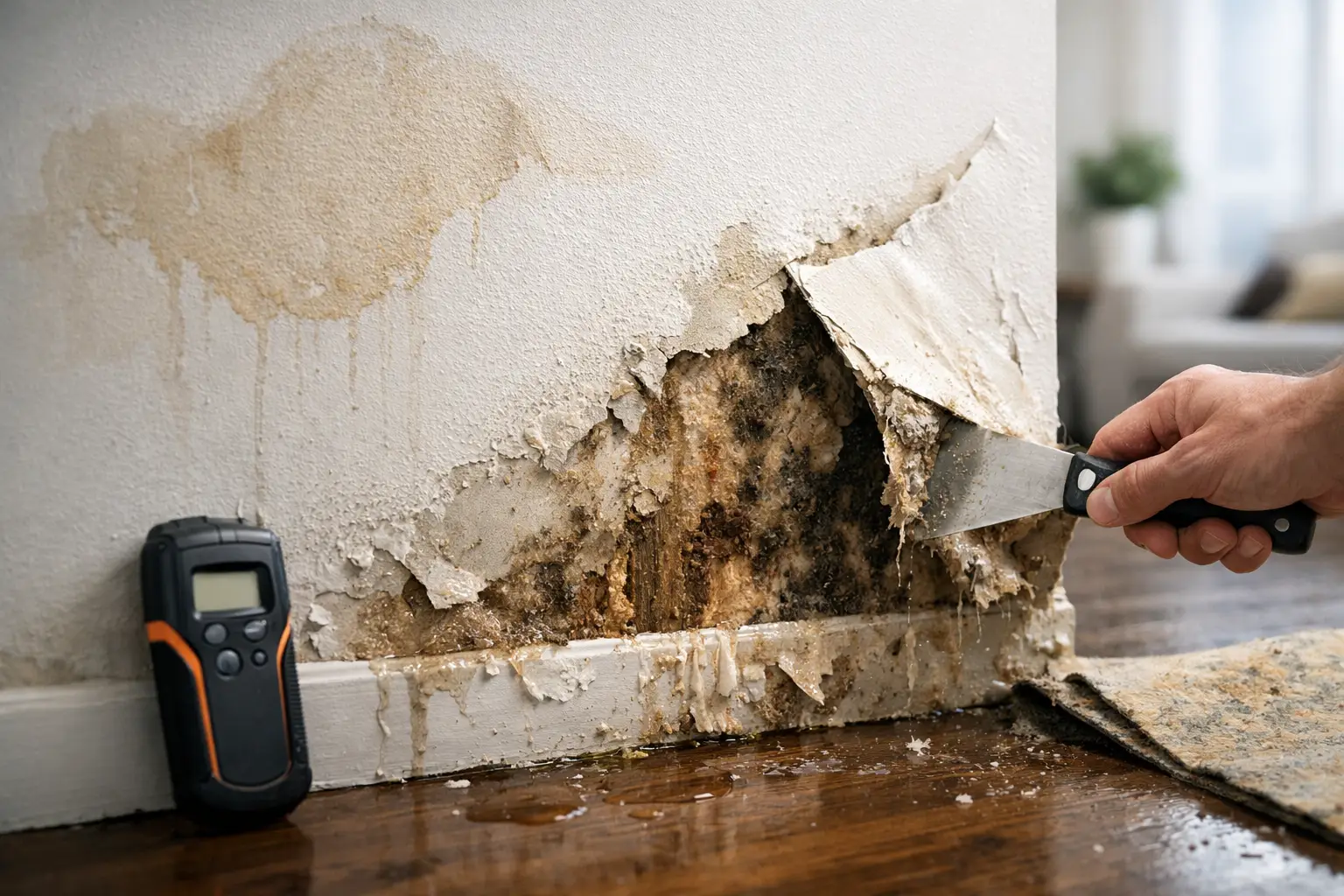
Drywall that feels soft when gently pressed has likely lost integrity. Other clear warning signs include bubbling paint, peeling texture, sagging ceilings, swollen seams, crumbling edges, and fasteners that no longer hold the board firmly against the studs.
A wall can look dry on the surface and still be weak inside. If a ceiling is sagging after a roof or plumbing leak, stay clear of the area. Wet ceiling drywall can become heavy enough to fall without much warning.
Replace it when drying was delayed
The first 24 to 48 hours after water damage are critical. With prompt extraction, controlled airflow, dehumidification, and moisture monitoring, some clean-water-affected drywall may dry successfully. Once materials remain wet longer, however, mold risk and material breakdown increase sharply.
El Paso's dry climate can make a damp wall feel less urgent, but indoor wall cavities do not dry reliably just because the air outside is dry. Insulation, framing, baseboards, and the back side of the drywall can hold moisture in enclosed spaces. Professional moisture readings provide a more reliable answer than touch alone.
Signs You May Be Able to Dry Wet Drywall Instead
Replacement is not automatic after every small leak. Drying may be possible when the water source was clean, the leak was discovered quickly, and the drywall remains firm, flat, and free of odor or visible microbial growth. The affected area must also be accessible enough for proper drying and verification.
For example, a small amount of clean water that splashes onto a wall during a plumbing repair may not require demolition if it is dried immediately. A larger leak that ran inside the wall overnight is a very different situation, even if the visible stain is small.
Restoration technicians use moisture meters and thermal imaging to locate water that cannot be seen. They may remove baseboards, create small access openings, or use controlled drying equipment to move air through the affected assembly. The goal is not simply to make the wall feel dry. It is to return the materials to an acceptable moisture level and confirm that hidden moisture has been addressed.
Why Cutting Out Only the Stained Spot Can Be Risky
It is tempting to patch the visible water stain and repaint. That approach can work only after the full extent of moisture has been identified and dried. A stain is evidence of water movement, not a map of every wet material.
Water travels downward and sideways through drywall, insulation, studs, and flooring. A leak from an upstairs bathroom may leave a small ceiling mark while soaking insulation several feet beyond it. Covering the stain without resolving the source and drying the cavity can trap moisture where mold may develop.
There is also a practical reconstruction issue. Drywall removal is often cleaner and more precise when done as part of a controlled mitigation plan. Technicians can establish containment when needed, protect unaffected rooms, remove wet materials, dry the framing, and prepare the area for repairs. This reduces the chance of repeated demolition later.
What to Do While You Wait for Help
First, stop the source if it is safe to do so. Shut off a local water valve or the main water supply for an active plumbing leak. If water is near outlets, appliances, or electrical panels, avoid the area and have a qualified professional assess the hazard.
Move furniture, electronics, documents, and other valuables out of the affected area when possible. Place aluminum foil or blocks under furniture legs to limit staining and transfer from wet carpet. Do not puncture a bulging ceiling, tear open large wall sections, or run household fans into a contaminated-water area. Those actions can create safety concerns or spread contaminants.
Take photos and notes for your insurance claim before major cleanup begins, if conditions allow. Then arrange a professional assessment as soon as possible. Timely documentation, moisture mapping, and a clear scope of work can make the claims process easier while ensuring the right materials are removed or dried.
The Difference Between Drywall and Insulation Damage
Drywall is only one part of the wall system. Insulation often needs separate consideration because fiberglass, cellulose, and foam react differently to water. Fiberglass insulation may sometimes be dried if the water was clean and the material has not compacted or become contaminated. Cellulose insulation, which absorbs and retains water, is more likely to require removal.
If wet insulation remains behind newly repaired drywall, moisture and odors can persist out of sight. That is why responsible restoration addresses the cavity, not just the finished wall surface. Framing is evaluated and dried before new insulation and drywall are installed.
Professional Assessment Protects the Rebuild
The best decision is not always the least invasive one at the moment. Saving drywall can reduce reconstruction costs when it is genuinely dryable. Removing unsalvageable drywall, on the other hand, can prevent a much larger mold, odor, or repair issue later.
At GEM Disaster Recovery Corp, the process begins with stabilizing the water loss, locating moisture, and explaining what can be saved and what should be removed. From emergency mitigation through reconstruction and insurance coordination, property owners receive a clear path forward rather than a patchwork of separate vendors.
If you have a wet wall or ceiling, do not wait for staining, odor, or mold to make the decision for you. Fast assessment gives you the best chance to preserve safe materials, remove damaged ones with care, and return your property to a dry, dependable condition.