When Mold Remediation Services Are Necessary
A musty smell after a plumbing leak is not something to cover with air freshener and forget. It can be an early warning that moisture is trapped behind drywall, under flooring, or inside an HVAC area where mold can grow out of sight. Professional mold remediation services address both the visible contamination and the moisture problem that allowed it to develop, helping El Paso property owners protect their homes, businesses, and peace of mind.
Mold concerns can feel overwhelming, especially when they follow a flood, roof leak, burst pipe, or long-standing plumbing issue. The right response is calm, prompt, and thorough. Rather than disturbing suspected growth or starting demolition without a plan, property owners need clear answers about what is affected, where the moisture is coming from, and what it will take to restore the space safely.
When Mold Remediation Services Are the Right Call
Mold needs moisture to grow. That is why it commonly appears after water damage, but it can also develop slowly from a small leak beneath a sink, condensation around an air conditioning system, poor ventilation in a bathroom, or water intrusion near windows and roofs. In El Paso, a sudden monsoon storm or an unnoticed plumbing failure can create conditions that allow mold to take hold before the damage is obvious.
You should arrange a professional inspection when you see discoloration on walls, ceilings, grout, or baseboards; notice a persistent earthy or musty odor; discover wet building materials; or experience recurring water damage in the same area. Mold can also be hidden behind cabinets, beneath carpet, inside wall cavities, and under flooring. A surface that looks dry does not always mean the materials behind it are dry.
The size and location of the affected area matter. A small amount of mildew on a nonporous shower surface may respond to regular cleaning and improved ventilation. Growth connected to water-damaged drywall, insulation, carpet padding, wood framing, or HVAC components is different. Porous materials can retain moisture and contamination, making incomplete cleanup more likely if the underlying source is not corrected.
Property managers and business owners should move quickly when mold is suspected in occupied spaces. Delays can disrupt tenants, employees, customers, and daily operations. Early assessment helps define the scope of work before a smaller problem becomes a larger repair project.
What Professional Mold Remediation Actually Includes
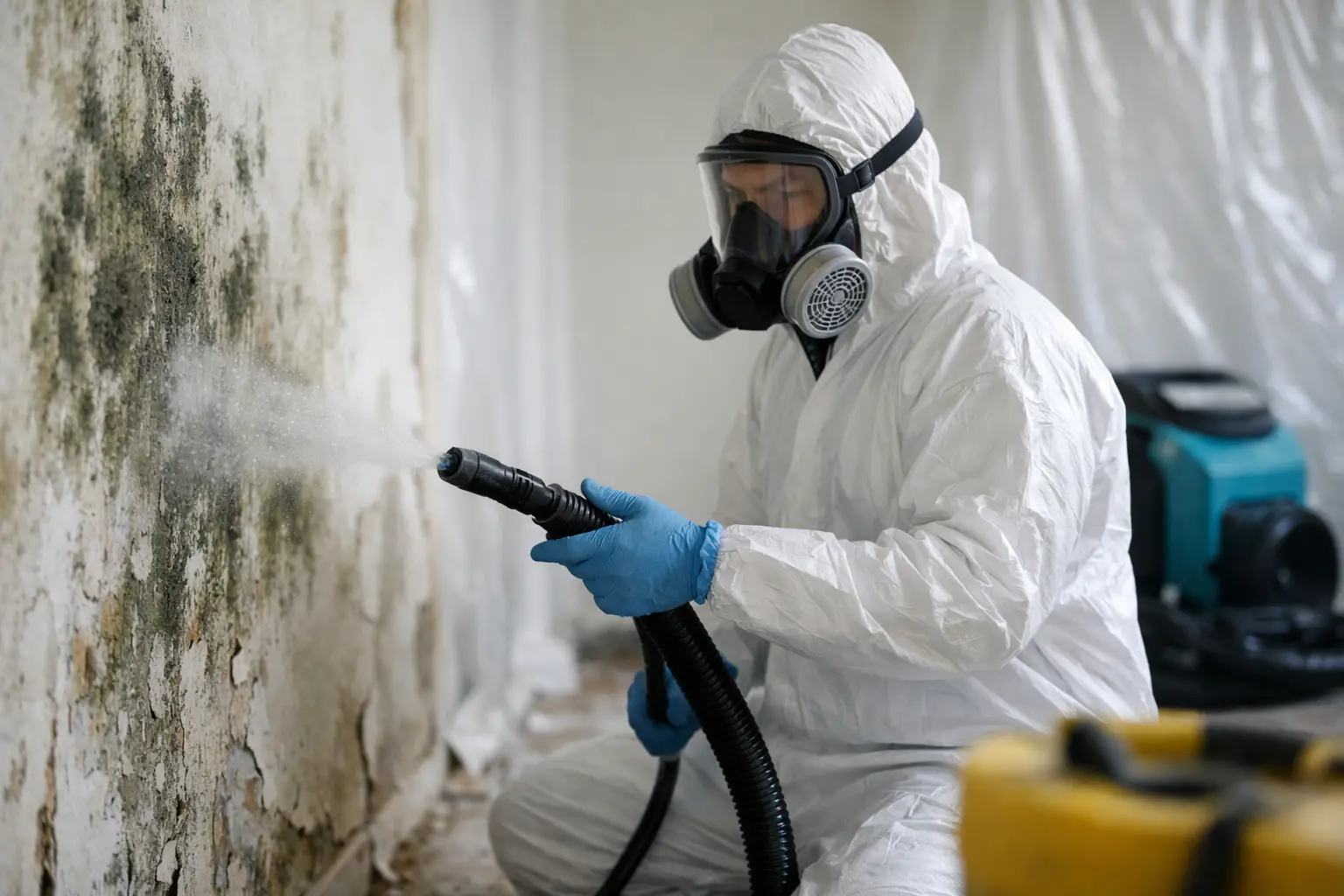
Mold remediation is more than spraying a cleaning product on a stained wall. The goal is to identify the moisture source, contain affected areas, remove materials that cannot be effectively cleaned, and dry the property to appropriate conditions before rebuilding begins.
Inspection and moisture assessment
The process begins with a careful inspection. A trained restoration team looks for visible growth, water staining, elevated moisture, damaged materials, and likely pathways where water may have traveled. This assessment helps determine whether the concern is isolated or whether it extends behind surfaces.
Finding the water source is essential. If a pipe continues leaking, a roof opening remains exposed, or condensation is not controlled, mold can return after cleanup. A dependable remediation plan addresses the cause as well as the damage it caused.
Containment to limit cross-contamination
When demolition or removal is needed, affected areas may be contained to reduce the chance of spores and dust spreading into clean sections of the property. Depending on the situation, this can involve temporary barriers, controlled entry points, and air filtration equipment.
Containment is one reason professional work matters. Pulling out wet drywall or carpet without appropriate controls can spread debris into nearby rooms, ducts, furniture, and work areas. The approach should match the size of the loss, the building layout, and whether the property is occupied.
Removal, cleaning, and drying
Some materials can be cleaned when they are structurally sound and appropriate for treatment. Others, such as saturated insulation, heavily damaged drywall, carpet padding, or compromised contents, may need to be removed. This is not a one-size-fits-all decision. The restoration team should explain what can be saved, what should be discarded, and why.
After removal and cleaning, drying is critical. Commercial drying equipment and moisture monitoring help bring affected materials back toward normal conditions. Rushing this stage can leave hidden moisture behind, creating another opportunity for mold growth.
Repair and reconstruction
A complete recovery does not end with cleanup. Once the affected area is dry and ready, repairs may include replacing drywall, insulation, flooring, trim, cabinetry, paint, or other finishes. Working with one restoration provider from emergency mitigation through reconstruction can reduce handoffs, simplify communication, and keep the project moving forward.
For El Paso homeowners and businesses, GEM Disaster Recovery Corp can coordinate that full path from initial stabilization through restoration and rebuilding, while helping document the damage for insurance communication.
Why Fast Action Makes a Difference
Water damage and mold concerns rarely improve with time. Moisture can wick into adjacent materials, weakening finishes and expanding the area that needs attention. What begins as a small leak under a vanity can affect flooring, baseboards, drywall, and neighboring rooms if it is not discovered promptly.
Fast action does not mean skipping proper assessment. It means protecting the property early: stopping the water source, removing standing water when present, beginning drying, documenting conditions, and creating a clear remediation plan. These steps can help limit secondary damage and make the restoration process more manageable.
Insurance questions are common after water or mold damage. Coverage depends on the policy, the cause of loss, maintenance history, and other details. A restoration company cannot decide coverage, but detailed photographs, moisture readings, estimates, and records of emergency work can help support a clearer conversation with the insurance carrier.
What Not to Do When You Find Suspected Mold
Avoid disturbing a suspected mold area by aggressively scrubbing, sanding, tearing out walls, or placing fans directly on visible growth. Those actions can spread particles and make the affected area harder to control. Do not assume bleach alone solves growth on porous materials, either. It may change the appearance of staining without resolving moisture inside drywall, wood, or padding.
It is also wise to avoid painting over stains before the source has been identified and corrected. Paint can hide evidence temporarily, but it cannot dry wet materials or repair a leak. If you are uncertain whether a stain is old water damage, active moisture, or mold-related growth, an inspection provides a more reliable next step.
Choosing Mold Remediation Services in El Paso
When choosing a remediation provider, look for a company that communicates clearly before work begins. You should understand the suspected source of moisture, the areas being addressed, the planned containment and drying methods, which materials may need removal, and what repairs may follow.
Credentials and experience matter, particularly when the damage involves extensive water intrusion, multiple rooms, commercial space, or reconstruction needs. Just as important is responsiveness. Property damage is stressful, and you should not have to chase updates or coordinate separate cleanup, drying, demolition, and repair companies during an already difficult situation.
Ask how the team documents damage, whether it can work with your insurance process, and how it will protect unaffected areas of the property. A professional answer should be straightforward, not vague or pressure-driven. The best plan is one that fits the actual conditions of your property rather than selling unnecessary work.
If you smell persistent moisture, see suspicious growth, or have recently experienced water damage, trust the warning signs and have the area evaluated. A timely, professional response can turn an uncertain problem into a clear plan for a cleaner, drier, and safer property.