What Is Water Mitigation and Why It Matters
A burst supply line at 2 a.m. does not give you time to learn restoration terms. You just need to know what happens next, what can wait, and how to keep damage from spreading. If you are asking what is water mitigation, the short answer is this: it is the immediate work done to stop water damage from getting worse and to stabilize the property before full repairs begin.
That distinction matters more than most people realize. Water can move fast through drywall, flooring, insulation, baseboards, and framing. Within hours, materials can swell, stains can spread, and moisture can settle into hidden spaces. The goal of mitigation is not to make everything look normal again on day one. The goal is to control the loss, protect the structure, and create the safest, fastest path toward full restoration.
What is water mitigation?
Water mitigation is the emergency response phase after water enters a home or commercial building. It focuses on containing the damage, removing standing water, drying affected materials, reducing safety risks, and preventing secondary issues like mold growth or structural deterioration.
In practical terms, mitigation often starts with an inspection and moisture mapping. From there, crews may shut off the water source, extract standing water, remove unsalvageable materials, set up drying equipment, and monitor moisture levels over several days. If needed, they also take steps to protect unaffected areas so the problem does not spread.
Mitigation is different from reconstruction. Reconstruction is the rebuilding phase, such as replacing drywall, installing new flooring, repainting walls, or rebuilding damaged sections of the property. Mitigation comes first because you cannot rebuild correctly until the property is dry and stable.
Why water mitigation matters so much
The biggest reason water mitigation matters is simple: delay costs money. A small leak under a sink is one problem. The same leak left unnoticed for two days can affect cabinets, subflooring, drywall, and adjacent rooms. What starts as a manageable cleanup can turn into a much larger restoration project.
There is also the issue of contamination. Not all water is the same. Clean water from a broken supply line is different from gray water from an appliance discharge, and both are very different from black water involving sewage or floodwater. The more contaminated the water, the more urgent the response and the stricter the handling procedures need to be.
Quick mitigation can also reduce business interruption. For property managers and business owners, every hour matters. Water in an office, retail space, or multi-unit property can affect operations, tenant safety, and liability. A fast, organized response helps limit downtime and keeps the damage from expanding into neighboring units or common areas.
What happens during the water mitigation process
Every job is a little different, but the process usually follows a clear sequence. First comes inspection. Technicians identify the source of water, the affected materials, the category of water involved, and how far moisture has traveled. Some damage is obvious, but some of the most serious moisture problems are hidden behind walls, under flooring, or above ceilings.
Next comes emergency stabilization. That may include stopping the active leak, isolating hazardous areas, moving contents out of the way, and protecting unaffected spaces. If the property is unsafe due to electrical risks, sagging materials, or contaminated water, those concerns are addressed immediately.
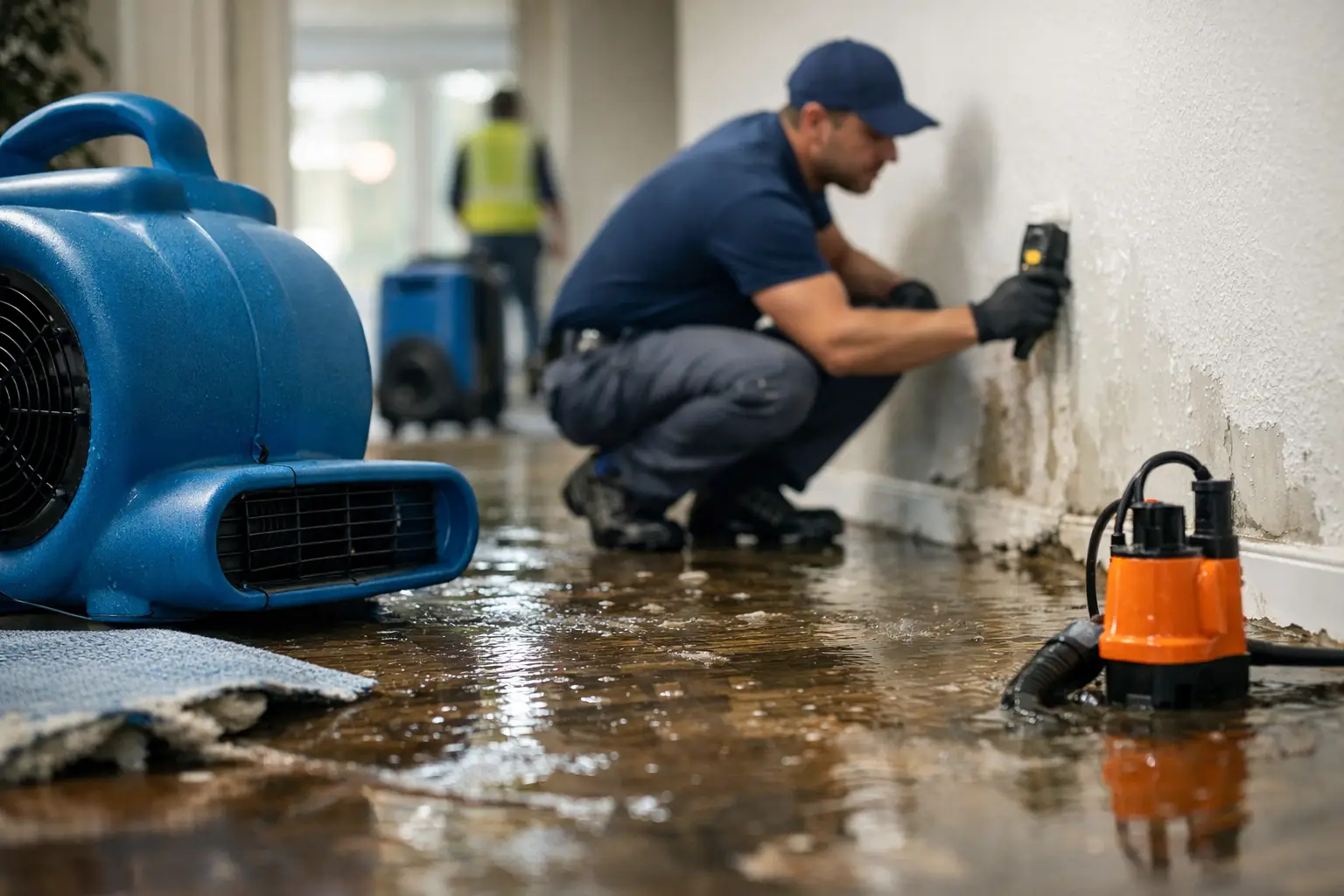
Water extraction follows. Removing standing water quickly is one of the most important parts of mitigation because the longer water sits, the deeper it penetrates. Extraction may involve pumps, vacuums, or specialty equipment depending on the amount of water and the surface involved.
After extraction, the drying phase begins. This is where professional equipment matters. Air movers, dehumidifiers, and moisture meters are used to pull water out of materials and the air. Drying is not guesswork. Technicians monitor moisture levels and adjust equipment placement to make sure materials reach appropriate dry standards.
Cleaning and sanitation may also be necessary, especially when the water source is not clean. Certain materials might need to be removed if they cannot be safely dried or sanitized. Carpet padding, wet insulation, and compromised drywall are common examples, though it depends on how long they were wet and what kind of water caused the damage.
Finally, documentation is typically gathered throughout the process. This can help with insurance claims, repair planning, and proving that the property was properly dried before rebuilding starts.
Water mitigation vs. water restoration
People often use these terms as if they mean the same thing, but they are not identical. Water mitigation is about immediate damage control. Water restoration is the broader process of returning the property to pre-loss condition.
Mitigation might include extracting water, setting drying equipment, and removing damaged materials. Restoration can include repairs, rebuilding, content restoration, painting, flooring replacement, and other finish work. In many cases, the same company handles both phases, which can make the process less stressful because the property owner is not juggling multiple vendors during an already difficult situation.
That end-to-end approach is especially helpful when insurance is involved. Damage needs to be documented properly at the start, and the scope of work needs to make sense from emergency response through final repairs.
When should you call for water mitigation?
The best time to call is as soon as you know water is where it should not be. That includes obvious emergencies like burst pipes, overflowing appliances, roof leaks, sewage backups, and storm intrusion. It also includes slower events, like a water heater leak or an HVAC issue that has soaked nearby materials.
Some property owners wait because the damage does not look severe. That can be a costly mistake. Water often travels beyond the visible wet area. If drywall feels dry on the surface, there may still be moisture inside the wall cavity. If carpet looks only slightly damp, the pad and subfloor underneath may be saturated.
In El Paso, quick action matters even when the climate feels dry overall. Indoor water damage behaves according to the materials and conditions inside the building, not just the weather outside. Air conditioning systems, closed rooms, insulation, and building materials can all hold moisture longer than expected.
Can you handle water mitigation yourself?
Sometimes a minor spill or a very small, clean-water incident can be handled without professional help. If the water source is clean, the affected area is limited, and you can dry everything completely and quickly, DIY cleanup may be enough.
But there are clear cases where professional mitigation is the safer call. If water has affected multiple rooms, seeped into walls or flooring, involved sewage or floodwater, or been sitting for more than a short time, the risk goes up. Hidden moisture, contamination, and improper drying can create bigger problems later.
There is also a practical issue. Household fans and shop vacs can help at the surface, but they are not the same as commercial extraction and drying equipment. Without moisture monitoring, it is hard to know whether materials are truly dry or just feel dry to the touch.
What to do while waiting for help
If it is safe to do so, stop the water source. Shut off the main water valve if a pipe has burst, or turn off the appliance causing the leak. If electricity may be affected, avoid standing water and use caution around breakers and outlets.
Move valuables, documents, electronics, and furniture away from wet areas when possible. You can also place aluminum foil or blocks under furniture legs to reduce staining or transfer onto wet flooring. Avoid using a household vacuum on standing water unless it is specifically designed for wet pickup.
Take photos if you can do so safely. Good documentation can help later, especially for insurance. Then focus on getting qualified mitigation underway as quickly as possible.
Choosing the right water mitigation company
Not every company responds with the same urgency or handles the full process the same way. Look for a team with emergency availability, proper certifications, clear communication, and experience with both residential and commercial losses. It also helps if they understand insurance documentation and can guide the job from initial stabilization through rebuilding.
When customers call GEM Disaster Recovery Corp, they are often dealing with more than wet floors. They are worried about their family, their tenants, their business, and how long normal life will be disrupted. That is why water mitigation should feel both technically sound and genuinely supportive. You need a team that can move fast, explain the process clearly, and treat your property with care.
Water damage has a way of making everything feel urgent at once. The right first step is not to solve the whole problem in one night. It is to stop the damage, stabilize the space, and put the recovery on solid ground.