Water Mitigation vs Restoration Explained
When water is spreading across your floor, dripping through a ceiling, or soaking into drywall, you do not need vague industry terms. You need to know what happens first, what can wait, and who should be doing the work. That is why understanding water mitigation vs restoration matters. These two services are connected, but they are not the same thing, and knowing the difference can help you make faster, better decisions for your home or business.
What water mitigation vs restoration really means
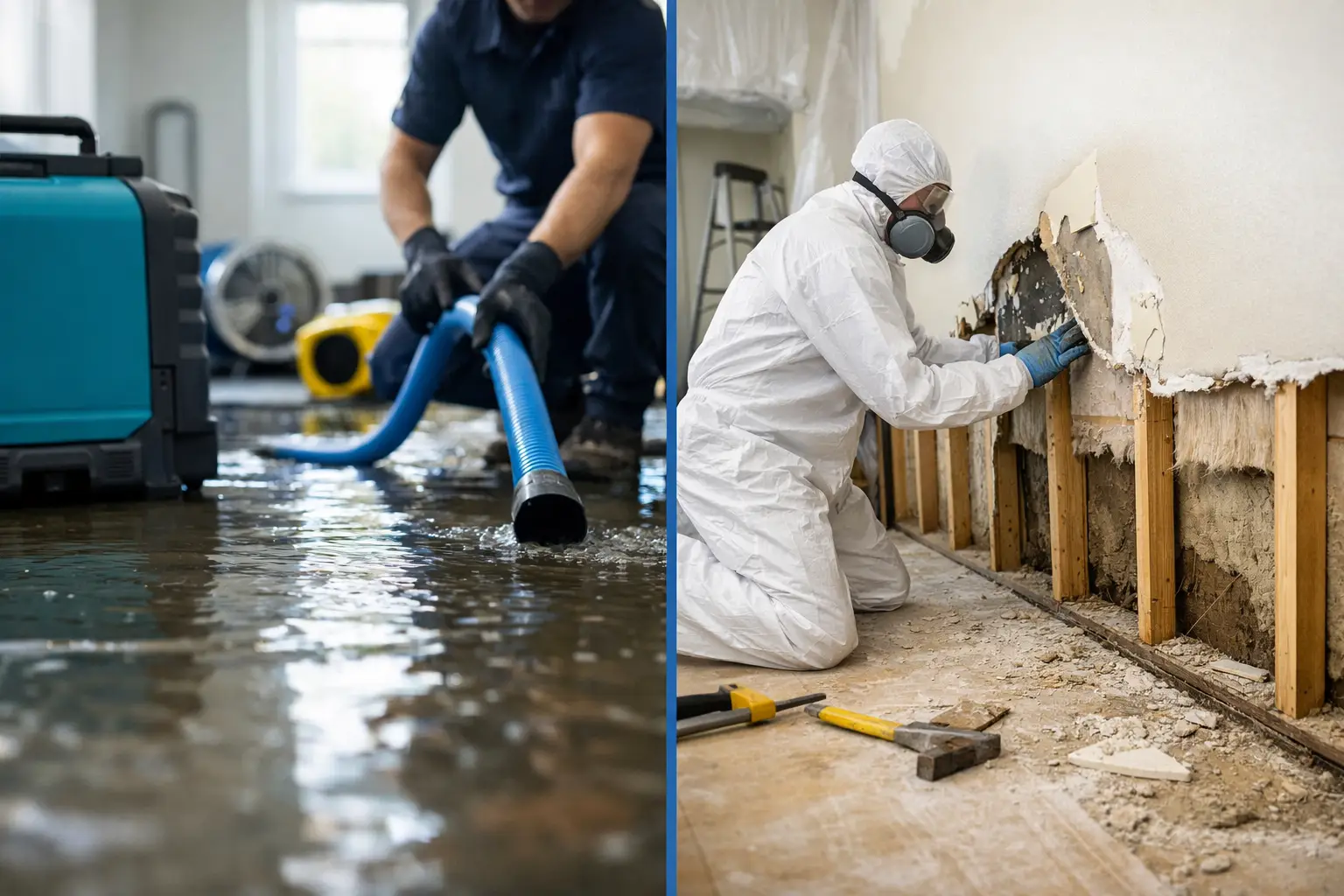
Water mitigation is the emergency phase. Its job is to stop the damage from getting worse. That can mean shutting off the water source, extracting standing water, removing unsalvageable materials, setting drying equipment, and stabilizing the property so moisture does not keep spreading into walls, floors, cabinets, and contents.
Restoration comes after that. This is the repair and rebuild phase that returns the property to its pre-loss condition, or as close to it as possible. Restoration may include replacing drywall, reinstalling flooring, repairing trim, painting, rebuilding damaged areas, and addressing the visible and structural impact left behind after the drying work is complete.
A simple way to think about it is this: mitigation protects what can still be saved. Restoration puts the property back together.
Why the difference matters during an emergency
In a real water loss, timing changes everything. Water does not stay in one place. It moves under flooring, behind baseboards, into insulation, around electrical areas, and through porous materials faster than most people expect. Even a small leak can create a much larger problem if the response is delayed.
If someone jumps straight to cosmetic repairs without proper mitigation, the results can look fine on the surface while hidden moisture remains trapped underneath. That is when swelling, staining, odors, warped materials, and mold growth can follow. On the other hand, if the property is properly mitigated but never fully restored, you may be left with a safe but unfinished space that still needs repairs before it feels livable or operational again.
For homeowners, this distinction affects safety, cost, and how quickly life can return to normal. For property managers and business owners, it also affects tenant satisfaction, downtime, and insurance documentation.
What happens during water mitigation
Mitigation begins with assessment and stabilization. The first priority is to identify the source of the water and stop it if it is still active. From there, the damaged area is inspected to determine how far the water has traveled and which materials can be dried versus which ones need to be removed.
This stage often includes water extraction, moisture mapping, removal of damaged materials, drying equipment placement, dehumidification, and monitoring. Technicians may use moisture meters, thermal imaging, and other tools to track conditions inside materials that do not look wet from the outside.
Not every water loss is handled the same way. A clean supply-line leak is different from a sewage backup or storm intrusion. The category of water matters because it affects what can be safely cleaned, what must be discarded, and how aggressive the mitigation approach needs to be.
Mitigation can feel disruptive because parts of the property may need to be opened up to release trapped moisture. That might mean removing sections of drywall, lifting flooring, drilling access points, or setting air movers for several days. It is not pretty, but it is often what prevents a limited water loss from turning into a more expensive structural problem.
What happens during restoration
Once moisture levels are brought back to an acceptable range, restoration begins. This phase focuses on repairing the damage left behind after water has been removed and the structure has been dried.
Depending on the loss, restoration may be minor or extensive. In a smaller incident, it could mean replacing a section of baseboard, patching drywall, and repainting. In a larger loss, it may involve reconstructing multiple rooms, replacing cabinets, installing new flooring, or rebuilding affected areas from the framing out.
Restoration is where the property starts to feel normal again. It is also where consistency matters. If repairs are not coordinated with the mitigation findings, important details can be missed. Matching materials, ensuring repairs meet current conditions, and rebuilding in the right sequence all affect the final result.
This is one reason many property owners prefer a single company that can handle both sides of the project. Moving from emergency drying to full repairs with one team usually means fewer handoffs, clearer documentation, and less stress during an already difficult situation.
Water mitigation vs restoration: which one do you need?
In many cases, you need both. If water has affected building materials, mitigation should happen first to stop further damage and dry the structure. Restoration follows once the area is stable and ready for repairs.
There are situations where mitigation is the main need. For example, a clean-water leak that is caught quickly may only require extraction, drying, and limited material removal. If there is little to no permanent damage, the restoration portion may be minimal.
There are also cases where a property owner calls for restoration because they are focused on what they can see, such as stained ceilings or damaged flooring, when the real need is still mitigation. If hidden moisture remains, repairs should not begin yet.
The key question is not which term sounds bigger. It is what the property needs right now. If the damage is active or moisture is still present, mitigation comes first every time.
Why fast action saves money
One of the most common misunderstandings after a water loss is assuming the damage is limited to the obvious wet area. In reality, water often spreads wider than the visible stain or puddle. The longer it sits, the more materials absorb it, and the more likely secondary damage becomes.
Fast mitigation can reduce demolition, protect structural components, improve the chance of saving contents, and shorten the overall recovery timeline. It can also create a cleaner insurance record by documenting the original cause, the affected areas, and the steps taken to prevent further damage.
That does not mean every situation is simple. Some materials cannot be saved. Some rooms dry quickly while others need more extensive intervention. Older properties, hidden leaks, and contaminated water losses all add complexity. But acting quickly usually gives you more options, not fewer.
The insurance side of mitigation and restoration
Insurance conversations often add another layer of confusion because property owners may hear both terms used in the same claim. Generally, mitigation refers to emergency actions taken to prevent additional damage, while restoration refers to repairs that return the property to its prior condition.
Documentation matters in both phases. Moisture readings, photos, removal records, drying logs, and repair estimates all help support the scope of work. A provider that understands how to document the loss clearly can make the process easier for the property owner, especially when multiple rooms or systems are affected.
That said, coverage depends on the cause of loss and the details of the policy. A sudden pipe break is not treated the same way as long-term neglect. This is another reason prompt assessment matters. The sooner the damage is documented, the clearer the picture tends to be.
Choosing the right help after water damage
When comparing water mitigation vs restoration services, look for a company that can explain the difference plainly and handle the work in the right order. You should know what is being done, why it is necessary, and what comes next.
Experience, licensing, certifications, and emergency availability all matter, but so does communication. During a water emergency, people are often making decisions under pressure. A dependable team should be able to stabilize the situation, answer questions directly, and guide the project from immediate response through reconstruction if needed.
For El Paso property owners, that local responsiveness can make a real difference. A family-owned company like GEM Disaster Recovery Corp understands that water damage is not just a construction issue. It disrupts routines, business operations, and peace of mind. The best service does more than dry a building. It helps people regain control of the situation.
If you are standing in the middle of a wet room and wondering what to ask for, start here: stop the damage, dry the structure, then repair what was lost. The right help will know how to handle all three with care.