Water Extraction Versus Structural Drying
A burst supply line can leave a room looking almost normal within hours, yet moisture may still be working its way into baseboards, wall cavities, subflooring, and framing. That is why water extraction versus structural drying is not an either-or decision. They are two connected parts of proper water damage restoration, and skipping either one can leave a property vulnerable to mold, material failure, and costly repairs.
For El Paso homeowners, property managers, and business owners, the goal is not simply to remove visible water. The goal is to stabilize the property, dry affected materials to an acceptable condition, and make informed decisions about what can be saved. Fast action matters, but so does following a process that addresses the moisture you can see and the moisture you cannot.
What Water Extraction Does First
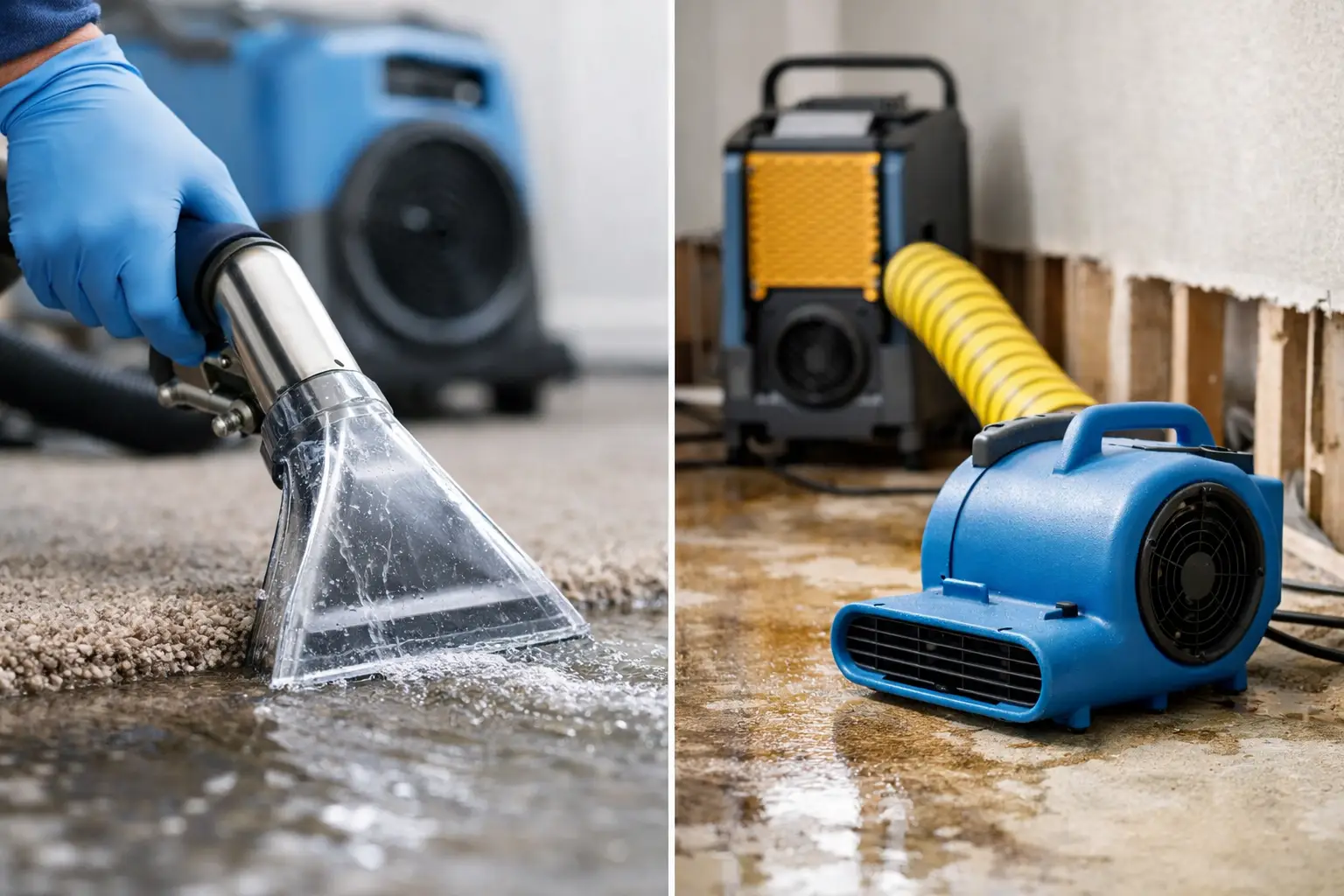
Water extraction is the controlled removal of standing water and readily accessible water from a structure. Restoration professionals may use truck-mounted extraction systems, portable extractors, pumps, weighted extraction tools for carpet, and specialized equipment for hard surfaces. The right approach depends on the amount of water, the affected materials, access to the space, and whether contamination is involved.
Extraction is the emergency step that can dramatically reduce the total drying time. Water left sitting in carpet, padding, drywall, cabinets, or flooring continues to spread through porous materials. It can wick upward into walls, migrate beneath flooring, and soak into insulation. The longer that happens, the more likely it is that otherwise salvageable materials will need to be removed.
A common misconception is that mopping, towels, or a household wet vacuum provide the same result. They may help with a small, contained spill, but they rarely remove enough moisture after a plumbing leak, appliance failure, roof leak, or flood. Professional extraction equipment has the power to recover water from materials that appear dry on the surface.
Why speed changes the outcome
The first 24 to 48 hours after water damage are especially significant. Materials can swell, warp, delaminate, or lose structural integrity as they stay wet. Moist conditions can also support mold growth. Acting quickly may preserve carpeting, reduce demolition, protect belongings, and shorten the interruption to your home or business.
However, fast extraction alone does not mean the drying work is complete. A floor can feel dry underfoot while moisture remains trapped below it. That is where structural drying begins.
Water Extraction Versus Structural Drying: The Key Difference
Water extraction removes liquid water. Structural drying removes the remaining moisture held within building materials and the air. Both are necessary after most significant water losses, but they solve different problems.
Structural drying is a measured process. Technicians use moisture meters, thermal imaging when appropriate, hygrometers, and other tools to identify affected areas and establish drying goals. They then create conditions that encourage water vapor to leave wet materials without causing unnecessary damage.
This can involve strategically placing air movers to increase evaporation, using dehumidifiers to remove moisture from the air, and controlling the drying environment through containment or temperature adjustments. In some cases, baseboards, sections of drywall, insulation, flooring, or cabinetry must be removed because they cannot dry properly or have been affected by contaminated water.
The distinction matters because visible water is only part of the loss. Imagine a refrigerator line leaking behind kitchen cabinets. Extraction may remove water from the floor, but moisture can remain beneath the cabinet toe kicks, inside the wall, and under adjacent flooring. Without targeted structural drying and verification, that hidden moisture can cause odor, mold, or deterioration later.
What a Proper Drying Plan Looks Like
No two water losses dry the same way. A clean-water leak caught quickly in one room calls for a different response than water that has traveled through several floors, entered a commercial suite, or contained sewage. A qualified restoration team starts with an inspection rather than assuming every wet area needs the same treatment.
The process generally begins with identifying the source and stopping it when possible. The affected area is documented, including moisture readings and the condition of materials. Contents may be moved or protected, water is extracted, and equipment is set based on the size and type of loss.
Technicians should return to monitor progress. They adjust equipment, check moisture levels, and look for areas that are not responding as expected. This monitoring prevents two costly mistakes: removing equipment before materials are dry, or leaving equipment running longer than necessary without a clear purpose.
Drying is complete when readings show that affected materials have returned to an appropriate moisture level relative to comparable, unaffected materials. This is more reliable than judging by touch, appearance, or whether the room feels less humid.
Drying materials is not always the same as saving them
Structural drying can save many materials, but it has limits. Solid wood framing may dry successfully after a clean-water event. Wet particleboard cabinets, swollen laminate flooring, saturated insulation, or delaminated engineered wood may not return to a stable condition. The same is true when water is contaminated.
Category and source matter. Water from a clean supply line is handled differently from water affected by a toilet overflow, sewage backup, or floodwater. Contaminated water may require removal of porous materials for health and safety reasons, even if those materials could technically be dried. This is why a restoration plan must be based on conditions at the property, not a one-size-fits-all promise to dry everything.
The Risks of Stopping After Extraction
Stopping after the water is gone can create a false sense of security. Hidden moisture is often responsible for the problems property owners notice days or weeks later: cupped flooring, peeling paint, soft baseboards, cabinet damage, musty odors, or mold growth.
For businesses and multi-unit properties, incomplete drying can also affect adjacent spaces and create disputes over where damage started. Thorough documentation and moisture monitoring help establish the scope of work, support insurance coordination, and provide a clear record of restoration decisions.
There is also a practical cost consideration. Structural drying requires specialized equipment and regular monitoring, but it may prevent a much larger reconstruction project. On the other hand, attempting to dry materials that are already compromised can waste time and delay necessary repairs. The right decision balances preservation, safety, cost, and the long-term condition of the building.
What Property Owners Should Do While Help Is on the Way
Your first priority is safety. If water is near outlets, appliances, electrical panels, or ceiling fixtures, stay out of the area until it can be assessed safely. Do not enter a room with a sagging ceiling, and do not handle contaminated water without proper protective measures.
If it is safe to do so, shut off the water source, move dry belongings away from the affected area, and place foil or wood blocks under furniture legs to reduce staining and transfer. Avoid using regular fans on contaminated water, as they can spread contaminants. Do not remove wall-to-wall carpet on your own, especially if the source is unknown or the water may be unsanitary.
Take photos and videos before major cleanup begins when possible. Then contact a restoration professional who can inspect the damage, begin mitigation, and explain what the drying process requires. For insurance claims, clear records of the source, affected areas, equipment placement, moisture readings, and completed work can be valuable.
From Emergency Mitigation to Repairs
Water damage recovery does not end when the equipment comes out. Once drying has been verified, the property may need cleaning, odor treatment, material replacement, painting, flooring work, or larger reconstruction. Coordinating these stages can be difficult when you are already dealing with an insurance claim and disruption to daily life.
GEM Disaster Recovery Corp helps El Paso property owners move from emergency stabilization through restoration and rebuilding with clear communication at each stage. The focus should always be on protecting the structure first, documenting the work carefully, and restoring the space with care.
When water enters a property, do not judge the situation by the puddle alone. A prompt inspection and a complete plan for extraction and structural drying give your home or business the best chance to recover safely, cleanly, and with fewer unwelcome surprises later.