Water Damage Drying Timeline Explained
At 2 a.m., a burst supply line can leave a room soaked in minutes, but drying the structure takes much longer than most property owners expect. A realistic water damage drying timeline depends on how much water entered the building, what materials got wet, how quickly mitigation begins, and whether hidden moisture has spread behind walls or under flooring. If you are trying to plan repairs, protect your insurance claim, or simply get back to normal, knowing what happens day by day can take some of the stress out of the process.
What a water damage drying timeline really looks like
Most clean water losses in homes and light commercial spaces take about 3 to 5 days for structural drying once professional mitigation is underway. More severe losses, contaminated water, high humidity, saturated insulation, dense materials, or hidden moisture can push the process to 7 to 10 days or longer. Drying is not the same as cleanup, and it is definitely not the same as reconstruction.
That distinction matters. Standing water may be extracted in a matter of hours, damaged materials may be removed the same day, and drying equipment may be set immediately. Even so, framing, subfloors, drywall, cabinetry, and contents all release moisture at different rates. A room can look dry and still contain enough trapped moisture to support mold growth, cause odors, or damage finishes later.
The first 24 hours matter most
The shortest drying timelines usually start with a fast response. In the first several hours, the priority is stopping the source, protecting unaffected areas, extracting water, and identifying what was impacted. If water continues to move through flooring, wall cavities, or contents, the drying clock keeps getting longer.
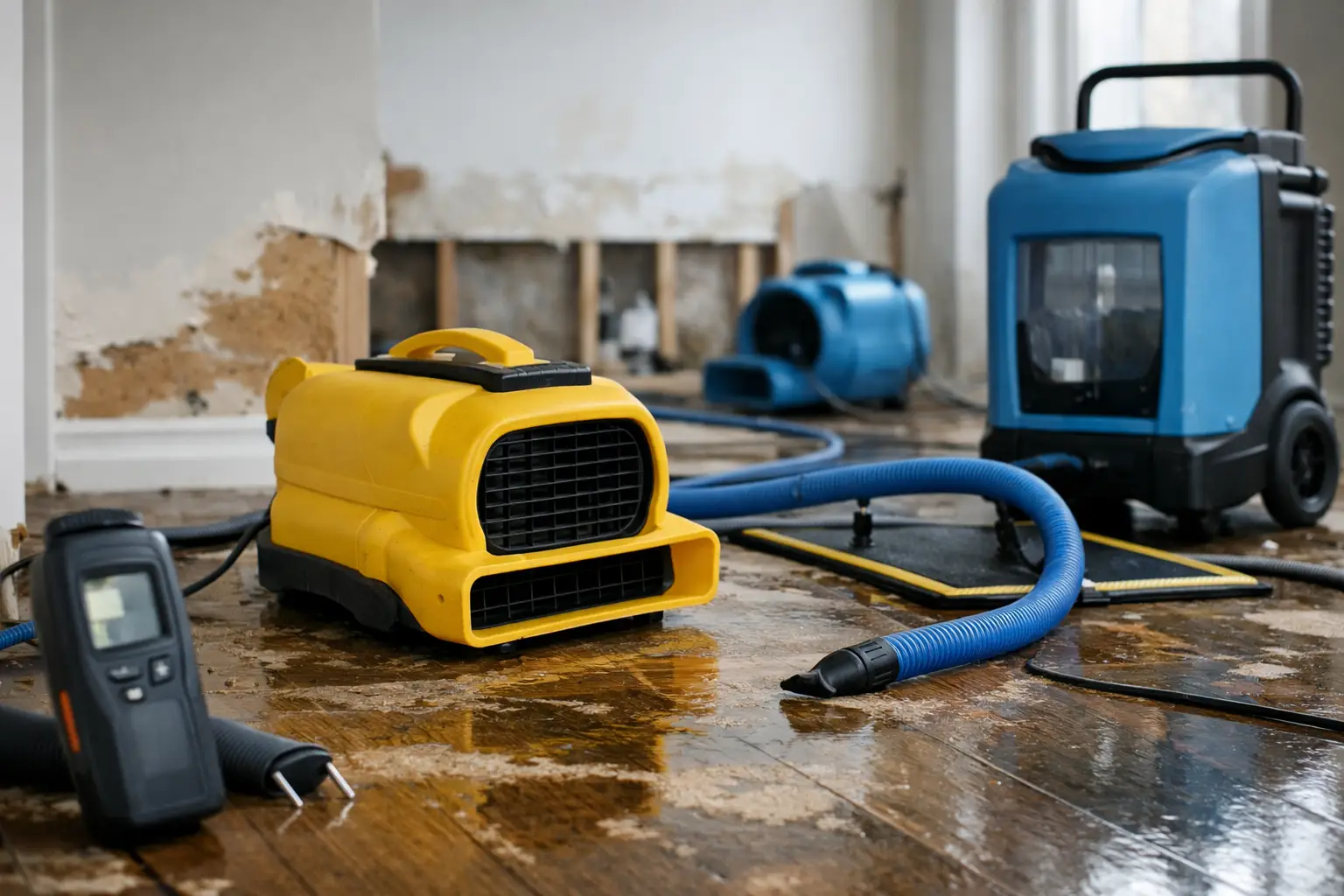
During this stage, trained technicians typically assess moisture levels with meters and thermal imaging, determine the category of water involved, and decide whether materials can be dried in place or need removal. Clean water from a supply line is very different from gray or black water from a drain backup or sewage issue. The more contaminated the water, the more likely removal and sanitizing will affect the timeline.
For many properties, day one is not about making the building dry. It is about stabilizing the loss correctly so drying can happen efficiently and safely.
Days 1 to 3 in the water damage drying timeline
Once extraction is complete, the true drying phase begins. Air movers increase evaporation from wet surfaces, while dehumidifiers pull moisture out of the air so materials can continue releasing water. If the affected area is large or segmented, technicians may create containment zones to control airflow and improve efficiency.
This is often the period when the property starts to feel better to the owner but still tests wet. Carpet pad, baseboards, lower drywall, insulation, engineered wood, and cabinets can hold moisture longer than expected. In some cases, small access openings are made to dry wall cavities or to remove trapped moisture behind built-ins.
Daily monitoring is a key part of this stage. Equipment is adjusted based on real readings, not guesswork. If moisture levels are dropping as expected, the original plan may stay in place. If not, the crew may need to add equipment, remove more material, or investigate secondary damage that was not visible at first.
Days 3 to 5 when many projects reach dry standard
For straightforward residential losses, this is the range where many drying jobs are completed. That does not mean every material is saved, and it does not always mean the property is ready for immediate rebuilding. It means moisture readings are approaching agreed dry standards based on unaffected materials in the structure.
This is where professional documentation becomes especially important. Surface dryness is not enough. Flooring adhesives, wall assemblies, wood framing, and subfloors should be tested and recorded. Insurance carriers also expect clear drying logs, equipment records, photos, and moisture documentation.
If the property dried as planned, equipment may be removed around this point. If readings are still elevated, the drying timeline extends, and that is not necessarily a sign that something is wrong. Some materials simply release moisture slowly, especially in enclosed areas or after a large volume of water intrusion.
Why some drying jobs take a week or more
A longer water damage drying timeline usually comes down to one or more complicating factors. The first is delayed response. Water that sits for even a day can spread far beyond the obvious wet area and soak materials more deeply.
The second is the type of material affected. Concrete, hardwood, plaster, thick insulation, masonry, and layered floor systems can take much longer than carpet and painted drywall. Cabinets and built-in millwork also slow things down because moisture becomes trapped in enclosed spaces.
The third is environmental conditions. In El Paso, outdoor air can be dry, which can help in some situations, but indoor conditions still need to be controlled correctly. Monsoon humidity, HVAC limitations, poor airflow, or a closed-up building can all change performance. Commercial spaces add another layer because larger floorplans, occupied operations, and specialty materials often require more careful staging.
The fourth is contamination. If the loss involves sewage, stormwater, or another unsanitary source, drying is only one part of the process. Removal of affected porous materials, cleaning, disinfection, and odor control can add time before restoration can continue.
What can slow the process after the equipment is set
Property owners sometimes assume that once fans and dehumidifiers are running, the hard part is over. In reality, drying can stall if wet materials are not exposed properly or if the equipment setup does not match the structure.
A few common issues can slow progress: hidden moisture behind walls, saturated insulation left in place, furniture blocking airflow, power limitations, or occupants turning off equipment because of noise or heat. Even opening doors and windows at the wrong time can work against the drying plan by introducing humid outside air.
This is why professional monitoring matters. Drying is not a set-it-and-forget-it job. It is an active process that should be adjusted as readings change.
When is a building actually dry?
A building is dry when affected materials test back to acceptable moisture levels, not when they look dry, feel dry, or stop smelling damp. Restoration professionals compare wet materials to baseline readings from unaffected areas to determine a target dry standard. That approach is more reliable than using a generic number for every property.
For example, a wood subfloor in one building may normally test differently than wood in another because of age, construction, and ambient conditions. The goal is to return materials to a stable range that supports repair and helps prevent secondary damage.
That is also why reconstruction should not start too early. Installing new flooring, closing walls, or painting over damp materials can trap moisture inside the assembly. That often leads to callbacks, warped finishes, microbial growth, and much higher repair costs later.
What property owners can do during the drying timeline
The most helpful thing you can do is support the drying plan. Leave equipment running unless your mitigation team tells you otherwise. Keep the affected area as accessible as possible. Communicate any concerns about power, temperature, security, or business operations early so adjustments can be made.
It also helps to keep records. Save photos, note when the loss occurred, and maintain copies of mitigation reports if an insurance claim is involved. If you are managing a commercial property, document any operational impacts and coordinate access so crews can monitor equipment without delays.
If the loss is significant, work with a company that can carry the project beyond drying. That reduces handoff problems between mitigation, repairs, and reconstruction. For homeowners and businesses already under pressure, having one experienced team manage stabilization, documentation, and the rebuild can make the process far less overwhelming.
Water damage drying timeline and next steps
The best answer to how long drying takes is honest but simple: it depends, and it should depend on measured moisture, not hope. Many losses dry in 3 to 5 days. Others take longer because the structure, materials, contamination level, or extent of hidden moisture calls for a more careful approach.
A dependable restoration team should explain what they found, what they are monitoring, and why the timeline may change. That kind of clarity helps property owners make better decisions under stress. For families, managers, and business owners across El Paso, that steady guidance matters just as much as the equipment in the room.
When water damage hits, speed matters, but patience matters too. Drying done right gives the rest of the recovery a stronger foundation.