Warehouse Flood Recovery in the First 48 Hours
A flooded warehouse can interrupt far more than a shift. It can put inventory, equipment, employee safety, customer commitments, and lease obligations at risk all at once. Effective warehouse flood recovery starts with quick decisions, but it cannot be rushed carelessly. The goal is to stabilize the building, protect people and assets, document the loss, and create a clear path back to normal operations.
For El Paso warehouse owners and property managers, water can enter after a burst supply line, roof failure, sprinkler discharge, sewage backup, or sudden storm flooding. The source matters because it determines what can be safely cleaned, what may need to be discarded, and how the recovery plan should proceed.
The first priority is safety and stabilization
Before anyone starts moving pallets or operating cleanup equipment, the affected area needs to be assessed for immediate hazards. Standing water can conceal damaged flooring, open drains, sharp debris, unstable shelving, and electrical risks. If water has reached outlets, machinery, electrical panels, or powered loading equipment, keep personnel away until a qualified professional confirms conditions are safe.
The water category also matters. Water from a clean plumbing supply line may be recoverable if addressed quickly. Water from a sewer backup, exterior floodwater, or a compromised drain system can carry contaminants. In those cases, employees should not handle exposed materials without appropriate protective measures, and porous items may require disposal rather than cleaning.
The first hours should focus on stopping the source when possible, securing the affected area, and preventing further spread. This might mean shutting off a water valve, covering a roof opening, moving unaffected inventory to a dry location, or setting containment around the damaged zone. A professional restoration team can then begin extraction and moisture control without creating additional cross-contamination.
What warehouse flood recovery should include
Warehouse restoration is not simply a matter of removing visible water. Concrete floors, wall assemblies, insulation, racking bases, stored goods, office areas, and mechanical systems can retain moisture long after puddles disappear. A complete recovery process addresses both the water you can see and the moisture you cannot.
Water extraction and detailed moisture mapping
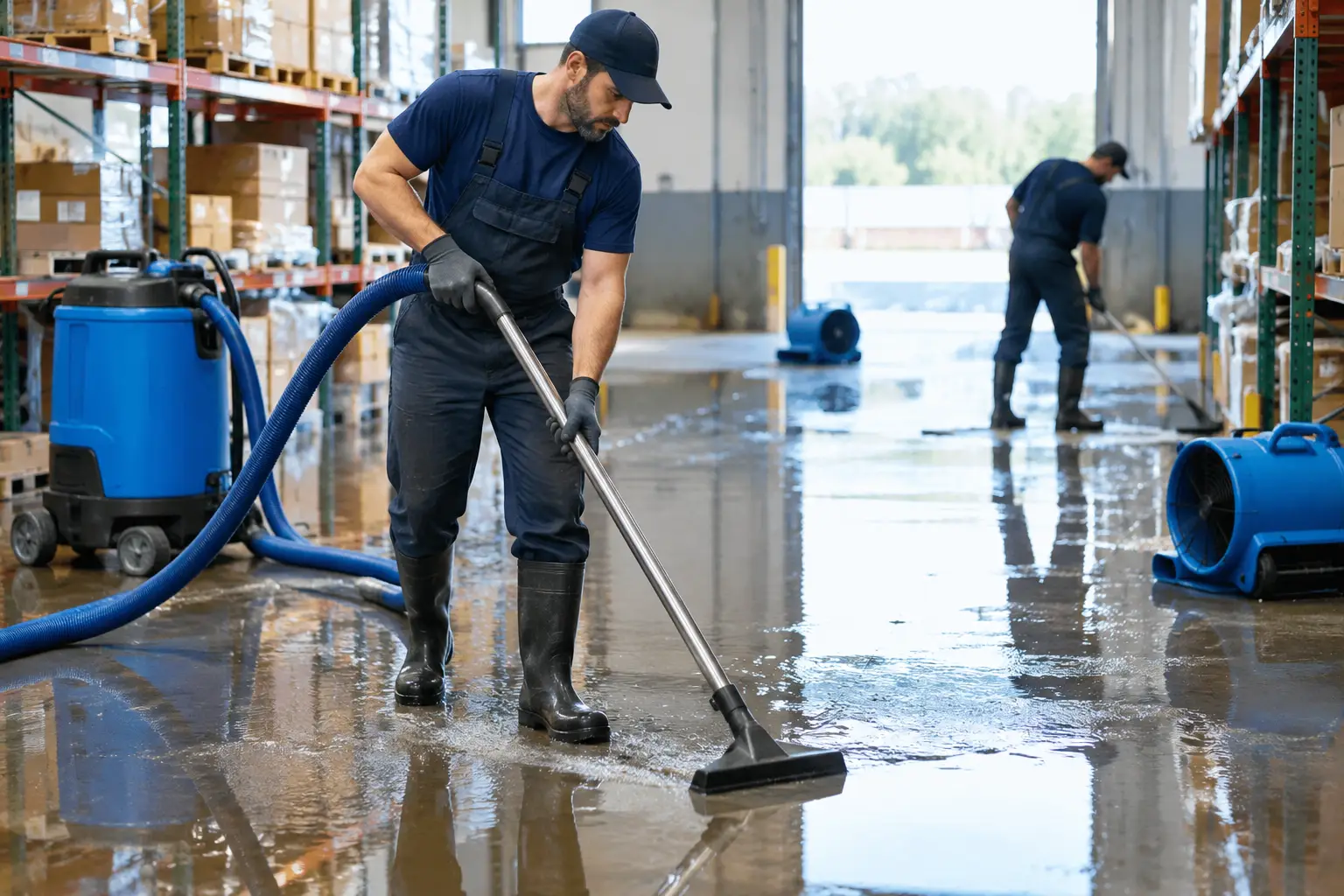
Fast extraction reduces the amount of water that can migrate into walls, under flooring, or beneath heavy storage systems. Commercial extraction equipment is designed to remove large volumes of water efficiently, but the work should be guided by an inspection of the entire affected footprint.
Moisture meters and thermal imaging help identify hidden wet areas behind wall coverings, inside insulated partitions, beneath vinyl or carpeted office flooring, and around dock doors. This documentation helps prevent the common mistake of drying only the center of the flood area while moisture remains trapped at the edges.
Strategic drying and humidity control
After extraction, drying equipment must be sized and positioned for the building, materials, and conditions involved. Air movers, commercial dehumidifiers, and controlled airflow work together to reduce moisture in structural materials and the surrounding air.
A large warehouse may need drying zones rather than one broad setup. Separating affected and unaffected spaces can help protect dry inventory, maintain safer indoor conditions, and allow portions of the facility to remain operational where appropriate. The right plan depends on the water source, the layout, the type of inventory, and whether the HVAC system was affected.
Cleaning, disinfection, and odor control
When floodwater is contaminated, cleanup must include proper cleaning and disinfection of recoverable hard surfaces. This is especially significant in warehouses that store food-related products, medical supplies, paper goods, textiles, or customer-owned inventory. The restoration team should identify materials that can be cleaned and those that cannot be returned to a safe condition.
Odors are another warning sign that should not be ignored. A damp, musty smell may indicate moisture remains in concealed materials. Removing the odor without resolving the moisture source only delays a larger problem.
Repairs and reconstruction
Once the structure is dry and clean, repairs may be needed to restore safe operations. Depending on the loss, this can include replacing drywall or insulation, repairing baseboards and doors, restoring flooring, rebuilding damaged office areas, repairing roof components, or addressing water-damaged electrical and mechanical systems.
Working with one restoration provider from emergency mitigation through reconstruction can reduce handoffs and confusion. It also gives property managers a clearer record of what was damaged, what was removed, what was dried, and what was rebuilt.
Protecting inventory without creating a bigger loss
Inventory decisions need to be made quickly, but not blindly. Move dry, unaffected products away from the impacted area first, provided it can be done safely. Elevate boxed goods and pallets where possible, and separate damaged items from undamaged stock to avoid spreading contamination or creating confusion during the insurance review.
Do not assume every wet item is a total loss, and do not assume every item can be saved. Sealed nonporous products may be recoverable after proper evaluation. Cardboard packaging, paper products, upholstered items, untreated wood, and absorbent materials are far more difficult to restore, particularly after contaminated water exposure.
Photograph inventory in place before disposal whenever possible. Capture product labels, pallet counts, lot numbers, water lines, damaged packaging, and the overall scope of the affected storage area. Keep damaged goods available for the insurer’s review unless they create a safety or sanitation concern. If immediate disposal is necessary, document why, with photographs and written notes.
Documentation supports a smoother insurance claim
Flood damage creates pressure to reopen fast, but clear documentation protects the business throughout the claim and repair process. A good record establishes the source of loss, the extent of damage, the actions taken to prevent further harm, and the cost of restoring the facility.
Maintain a timeline that notes when the issue was discovered, when the source was stopped, when cleanup began, and when each area was returned to service. Save photos, videos, invoices, equipment logs, inventory records, and communications with vendors or the property owner. If operations are disrupted, track extra expenses such as temporary storage, emergency shipping, equipment rental, or labor required to relocate stock.
Professional mitigation documentation can be particularly valuable because drying decisions are based on measured conditions, not guesswork. Daily moisture readings, equipment records, and photographs show the work completed and help support a well-documented claim.
When can warehouse operations resume?
The answer depends on the type of water, affected materials, the scale of the loss, and the nature of the business. A small clean-water incident limited to a concrete loading area may allow partial operations to continue after extraction and safety checks. A sewage backup in storage or employee areas may require a much more controlled cleanup and clearance process.
Reopening should not be based on whether the floor looks dry. The building should be evaluated for electrical safety, structural concerns, remaining moisture, sanitation needs, and access routes for employees and forklifts. If office spaces, restrooms, break rooms, or critical mechanical systems were affected, those areas need separate attention before they are placed back in service.
Reduce the chance of the next loss
After recovery, use the incident to identify weak points in the facility. Check roof drains and gutters, inspect dock door seals, test sump pumps, review sprinkler and plumbing maintenance, and make sure employees know where emergency shutoff valves are located. Keep inventory elevated where practical, especially near exterior walls, floor drains, and areas with a history of water entry.
A written response plan also helps. It should identify who contacts emergency restoration support, who communicates with the insurer and property owner, where inventory can be moved, and how staff will be notified after hours. In a real emergency, those decisions are much easier when they were made before water reached the floor.
GEM Disaster Recovery Corp provides 24/7 emergency response for commercial water damage in El Paso, from immediate stabilization and drying through reconstruction and insurance coordination. When a warehouse floods, a calm, documented response gives your people and your operation the best chance to recover with confidence.