Top Signs of Hidden Water Damage in Your Property
A water leak does not have to flood a room to cause expensive damage. A slow drip behind a wall, under a sink, or above a ceiling can keep working for weeks before anyone sees it. Knowing the top signs of hidden water damage can help homeowners, property managers, and business owners act before a small repair becomes a mold problem, structural issue, or insurance claim.
In El Paso, water damage can be especially deceptive. Dry outdoor conditions may make indoor moisture feel less urgent, but a concealed plumbing leak, roof failure, appliance line leak, or HVAC issue can still saturate building materials quickly. The goal is not to panic at every discoloration or odor. It is to recognize patterns, investigate early, and bring in qualified help when moisture may be trapped where you cannot see it.
10 Top Signs of Hidden Water Damage
1. Stains that grow or change color
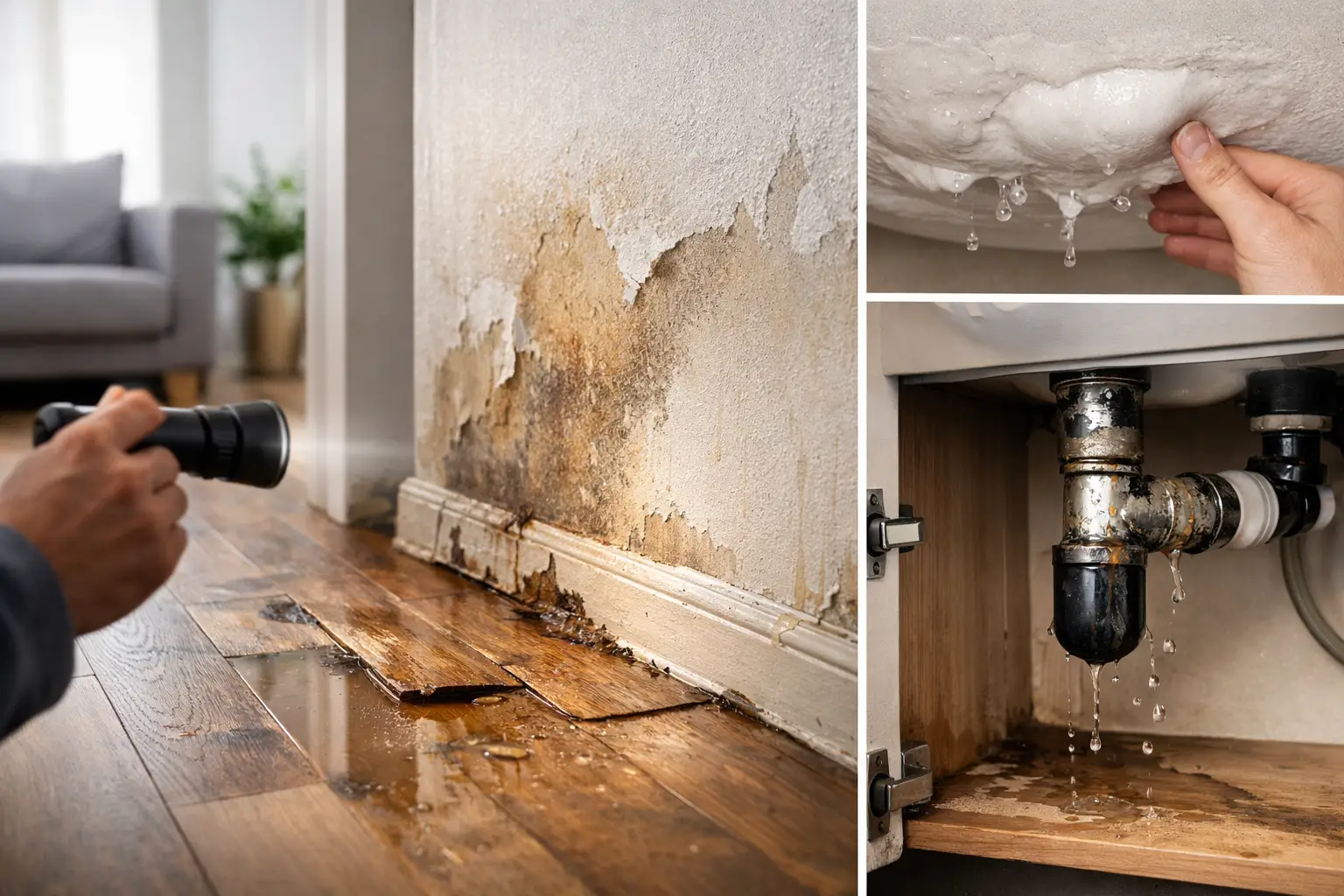
A yellow, brown, or copper-colored spot on a ceiling or wall is one of the clearest warnings of moisture intrusion. It may appear after a storm, beneath an upstairs bathroom, or near a roofline. Even if the stain feels dry when you touch it, the source may still be active above or behind the surface.
Watch for stains that expand, darken after rain, or return after being painted. Painting over the mark may improve appearance temporarily, but it does not stop the leak or dry the affected materials.
2. Peeling paint, bubbling drywall, or loose wallpaper
Paint and wallpaper need a stable, dry surface to stay bonded. When moisture enters drywall or plaster, it can cause paint to bubble, crack, peel, or feel soft. Wallpaper may curl at seams or pull away from the wall.
These signs can also come from age, poor surface preparation, or high bathroom humidity. The difference is location and repetition. If damage is concentrated near plumbing fixtures, windows, exterior walls, or ceilings, hidden moisture should be considered.
3. A musty smell that cleaning does not solve
A persistent musty odor is often an early clue that moisture has been present long enough for microbial growth to begin. You may notice it most when entering a closed room, opening a cabinet, walking into a closet, or running the HVAC system.
Air fresheners, carpet shampoo, and open windows can mask the smell for a while, but they do not remove the source. The odor may come from damp carpet padding, wet insulation, wall cavities, crawl spaces, or areas beneath flooring. If the smell returns, it deserves a professional moisture assessment.
4. Floors that warp, buckle, or feel different underfoot
Wood and laminate flooring can swell, cup, separate, or lift when exposed to water. Tile may loosen, and vinyl flooring can develop bubbles or soft spots. In some cases, the most noticeable change is simply a floor that feels uneven, spongy, or unusually cold.
A leaking refrigerator line, dishwasher connection, toilet seal, or slab plumbing issue may spread water beneath flooring without creating a visible puddle. Do not assume the problem is limited to the surface material. Moisture can affect subflooring and adjacent walls as well.
5. Drywall that feels soft, swollen, or crumbly
Drywall acts like a sponge. Once it absorbs enough water, it can swell, weaken, and lose its structural integrity. Press gently around suspicious stains, especially near baseboards and below windows. A wall that feels soft, damp, bowed, or fragile may have concealed water damage.
Avoid cutting into a damaged wall yourself if there is a chance of electrical wiring, mold growth, or contaminated water. Proper restoration begins with locating the source, documenting the affected area, and drying materials safely.
6. Unexplained changes in your water bill
A sudden rise in water usage can signal a hidden plumbing leak, even when every faucet appears to be off. Compare your bill with prior months and consider whether household routines have actually changed. A running toilet, leaking supply line, or pipe leak below a slab can waste a surprising amount of water.
You can also check your water meter when no water should be in use. If it continues to register flow, contact a plumber or water damage professional promptly. The exact next step depends on the source, but waiting can allow moisture to travel farther through the structure.
7. Mold spots or repeated mildew around the same area
Small mold or mildew spots near a shower may be related to everyday humidity and inadequate ventilation. Repeated growth in the same location, however, can point to a deeper problem. Look closely around baseboards, window frames, under sinks, behind appliances, and inside cabinets.
Visible growth is not always the full extent of the issue. Mold may grow behind drywall, beneath flooring, or inside insulation where moisture has remained undetected. Because disturbing contaminated materials can spread spores, professional inspection is often the safest choice when mold keeps returning or covers more than a small, isolated area.
8. Ceiling cracks, sagging, or a bulging area
A sagging or bulging ceiling is an urgent warning sign. Water may be collecting above the drywall from a roof leak, broken pipe, overflowing fixture, or air-conditioning condensate issue. The ceiling can fail under the weight of trapped water.
Keep people away from the affected area, move valuables if it is safe to do so, and avoid placing yourself directly beneath the bulge. If water is near lights, outlets, or electrical equipment, use extra caution and seek emergency assistance. This is not a wait-and-see situation.
9. Rust, corrosion, or staining around fixtures and appliances
Rust on water heater fittings, supply valves, washing machine connections, or the base of appliances may indicate a slow leak. Corrosion under a bathroom sink or around a toilet connection can also be easy to overlook because it develops gradually.
Inspect these areas periodically with a flashlight. Look for mineral buildup, damp cabinet bottoms, warped wood, or discoloration around hoses and valves. A small repair today may prevent a larger water mitigation project later.
10. A room that stays humid or feels unusually cool
When a room feels clammy, humid, or cooler than the rest of the property, hidden moisture may be affecting the space. This can happen around exterior wall leaks, poorly draining HVAC condensate lines, or water trapped in carpet and padding.
Humidity alone does not confirm water damage. El Paso weather, cooking, shower use, and HVAC performance can all influence indoor conditions. But when elevated humidity appears with odor, staining, warped materials, or mold, the case for inspection becomes much stronger.
Where Hidden Water Damage Often Starts
The source is not always where the visible damage appears. Water follows gravity and can travel along framing, pipes, wiring paths, and subflooring before it becomes noticeable. That is why a ceiling stain may originate from a bathroom several feet away, or a damaged baseboard may be connected to a leak inside a nearby wall.
Common trouble areas include appliance supply lines, water heaters, toilets, shower pans, under-sink plumbing, roof penetrations, windows, irrigation connections, and HVAC condensate drains. Commercial properties may also face risks around sprinkler systems, break rooms, restrooms, mechanical rooms, and roof drains.
Property managers should take reports of odors, stains, or soft flooring seriously, even if the area appears minor. Fast documentation and investigation can protect tenants, reduce business disruption, and establish a clear record for ownership and insurance coordination.
What to Do When You Suspect a Hidden Leak
First, stop the water source if you can identify it safely. Shut off the local fixture valve or the main water supply for an active plumbing leak. If the damage may involve electricity, do not touch wet outlets, appliances, or electrical panels.
Next, photograph visible conditions before moving damaged items. Note when you first noticed the problem, whether it followed rain or appliance use, and any changes in odor, flooring, or utility bills. This information can help identify the cause and support an insurance claim.
Then, arrange a professional inspection as soon as possible. Moisture meters, thermal imaging, controlled removal, and targeted drying equipment can identify and address water that ordinary visual checks miss. The right scope depends on how long the leak has been active, what materials are wet, and whether mold or contaminated water is involved.
Why Fast Drying Matters
Water damage is not only about what looks wet. Materials such as drywall, insulation, carpet padding, cabinetry, and subflooring can hold moisture long after the surface feels dry. Without thorough drying, those materials may deteriorate or support mold growth.
Professional water mitigation focuses on stabilizing the property first: stopping the source, extracting water where needed, measuring moisture, setting drying equipment, and monitoring progress. If repairs are required afterward, coordinated reconstruction helps return the property to a safe, finished condition without forcing you to manage several separate vendors.
For El Paso property owners facing a suspected leak or visible damage, GEM Disaster Recovery Corp can help assess the situation, document affected areas, and guide the next steps with care. A quick response to an early warning sign can protect far more than walls and floors - it can protect the comfort, safety, and continuity of the place you depend on.