Structural Drying After Water Damage Explained
A floor can look dry long before the structure underneath is safe. That gap between what you can see and what moisture is still doing behind walls, under flooring, and inside framing is why structural drying after water damage matters so much. If the drying process is rushed, skipped, or handled with the wrong equipment, the result is often warped materials, lingering odors, mold growth, and repairs that become far more expensive than they needed to be.
What structural drying after water damage actually means
Structural drying is the controlled process of removing moisture from the building materials that make up your property. That includes drywall, insulation, wood framing, subfloors, concrete, trim, and other surfaces that absorb water after a leak, overflow, storm intrusion, or plumbing failure.
This is different from simply cleaning up standing water. Extraction removes what is visible and accessible. Structural drying addresses what soaked in. In many cases, the most serious moisture is not on the surface at all. It is trapped in wall cavities, beneath baseboards, under cabinets, or inside materials that feel only slightly damp from the outside.
For homeowners and property managers, this distinction is where many problems begin. A room may seem usable again within a day or two, but if moisture readings are still elevated inside the structure, deterioration can continue quietly. That is why professional drying is based on measurement and monitoring, not guesswork.
Why speed matters more than most people expect
Water damage changes fast. Within hours, moisture spreads through porous materials and can move beyond the original source area. Drywall wicks upward, wood swells, adhesives weaken, and insulation can hold moisture deep inside wall systems. The longer this sits, the less likely it is that materials can be saved.
In El Paso, people sometimes assume the dry climate will solve the problem naturally. It can help in some situations, but it is not a replacement for proper mitigation. Indoor moisture behaves differently when it is trapped inside assemblies or sealed beneath flooring. Air conditioning can also create conditions where moisture lingers longer than expected.
Fast action improves the chances of restoring materials instead of replacing them. It also helps reduce the risk of secondary damage such as mold growth, staining, odor, and structural weakening. That matters whether you are protecting a family home, a rental property, or a commercial space that needs to reopen quickly.
The real process behind structural drying after water damage
Professional drying is not just setting fans in a room and waiting. It starts with inspection and moisture mapping. Technicians identify the source of the loss, the materials affected, and how far water has traveled. Moisture meters, thermal imaging, and hygrometers help create a clear picture of what is wet and what is drying at the proper rate.
Once the affected areas are mapped, standing water is extracted if needed. This step is critical because no drying system can work efficiently if excess water is still present. After extraction, the drying plan is built around the type of structure, the category of water involved, and the materials that can reasonably be salvaged.
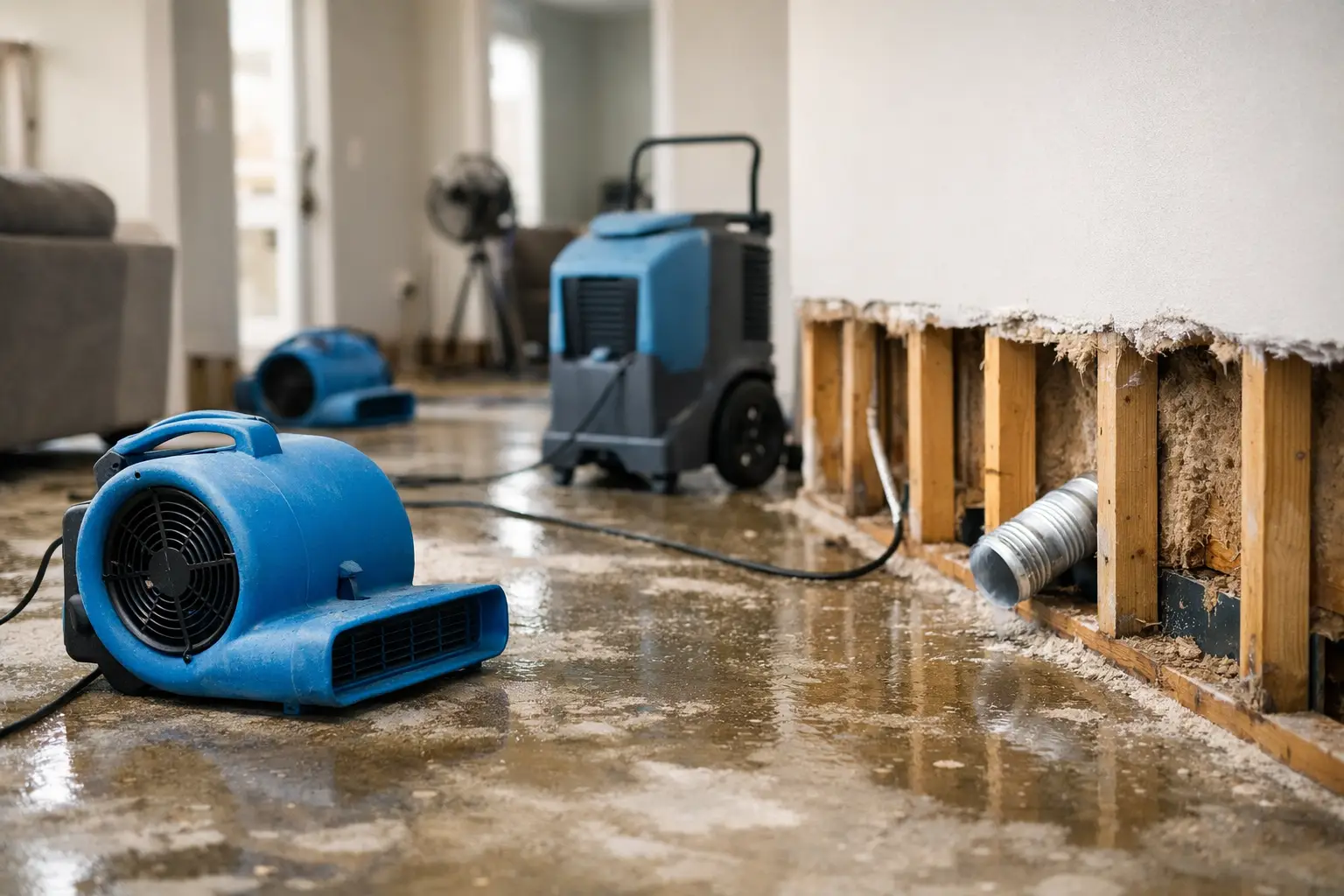
Air movers are then placed to increase evaporation from wet surfaces. Dehumidifiers remove that moisture from the air so it does not settle back into the structure. In some cases, specialty equipment is used for hardwood floors, wall cavities, crawl spaces, or dense materials like concrete and plaster.
Containment may also be necessary. If one section of a building is drying while another is unaffected, isolating the work area helps control temperature, humidity, and airflow. It can also protect occupied areas and improve efficiency.
The process does not end once equipment is installed. Daily or scheduled monitoring is what keeps drying on track. Technicians adjust equipment, record moisture readings, and compare progress against expected drying goals. If readings stop improving, the plan may need to change. Sometimes that means opening a wall cavity, removing saturated insulation, or lifting portions of flooring that cannot dry effectively in place.
Drying is not the same in every loss
No two water events are exactly alike. A clean water line break in a living room is different from a roof leak that has slowly soaked insulation for weeks. A toilet overflow in a commercial restroom raises different sanitation concerns than an appliance supply line failure in a kitchen.
The type of water matters because it affects what can be saved. Clean water losses may allow for more restoration if handled quickly. Gray water and black water events often require more aggressive removal of porous materials for health and safety reasons. The age of the damage matters too. Materials that might have been salvageable on day one may not be by day three.
Construction type also changes the drying strategy. Older homes, newer builds, slab foundations, multi-unit properties, and commercial spaces all behave differently. A good drying plan accounts for those differences rather than applying the same setup to every job.
Common mistakes that make water damage worse
One of the biggest mistakes is assuming visible dryness means the problem is over. Paint, tile, laminate, and finished surfaces can hide moisture for days. Without proper testing, it is easy to miss what is happening underneath.
Another common issue is relying on household fans or opening windows without a plan. More airflow is not always better. If humidity rises or wet air is pushed into unaffected areas, drying can slow down or spread the problem. In some situations, poor airflow patterns can even create uneven drying that damages certain materials further.
Delaying professional help is another costly choice. People often wait because they are hoping the area will dry on its own or because they are unsure whether the loss is serious enough. Unfortunately, by the time swelling, odor, or staining appears, hidden damage is usually already well underway.
There is also the insurance side to consider. Thorough documentation, moisture records, and a clearly managed mitigation process can make a major difference when you are trying to show what was affected and why certain work was necessary.
When materials can be saved and when removal is smarter
Many property owners understandably want to save as much as possible. In many cases, that is absolutely the right goal. Proper structural drying can preserve framing, subfloors, drywall in select situations, cabinetry, and other building materials that would otherwise be torn out too quickly.
At the same time, saving everything is not always the best outcome. Some materials are too saturated, too contaminated, or too slow to dry in place. If insulation has collapsed, if drywall has wicked too far, or if flooring is trapping moisture below the surface, targeted removal may be the safer and more cost-effective path.
That is where experience matters. The right decision is not the most aggressive one or the cheapest one. It is the one that protects the structure, supports a healthy indoor environment, and avoids repeat problems later.
What homeowners and property managers should expect
A professional restoration team should explain what is wet, what equipment is needed, how long drying may take, and what changes may come as monitoring continues. You should not be left guessing about whether the process is working.
You should also expect some disruption. Equipment can be loud, rooms may be partially inaccessible, and temperatures may be adjusted to support drying. For occupied homes and businesses, that can be inconvenient. Still, a few days of controlled disruption is usually far better than weeks of repairs caused by incomplete mitigation.
If reconstruction is needed after drying, a company that can manage the project from emergency response through rebuild can simplify the process considerably. Instead of coordinating separate vendors, property owners can move from stabilization to restoration with a clearer timeline and less stress. For many families and businesses, that continuity matters just as much as the technical work itself.
GEM Disaster Recovery Corp sees this every day in El Paso - the sooner structural drying begins, the more options property owners usually have.
Why proper drying protects more than the building
Water damage is never just about materials. It disrupts routines, creates uncertainty, and can put homes or businesses in limbo. Proper structural drying helps protect the physical structure, but it also restores a sense of control. When the process is handled quickly, carefully, and with clear communication, people can make informed decisions instead of reacting to one surprise after another.
If you are dealing with a recent leak, flood, or plumbing failure, do not judge the damage by appearance alone. Hidden moisture is often the part that costs the most later. A measured, professional drying plan gives your property the best chance at a safe recovery and a cleaner path toward getting life back to normal.