Soot Cleanup After House Fire: What to Do
The first thing many property owners notice after the flames are out is not the burned material - it is the black film left on walls, ceilings, vents, cabinets, and furniture. That residue spreads farther than most people expect, and soot cleanup after house fire damage is rarely a simple wipe-down job. Soot is acidic, easily smeared, and often tied to smoke odors, hidden contamination, and damage that keeps getting worse if cleanup is delayed.
When you are standing in a damaged home or trying to reopen a business, the goal is not just to make the space look better. The real priority is to stabilize the property, protect what can still be saved, and clean each surface with the right method so the damage does not set in deeper.
Why soot cleanup after house fire damage needs a careful plan
Soot is made up of very fine particles created when materials do not burn completely. In a house fire, that can include wood, plastics, insulation, fabrics, paper goods, and synthetic finishes. Each one can leave behind a slightly different residue, which is why one room may respond to cleaning while another needs specialized restoration.
This is also where well-meaning DIY efforts can make things worse. Dry soot can be smeared into paint, upholstery, or unfinished wood with a single pass of a wet rag. Some surfaces etch quickly. Metals can corrode. Electronics can hold residue inside components even when the outside looks clean. If the property was also affected by firefighting water, the restoration plan has to account for moisture damage and mold risk at the same time.
A professional response starts by identifying what burned, how far the smoke traveled, which materials are salvageable, and whether the property is safe to enter for extended work. That assessment shapes everything that follows.
What to do first after a fire
Once the fire department says the property is safe to access, the next steps should focus on safety and damage control. If utilities were affected, they may need to remain off until the structure is inspected. Soot particles can irritate the eyes and lungs, so basic protective gear matters even for short entry.
Try not to touch affected surfaces more than necessary. Walking through the property, opening cabinets, sitting on furniture, or brushing against walls can spread residue to cleaner areas. If there is active roof damage, broken windows, or exposed openings, emergency board-up or tarping may be needed to keep weather, debris, and unauthorized entry from making a bad situation worse.
Documentation is just as important as cleanup. Take clear photos and video before moving items whenever possible. Insurance carriers often need a record of visible damage, affected rooms, contents, and structural conditions. A restoration contractor that understands insurance coordination can help organize that process so you are not trying to manage cleanup and paperwork separately.
Which materials can be cleaned and which may need replacement
One of the hardest parts of soot cleanup after house fire loss is accepting that not everything can or should be saved. The answer depends on the type of material, the severity of the fire, how long the residue sat, and whether the item absorbed smoke odors.
Hard, non-porous surfaces such as sealed tile, glass, and some metal surfaces are often good candidates for cleaning. Painted drywall, cabinetry, countertops, and finished wood may also be restorable, but only if the residue has not permanently stained or etched the finish. Upholstery, mattresses, insulation, acoustic materials, and some soft contents are more complicated because soot and odor can penetrate below the surface.
This is where experience matters. Replacing too quickly can increase claim costs unnecessarily, but trying to save heavily contaminated materials can waste time and leave odor behind. Good restoration work is not about cleaning everything at all costs. It is about making sound decisions room by room and material by material.
How professional soot removal is typically handled
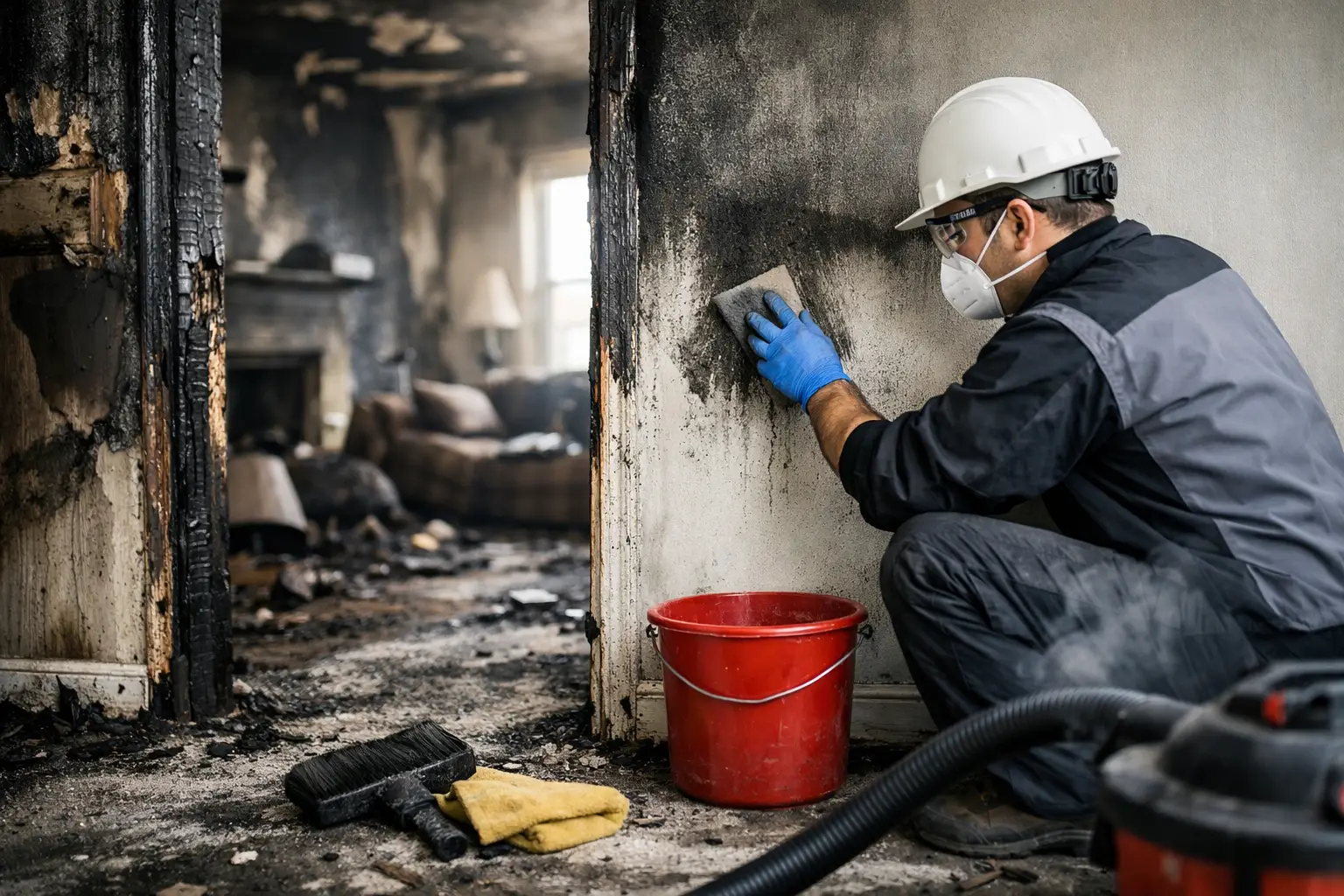
The cleanup process usually begins with containment and air filtration. That helps control loose particles and limits cross-contamination as crews work through the structure. In many fire losses, HEPA-equipped equipment is used to capture fine particulates from the air before detailed surface cleaning begins.
Dry removal methods often come first. Specialized sponges and HEPA vacuuming can lift soot from certain surfaces without grinding it in. After that, technicians choose cleaning agents and methods based on the residue and the material underneath it. A kitchen fire, for example, may leave greasy soot that behaves very differently from dry soot produced by a fast-burning paper or wood fire.
Odor treatment is another major part of the job. If smoke odor remains after visible residue is removed, the property is not truly restored. Thermal fogging, odor counteractants, and other deodorization methods may be used depending on the source and severity of the smoke. HVAC systems also need attention because soot in ductwork can continue circulating contamination and smell throughout the building.
In some losses, demolition becomes part of the cleanup. If drywall, insulation, flooring, or structural materials are too damaged to restore, removing them is the safest path forward. This can feel like a setback, but controlled demolition is often what makes complete restoration possible.
The most common mistakes property owners make
The biggest mistake is trying to clean soot with everyday household products before the damage is evaluated. Standard sprays, paper towels, and water can spread residue, strip finishes, and lock stains into porous materials. Vacuuming with a regular household vacuum can also push fine particles back into the air.
Another common issue is waiting too long. Soot does not just sit on a surface harmlessly. It can discolor paint, corrode metal fixtures, stain grout, damage plastics, and leave odors that become harder to remove over time. The longer the delay, the more likely a cleaner restoration turns into a deeper repair project.
People also tend to underestimate hidden damage. A room that did not burn may still have smoke residue in closets, insulation cavities, vents, and behind contents. If only the visible areas are treated, the property may continue to smell smoky long after cleanup appears finished.
Why insurance support matters during fire restoration
Fire claims often involve multiple layers of damage at once - fire, smoke, soot, water, odor, and sometimes structural instability. That creates a lot of moving parts for homeowners and property managers who are already under stress. Having one restoration team document conditions, provide scope details, and coordinate with the insurance process can reduce delays and confusion.
Clear documentation helps support decisions about what can be cleaned, what must be removed, and what reconstruction is needed next. It also creates a more orderly path from emergency response to mitigation to repairs. For many property owners, that continuity is just as valuable as the cleaning itself.
A full-service company like GEM Disaster Recovery Corp can be especially helpful when soot removal is only one phase of a larger recovery. If the same team can stabilize the structure, clean the damage, address water issues, and move into reconstruction, you avoid the added stress of handing the project off to multiple vendors.
When to call for professional soot cleanup after house fire loss
If the fire affected more than a very small, contained area, professional help is the safest choice. The need becomes even more urgent when soot is widespread, odors are strong, HVAC systems were exposed, contents are heavily affected, or firefighting water is present. Commercial properties should also move quickly because delayed cleanup can disrupt operations, affect occupants, and increase business losses.
The right restoration partner will explain what can be saved, what needs to be removed, and what the next few days should look like. That clarity matters. After a fire, people do not just need technical work. They need steady guidance, fast action, and a team that treats the property with care.
A fire can leave a building looking still and silent, but the damage keeps moving until it is properly addressed. Acting quickly on soot cleanup gives you the best chance to protect the structure, recover valuable contents, and move one step closer to feeling at home again.