Smoke Damage Health Risks After a House Fire
A fire can be out, the visible flames gone, and your property still unsafe to occupy. Smoke damage health risks do not end when the fire department leaves. Fine soot, chemical residue, and odors can remain on walls, furniture, clothing, and inside HVAC systems, where they may continue to affect the air your family, employees, or tenants breathe.
For homeowners and property managers in El Paso, the first priority after a fire is protecting people. The second is stabilizing the property quickly enough to prevent smoke residue from spreading deeper into materials or circulating through the building. Knowing what to watch for can help you make calm, informed decisions during a stressful time.
Why smoke residue can affect health
Smoke is not one simple substance. It is a mixture of tiny particles, gases, and chemicals created by whatever burned. Wood, paper, fabric, plastics, insulation, electronics, paint, and household cleaning products all produce different contaminants when exposed to fire. That is why a small kitchen fire can leave behind a different cleanup challenge than a garage, electrical, or commercial fire.
The smallest soot particles can settle in places that look clean at first glance. They may collect on upholstered furniture, inside cabinets, in carpet fibers, behind walls, and throughout ductwork. When disturbed, those particles can become airborne again. Residue can also be acidic or oily, which means it may irritate skin and airways while continuing to stain or corrode surfaces.
Some health effects happen immediately, especially during or shortly after a fire. Others may become noticeable after returning to a smoke-damaged space. The level of risk depends on the size of the fire, what burned, how long the smoke was present, how well the area was ventilated, and each person's health.
Common smoke damage health risks and symptoms
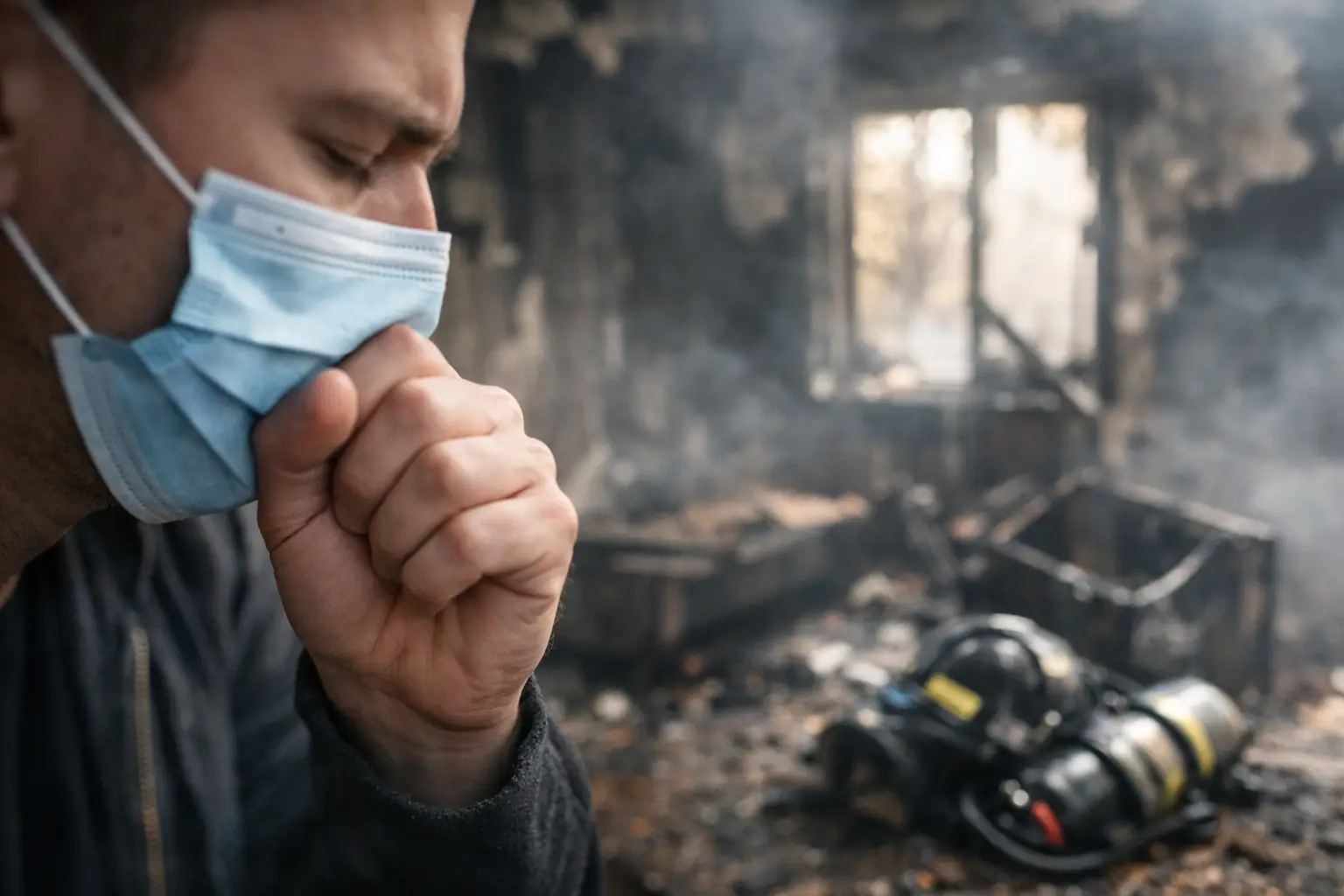
Short-term exposure to smoke residue may cause burning or watery eyes, a sore throat, coughing, congestion, headaches, nausea, or skin irritation. People with asthma or allergies may notice wheezing, chest tightness, or symptoms that are harder to control than usual.
Lingering smoke odor is not merely an inconvenience. Odor can be a sign that smoke particles or vapors remain in porous materials, even if visible soot has been wiped away. At the same time, odor alone does not measure the exact level of exposure. A property needs a professional assessment based on the fire conditions, affected materials, and the extent of contamination.
Carbon monoxide is a serious concern during an active fire or when fuel-burning equipment is damaged. It is generally not the primary long-term concern once the fire is fully extinguished and the building has been cleared, but anyone experiencing confusion, severe headache, dizziness, chest pain, or trouble breathing should get emergency medical help immediately. Do not assume symptoms are simply stress or a lingering smell.
People who need extra protection
Smoke exposure can affect anyone, but some people should avoid re-entering a damaged property until it has been evaluated and cleaned. This includes infants and children, older adults, pregnant people, anyone with asthma, COPD, heart disease, or compromised immunity, and pets.
For property managers and employers, this also means considering employees, visitors, and tenants who may have health conditions you do not know about. Opening a business or rental unit before it is properly stabilized can expose others to avoidable risk and create additional liability.
What makes post-fire cleanup risky
It is understandable to want to start cleaning right away. After a fire, people often try to save photographs, clothing, business files, and furniture before the damage gets worse. But ordinary household cleaning methods can spread soot instead of removing it.
Dry wiping can push fine particles into surfaces. Vacuuming with a standard vacuum can release particles back into the air. Mixing cleaning products in an attempt to remove odor may create fumes or damage materials. Even moving smoke-damaged belongings through unaffected rooms can transfer contamination to areas that were originally safe.
Smoke residue from burned synthetic materials, appliances, or electronics can require particularly careful handling. Professionals use appropriate protective equipment, containment, HEPA filtration, specialized cleaning methods, and deodorization strategies based on the materials affected. The goal is not to cover an odor. It is to remove residue safely and prevent it from moving through the property.
What to do before entering a smoke-damaged property
Wait for fire officials to say it is safe to enter. Structural damage, electrical hazards, wet conditions from firefighting efforts, and concealed hot spots can remain after a fire. If the structure is cleared for limited entry, keep that visit brief and avoid bringing children, pets, or vulnerable family members inside.
Before touching contents, document the damage for your insurance carrier with photos and video if it is safe to do so. Avoid turning on HVAC equipment, ceiling fans, or electrical appliances until they have been checked. Air movement can distribute soot through clean areas and may worsen contamination in ductwork.
If you must retrieve essential belongings, wear a properly fitted respirator suitable for particulate exposure, gloves, long sleeves, and closed-toe shoes. A loose cloth mask is not reliable protection against fine soot. Do not eat, drink, smoke, or take medications inside the affected space, and wash hands thoroughly after leaving.
Four immediate steps can make a meaningful difference:
- Keep people out of affected areas until the property is assessed.
- Prevent unnecessary airflow by leaving HVAC systems and fans off.
- Avoid cleaning soot with household vacuums, dry rags, or scented sprays.
- Arrange professional emergency stabilization, including board-up or roof protection when needed.
How professional restoration reduces health concerns
Proper smoke restoration begins with identifying where contamination traveled. A trained restoration team inspects visible fire damage as well as less obvious areas such as HVAC components, insulation, cabinets, wall cavities, and adjoining rooms. The cleanup plan should be based on the type of residue and the materials involved, not a one-size-fits-all approach.
Technicians may use containment barriers and air filtration to keep particles from spreading while work is underway. Nonporous surfaces can often be cleaned using residue-specific methods. Porous items such as carpet, upholstery, insulation, and unfinished wood may require specialized cleaning, deodorization, or removal when contamination cannot be safely resolved.
HVAC inspection matters because ducts and mechanical components can carry smoke particles to rooms that were never near the flames. Simply replacing an air freshener or changing a filter does not address contamination already settled in the system. A restoration plan should account for the entire path smoke traveled.
In some cases, reconstruction is necessary after cleaning and removal. Damaged drywall, flooring, cabinetry, insulation, or roofing may need replacement to restore a healthy, functional property. This is where a single restoration partner can reduce stress by coordinating mitigation, documentation, repairs, and insurance communication rather than leaving you to manage separate vendors.
GEM Disaster Recovery Corp provides 24/7 emergency response for El Paso property owners who need help stabilizing, cleaning, and rebuilding after fire and smoke damage. With the right team involved early, you can protect the structure, preserve recoverable belongings, and create a safer path back to normal.
When a property may be ready to use again
A smoke-damaged home or business should not be considered ready simply because the walls look clean or the smell has faded. Re-entry decisions depend on the fire source, contamination level, materials affected, air handling systems, moisture damage from firefighting, and the scope of cleaning completed.
Ask clear questions before moving back in or reopening: What areas were affected? Were HVAC systems inspected? Which materials were cleaned, sealed, or removed? Has smoke odor been addressed at its source? What reconstruction remains? Detailed answers help homeowners, managers, and business owners make decisions with confidence.
After a fire, urgency matters, but rushing cleanup can create a second problem. Give the property the same care you would give the people inside it: stabilize it quickly, remove contamination correctly, and do not settle for a space that only appears clean. A healthy recovery begins with a property that is truly safe to return to.