Sewage Cleanup Steps to Protect Your Property
A sewage backup is more than a water problem. It can introduce bacteria, viruses, parasites, and contaminated waste into the places where your family, tenants, employees, or customers live and work. Knowing the right sewage cleanup steps helps you protect people first, limit property damage second, and avoid a rushed decision that leaves contamination behind.
Whether the backup started in a single bathroom, a drain line, or a commercial restroom, treat the affected area as unsafe until it has been professionally cleaned and restored. The goal is not simply to make the space look dry. It is to remove contaminated materials, clean and disinfect the structure, verify conditions, and rebuild safely.
Sewage Cleanup Steps: What to Do First
The first minutes after a sewage loss can make a meaningful difference. Do not walk through standing sewage unless there is an immediate emergency. Keep children, pets, residents, customers, and unprotected staff out of the affected area. If sewage has reached electrical outlets, appliances, or a room with active power, avoid touching anything wet and turn off power only if you can do so safely from a dry location.
If the source is a toilet overflow and you can reach the shutoff valve without entering contaminated water, turn off the water supply behind or below the toilet. For a larger backup involving multiple drains, stop using sinks, showers, toilets, dishwashers, and washing machines. Continuing to send water into the plumbing system can force more contaminated water back into the property.
Call a licensed plumber when the blockage or broken line needs repair, and contact a qualified restoration company for emergency mitigation. These are related jobs, but they are not the same. A plumber addresses the plumbing failure. A restoration team handles the contamination, moisture, damaged building materials, cleaning, drying, and documentation needed to return the property to a safe condition.
Take photos and short videos from a safe distance before cleanup begins. Capture the source, affected rooms, visible water lines, damaged flooring, and impacted belongings. Keep receipts for emergency services and temporary accommodations if the property cannot be occupied. Early documentation can support the insurance process and establish the full scope of damage.
Why Sewage Requires a Different Cleanup Standard
Clean-water leaks may sometimes be addressed with limited drying if caught quickly. Sewage is different. Industry restoration standards generally classify sewage as Category 3 water, meaning grossly contaminated water. It may contain pathogens and other harmful contaminants, even when it appears clear.
That classification changes the cleanup approach. Porous materials that absorb sewage often cannot be reliably returned to a safe condition. Carpet, carpet pad, upholstered furniture, insulation, particleboard, paper products, and some drywall may need removal. The exact scope depends on how long the material was exposed, how far contamination traveled, the material itself, and whether it can be properly cleaned and disinfected.
Hard, nonporous surfaces such as tile, sealed concrete, metal, and some plastics may be cleanable when they are structurally sound. However, they still require thorough cleaning, disinfection, and drying. A quick pass with household disinfectant is not a substitute for removing contamination from cracks, seams, baseboards, subflooring, and wall cavities.
The Professional Sewage Cleanup Process
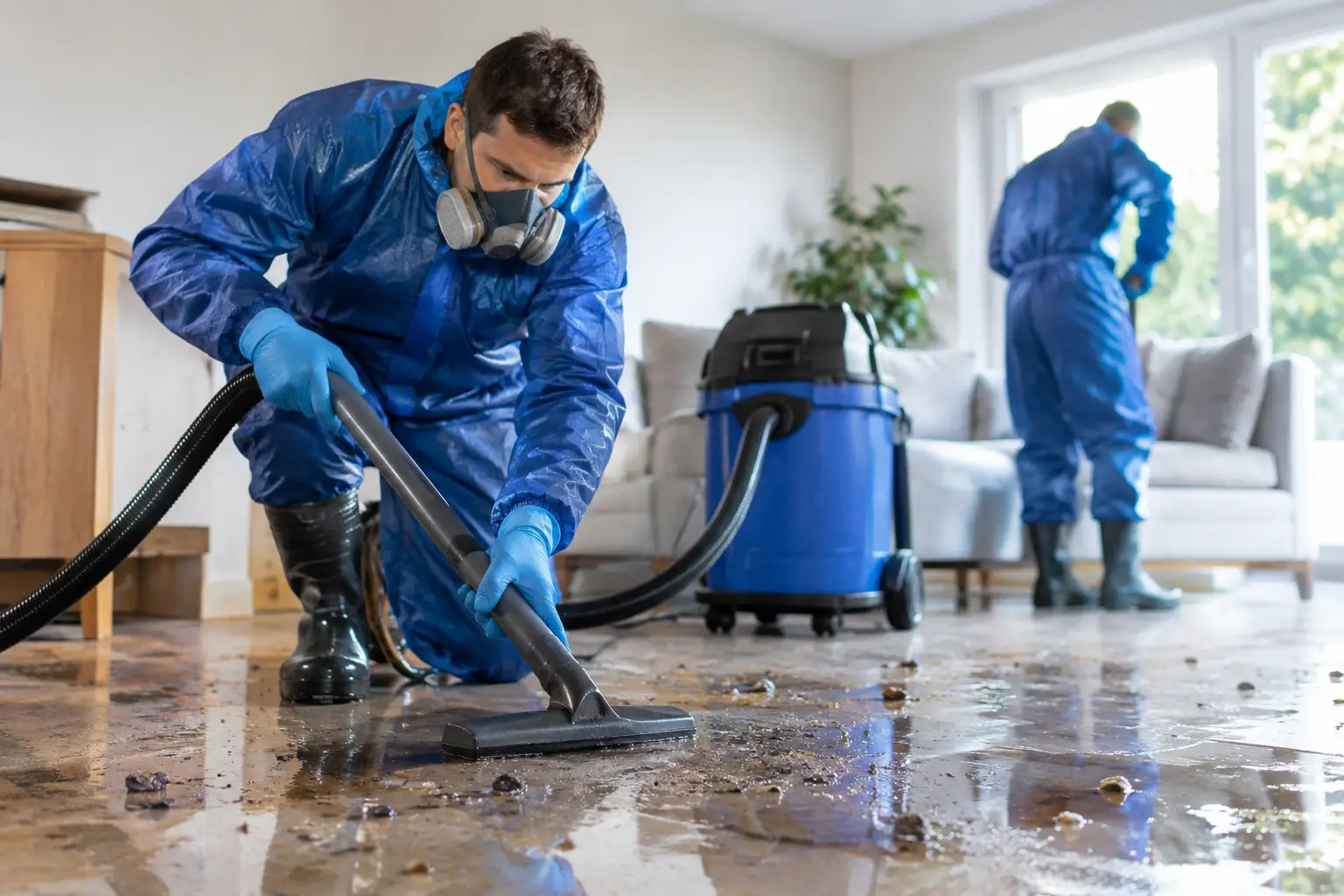
A qualified restoration crew begins by evaluating the affected space and establishing containment. Containment helps prevent contaminated water, aerosols, and debris from spreading into clean areas of the home or business. Technicians wear appropriate personal protective equipment and use controlled work practices throughout removal and cleaning.
1. Inspect the source and map the damage
The team identifies where the backup originated, which rooms are affected, and how far moisture has traveled. Moisture meters and other detection equipment can reveal water beneath flooring, behind walls, and inside building assemblies that may look dry on the surface. This assessment guides the cleanup plan and creates a record for property owners and insurers.
2. Remove sewage and contaminated debris
Standing sewage and wastewater are extracted using professional equipment designed for contaminated losses. The crew then removes unsalvageable materials and packages debris for proper disposal. In many cases, baseboards, portions of drywall, flooring, carpet pad, and insulation must be removed to access and clean the structure behind them.
This stage can feel discouraging because damage may look worse before it looks better. Controlled removal is often what prevents odor, mold growth, and hidden contamination from becoming a larger reconstruction issue later.
3. Clean, disinfect, and dry the structure
After removal, technicians clean affected structural surfaces to remove soil and organic matter before applying appropriate antimicrobial or disinfecting products. Cleaning comes first because disinfectants do not work effectively through visible grime or waste residue.
Professional drying equipment is then used to reduce moisture in the remaining structure. Air movement, dehumidification, and monitored drying are selected based on the materials, room size, humidity, and extent of the loss. El Paso's dry climate can help under some conditions, but it does not eliminate moisture trapped under floors or inside wall systems. Drying must be measured, not assumed.
4. Evaluate contents and salvage what is safe
Some belongings can be cleaned or restored, while others should be discarded. Nonporous items may be recoverable after appropriate cleaning and disinfection. Items such as mattresses, stuffed toys, unsealed wood, books, and heavily contaminated textiles are often difficult or unsafe to restore.
Do not bring contaminated belongings into unaffected rooms, vehicles, or storage areas before they have been evaluated. Moving items without controls can spread contamination well beyond the original loss.
5. Verify readiness for repairs
Once cleaning and drying are complete, the restoration team reviews moisture conditions, affected materials, and the scope of reconstruction. Repairs may include replacing drywall, insulation, flooring, cabinetry, trim, paint, or other finishes removed during mitigation. A company that can manage both restoration and rebuilding helps reduce handoffs during an already stressful time.
What Not to Do After a Sewage Backup
Property owners often want to act fast, which is understandable. Some common actions can create greater risk or make insurance documentation harder.
Do not use a standard household vacuum or wet/dry vacuum on sewage. These units are not designed for Category 3 contamination and can spread contaminants. Do not run fans before contaminated materials have been removed and the area has been properly contained. Air movement in the wrong stage can distribute particles into nearby rooms.
Avoid washing contaminated clothes, towels, or rugs with regular household laundry. Do not mix cleaning chemicals, especially bleach with ammonia-containing products, since dangerous fumes can result. Most importantly, do not assume an area is safe because the water has drained away. The contamination and moisture can remain in materials long after standing water is gone.
Insurance and Documentation Considerations
Coverage for sewer backups varies by policy. Some policies require separate sewer or water backup coverage, and coverage may depend on whether the event came from an interior plumbing issue, a drain backup, or an external sewer line problem. Notify your insurance carrier promptly, but do not delay emergency mitigation while waiting for an adjuster if the property remains unsafe.
Keep a simple record of when the loss was discovered, who was contacted, what emergency steps were taken, and which rooms and items were affected. Photos, videos, itemized inventories, and professional moisture and cleanup documentation can all help clarify the claim. A restoration provider experienced with insurance coordination can communicate the scope of work clearly while you focus on your household, tenants, employees, or customers.
When to Call for Immediate Help
Call for professional sewage cleanup right away when sewage has entered living areas, reached carpet or drywall, affected more than one drain, remained standing for any period of time, or involves a business with employees or customers. The same urgency applies if anyone who may have been exposed is very young, elderly, immunocompromised, or has a compromised wound.
For El Paso property owners, GEM Disaster Recovery Corp provides 24/7 emergency response for sewage-related water damage, contamination cleanup, drying, and reconstruction support. A fast, controlled response protects more than finishes and furnishings. It gives you a clearer path back to a safe, usable property when the situation feels anything but manageable.
The safest next move after a sewage backup is simple: protect the people in the space, stop adding water to the problem, document what you can safely see, and bring in qualified help before hidden damage has time to spread.