What Affects Sewage Backup Cleanup Cost?
A toilet overflow that reaches one bathroom is stressful enough. When contaminated water spreads into flooring, walls, offices, or inventory, the question becomes urgent: what will it take to make the property safe again? Sewage backup cleanup cost depends less on the visible water and more on where it traveled, what it touched, and how quickly qualified cleanup begins.
For El Paso homeowners, property managers, and business owners, professional sewage cleanup is not simply a deep-cleaning service. It is a health and property-protection response. Sewage can contain bacteria, viruses, parasites, and other contaminants that make porous materials unsafe to keep. The goal is to stop the source, remove contaminated materials when necessary, disinfect affected areas, dry the structure, and document the work for an insurance claim.
Typical Sewage Backup Cleanup Cost Ranges
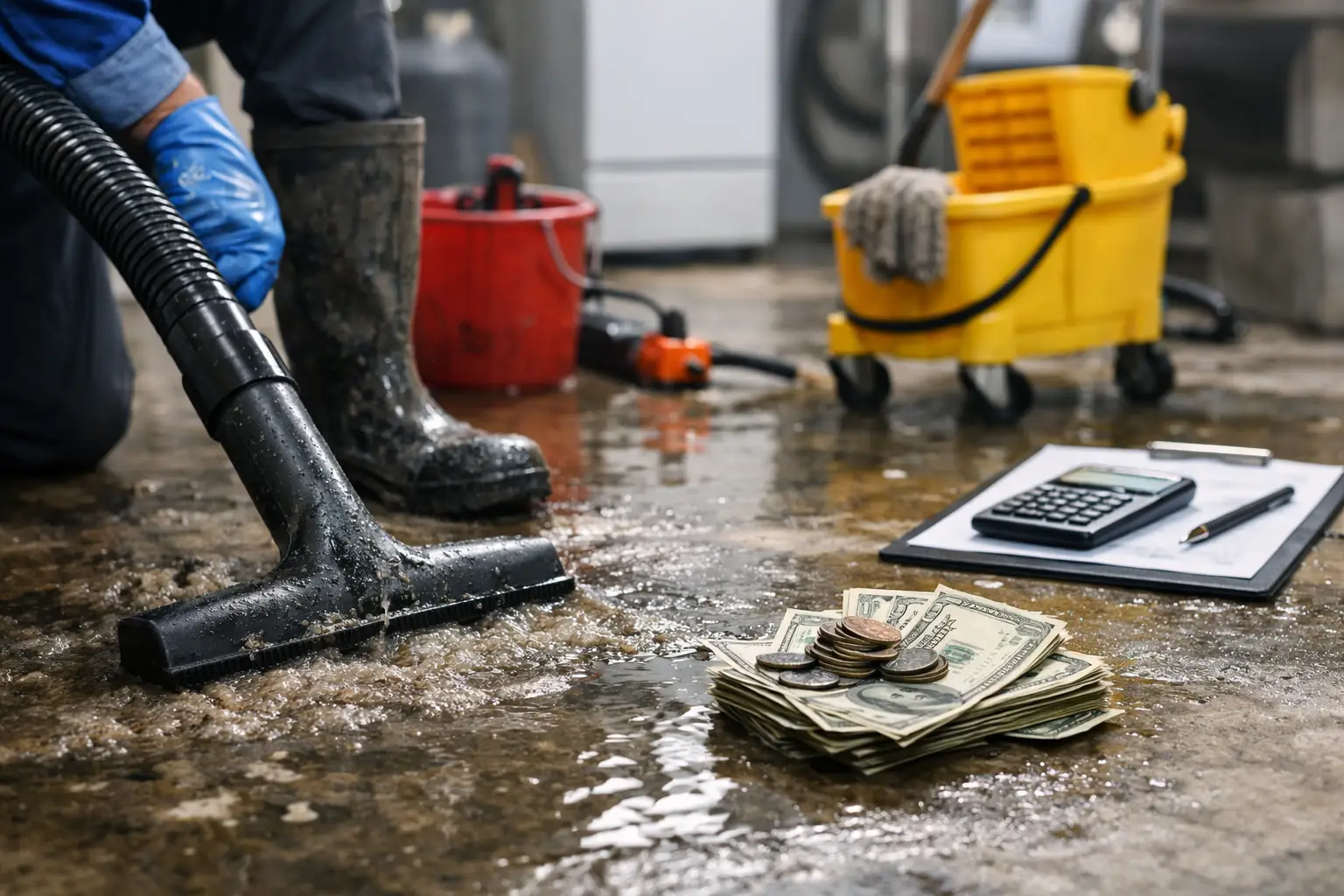
A small, contained sewage overflow may cost several hundred to a few thousand dollars to clean and sanitize. A backup that spreads through multiple rooms, saturates carpet and drywall, or affects a commercial space can rise into the several-thousand-dollar range quickly. If reconstruction is required after mitigation, total project costs can be higher.
A realistic estimate requires an onsite assessment because two properties with the same amount of standing water can have very different needs. Water confined to a nonporous tile floor is typically less involved than water that has soaked into carpet padding, baseboards, drywall, cabinetry, insulation, or contents.
The most useful way to think about the price is in stages. Emergency response and containment are followed by extraction, removal of unsalvageable materials, cleaning and disinfection, structural drying, testing or verification when appropriate, and repairs. A complete scope should explain which of these services are included and which repairs may be quoted separately.
What Drives the Cost of Sewage Cleanup?
The source and category of water
Water from a broken clean supply line is not handled the same way as water from a sewer line, toilet backup, or drain system. Sewage is generally treated as Category 3 water, often called black water. It requires stricter safety measures, controlled removal procedures, and thorough cleaning because of the potential health risk.
Even a backup that looks minor can be Category 3 if it came from a toilet containing waste or a sewer line. The category of water affects the protective equipment, containment, labor, disposal, and sanitation methods needed to restore the space safely.
How far the contamination traveled
Cleanup costs increase as contaminated water moves from one surface to another. A localized bathroom incident may require extraction, disinfection, and removal of limited materials. If the water reaches adjoining rooms, flows under flooring, enters wall cavities, or travels through a commercial suite, the project becomes more complex.
Gravity often carries water farther than expected. Water can move beneath vinyl flooring, along carpet padding, under baseboards, and into low wall cavities before anyone sees evidence of it. Professional moisture detection helps identify affected areas so the cleanup plan addresses the full loss rather than only the visible portion.
The materials affected
Nonporous materials such as tile, metal, and some sealed surfaces can often be cleaned and disinfected when they are structurally sound. Porous materials are different. Carpet padding, insulation, particleboard cabinetry, untreated wood, upholstered items, and some drywall may absorb contamination and may not be safely restorable.
This is one reason estimates can vary substantially. The cost is not only labor and equipment. It can include controlled demolition, bagging and disposal, replacement of baseboards or drywall, flooring removal, and reconstruction after the area is dry and cleared for repairs.
The timing of the response
Fast action can limit the size of the affected area. The longer contaminated water remains in place, the more opportunity it has to wick into walls and flooring, damage building materials, create odors, and disrupt daily operations.
That does not mean rushing into cleanup without proper precautions. It means contacting a trained restoration team promptly, keeping people and pets away from the affected area, and avoiding attempts to shampoo, mop, or dry contaminated carpet yourself. Improper cleaning can spread contaminants or push moisture deeper into materials.
Access, layout, and property use
A ground-floor bathroom with clear access is generally easier to address than a finished basement, a multi-story commercial building, or a unit where water has spread behind fixtures and cabinetry. Tight access, furniture moving, after-hours commercial work, and the need to protect unaffected areas can all affect labor and equipment needs.
For businesses and property managers, downtime also matters. A restoration plan may need to include containment barriers, odor control, phased work, and communication with tenants or employees. The lowest initial price is not always the lowest overall cost if it leaves contamination behind or extends the closure.
What Professional Sewage Cleanup Should Include
A trustworthy estimate should describe the work in plain language. You should know what is being cleaned, what is being removed, how the area will be dried, and what documentation will be provided.
Professional sewage cleanup typically includes emergency assessment, source control when possible, safety containment, extraction, removal of contaminated porous materials, cleaning and disinfection of salvageable structural surfaces, drying and dehumidification, and disposal of affected debris. Technicians should use appropriate personal protective equipment and take steps to prevent cross-contamination into clean areas of the property.
The drying process is especially important. A room can look clean while moisture remains behind walls or under flooring. Moisture monitoring and proper drying help reduce the risk of secondary damage and mold growth after the sewage event has been addressed.
At GEM Disaster Recovery Corp, the focus is to stabilize the property first, then guide the restoration through cleanup, drying, and rebuilding with clear communication at each stage. For a property owner already dealing with a sewer backup, having one local team coordinate the work can remove a great deal of uncertainty.
Will Insurance Cover a Sewer Backup?
Coverage depends on the cause of the backup and the specific policy. Many standard homeowners policies do not automatically provide full coverage for sewer or drain backup, but an added sewer backup endorsement may help cover cleanup and resulting damage up to the policy limit. Commercial policies also vary, especially when business interruption or tenant responsibilities are involved.
A sudden backup caused by a covered plumbing failure may be handled differently than damage related to a maintenance issue, an old pipe, tree-root intrusion, or municipal sewer overflow. Flood insurance is also different from sewer backup coverage, so it is wise not to assume one applies to the other.
Document the situation before cleanup begins when it is safe to do so. Take photos or video of the affected areas, note the apparent source, save damaged-item information, and report the claim promptly. A restoration company can provide moisture readings, photographs, removal records, drying documentation, and a detailed scope that helps support the claim. Your insurer remains the party that determines coverage, but thorough documentation makes the process clearer.
How to Protect Your Property While Help Is on the Way
If sewage is actively backing up, stop using sinks, toilets, showers, dishwashers, and washing machines that may feed the same drain line. Keep children, pets, customers, and employees away from the affected space. If water is near electrical outlets or equipment, avoid entering the area until it can be evaluated safely.
Do not use a household vacuum on contaminated water, and do not run fans across the affected area. Fans can spread odors and contaminants, while ordinary vacuums are not designed for sewage extraction. If you can do so without contact with the water, move clean valuables away from the path of the backup. Then contact a qualified cleanup professional and your plumber or property maintenance contact as appropriate.
Choosing Cleanup Based on Value, Not Just Price
When comparing estimates, ask whether the company is treating the incident as sewage contamination or merely water damage. Ask how they will identify hidden moisture, what materials they recommend removing, how they will document the project, and whether they can manage reconstruction after mitigation.
A lower quote may appear attractive if it only covers surface cleaning. But leaving contaminated padding, wet drywall, or moisture behind baseboards can lead to additional repair costs and a space that does not feel safe to use. The right scope balances immediate expense with the work needed to protect the people inside and preserve the property over time.
A sewage backup is disruptive, but it does not have to become an open-ended problem. Prompt, properly documented cleanup gives you a safer path back to a clean home, functioning rental, or reopened business.