Post Fire Odor Solutions That Actually Work
The fire may be out, but the smell can make a home or business feel damaged long after the visible debris is gone. Effective post fire odor solutions do more than cover up smoke with fragrance. They remove odor-causing residue from the building, its contents, and the air system so your property can become safe, comfortable, and usable again.
Smoke odor is persistent because smoke travels far beyond the room where the fire started. It settles into drywall, insulation, carpet padding, cabinets, upholstery, clothing, and HVAC ductwork. In El Paso's dry climate, smoke particles can remain undisturbed in porous materials until humidity, heat, or air movement brings the odor back.
Why Smoke Odor Returns After a Fire
A lingering odor usually means smoke residue is still present somewhere in the property. Fire smoke contains tiny particles, oils, soot, and gases. Some residues are dry and powdery, while others are sticky, acidic, or nearly invisible. The type of fire matters too. A kitchen grease fire leaves a different residue than a fire involving plastics, wiring, wood, or synthetic furnishings.
That is why a quick wipe-down and an air freshener rarely solve the problem. In some cases, household cleaning can make things worse by spreading soot across a larger area or pushing residue deeper into fabric and carpet. Smoke can also enter wall cavities and heating and cooling equipment, then circulate again each time the system runs.
Odor removal begins with identifying where smoke traveled, what materials were affected, and which items can be cleaned versus replaced. This assessment helps avoid spending money on cosmetic fixes that fail a few weeks later.
Post Fire Odor Solutions Start With Cleanup
The most reliable odor treatment is source removal. Before deodorizing equipment is used, restoration professionals address soot, ash, charred material, and water damage from firefighting efforts. Removing these contaminants reduces both odor and the risk of ongoing damage to finishes, metals, electronics, and indoor air quality.
Secure the Property and Control Airflow
A damaged roof, broken window, or open doorway can let dust, moisture, and outside contaminants into the building. Emergency board-up and temporary protection help stabilize the property while cleanup begins. Technicians may also use containment barriers and air filtration to keep disturbed particles from moving into unaffected rooms.
If the HVAC system was operating during the fire, it should not be turned back on until it has been evaluated. Running it too early may spread smoke particles throughout the home or business. Filters, registers, coils, and ductwork may all need professional cleaning depending on the extent of exposure.
Remove Soot From Every Affected Surface
Soot removal is a specialized process, not a standard housekeeping task. Professionals use the cleaning method that fits the material and residue type, which may include dry cleaning techniques, HEPA vacuuming, wet cleaning, or specialty chemical cleaning. Walls, ceilings, trim, cabinets, light fixtures, and hard surfaces all require attention because even a thin film of smoke residue can continue to release odor.
Porous materials require extra care. Carpet may need deep extraction after soot removal, while upholstered furniture, drapes, and clothing may need content cleaning. In severe fires, carpet padding, insulation, particleboard furniture, or heavily charred materials may be beyond restoration. Removing unsalvageable materials is sometimes the only practical way to stop an odor from returning.
Choosing the Right Deodorization Method
Once the physical source has been cleaned or removed, deodorization can neutralize residual odors that remain in the air and inside materials. The best method depends on the fire, the size of the affected area, the materials involved, and whether occupants can safely remain out of the space during treatment.
Thermal fogging creates a fine deodorizing mist designed to reach areas smoke reached, including cracks and porous surfaces. Hydroxyl generators use a process that can help break down odor molecules and are often appropriate when a building needs to remain accessible during treatment. Ozone treatments can also be used in certain restoration situations, but they require strict safety controls and an unoccupied property. Ozone is not a do-it-yourself solution and should never be used while people, pets, or plants are present.
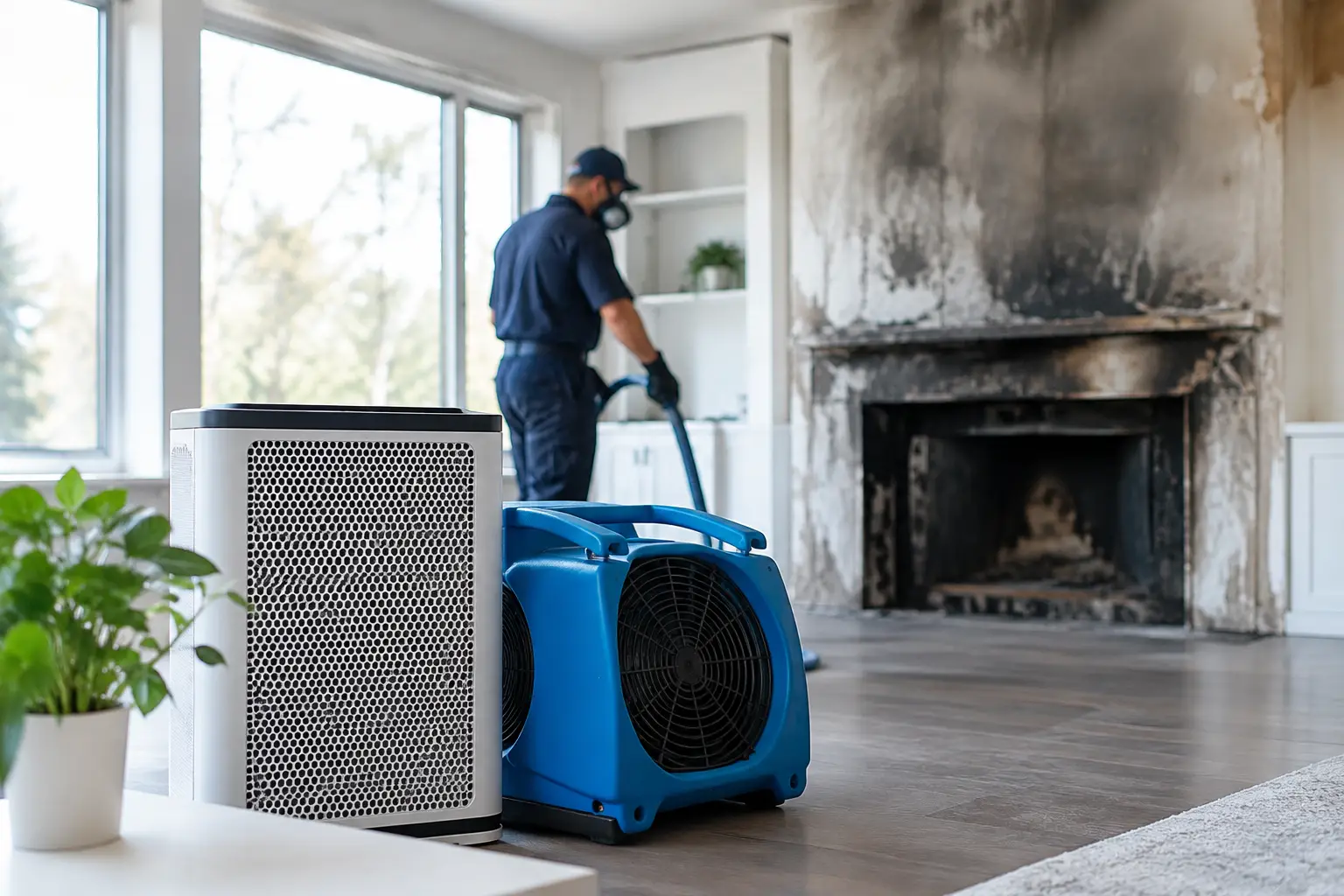
Air scrubbers with HEPA and carbon filtration can capture airborne particles and help reduce odor during cleanup. They are valuable for improving conditions inside the work area, but they cannot replace thorough cleaning. If soot remains on surfaces or inside materials, odor control equipment alone will provide only temporary relief.
When Sealing and Reconstruction Are Necessary
Sometimes smoke has penetrated structural materials deeply enough that cleaning alone cannot fully resolve the odor. After proper cleaning and drying, restoration teams may apply a specialized odor-blocking sealer to walls, ceilings, framing, or subfloors. This step prevents remaining odor molecules from migrating back into the indoor space.
Sealing should never be used to hide soot. Applying paint or primer over uncleaned smoke residue can trap contaminants, create adhesion problems, and allow odors to reappear. The order matters: clean, dry, deodorize, seal where needed, then restore finishes.
Reconstruction may be necessary if fire, smoke, or firefighting water damaged drywall, flooring, cabinetry, electrical components, or insulation. Coordinating cleaning and rebuilding through one restoration provider helps prevent gaps between phases. It also makes documentation and insurance communication more manageable for property owners already dealing with a stressful loss.
What Property Owners Should Do Right Away
After the fire department has cleared the property, avoid entering until it is safe to do so. Smoke-damaged materials may contain sharp debris, unstable surfaces, hidden moisture, and harmful particles. Do not wipe soot with regular towels, vacuum it with a standard household vacuum, or wash walls aggressively. These actions can smear residue and increase damage.
If you need to retrieve essential belongings, wear appropriate protective equipment and disturb as little as possible. Take clear photos and videos of affected rooms and contents before moving or discarding items, unless an emergency makes removal necessary. Keep receipts for emergency expenses and communicate with your insurance carrier promptly.
For businesses, act quickly to protect records, inventory, equipment, and customer areas. Even a small fire can disrupt operations when smoke enters offices, storage rooms, kitchens, or ventilation systems. A professional assessment can help determine which areas can be safely reopened and which require containment or restoration first.
Why Professional Odor Removal Protects More Than Comfort
Smoke odor is not just unpleasant. It is a sign that residues may still be present. Acidic soot can discolor paint, corrode metal, damage electronics, and degrade materials over time. Lingering smoke also affects the way residents, employees, tenants, and customers experience a property. For a rental, office, restaurant, or retail location, that can affect occupancy, productivity, and trust.
Professional fire and smoke restoration provides a documented path from emergency stabilization through cleaning, deodorization, repairs, and reconstruction. It also supports a clearer insurance claim by recording affected materials, work performed, and the condition of the property throughout the process.
GEM Disaster Recovery Corp helps El Paso homeowners, property managers, and business owners address fire and smoke damage with 24/7 response, compassionate communication, and coordinated restoration from cleanup through rebuilding.
A smoke-free property should not depend on stronger candles or a fresh coat of paint. When the source is removed and each affected material is treated correctly, the space can begin to feel like yours again.