Mold Removal Versus Encapsulation: Which Works?
A dark patch on drywall or a musty odor after a leak can make one question feel urgent: should the mold be removed, or can it be sealed? Mold removal versus encapsulation is not a matter of choosing the quickest-looking fix. The right approach depends on the material affected, the size of the problem, whether moisture is controlled, and whether the mold source can truly be addressed.
For El Paso homeowners, property managers, and business owners, the goal is the same: restore a safe, dry property without creating a larger problem behind walls, under flooring, or inside HVAC systems. A professional assessment helps turn that concern into a clear plan.
Mold Removal Versus Encapsulation: The Core Difference
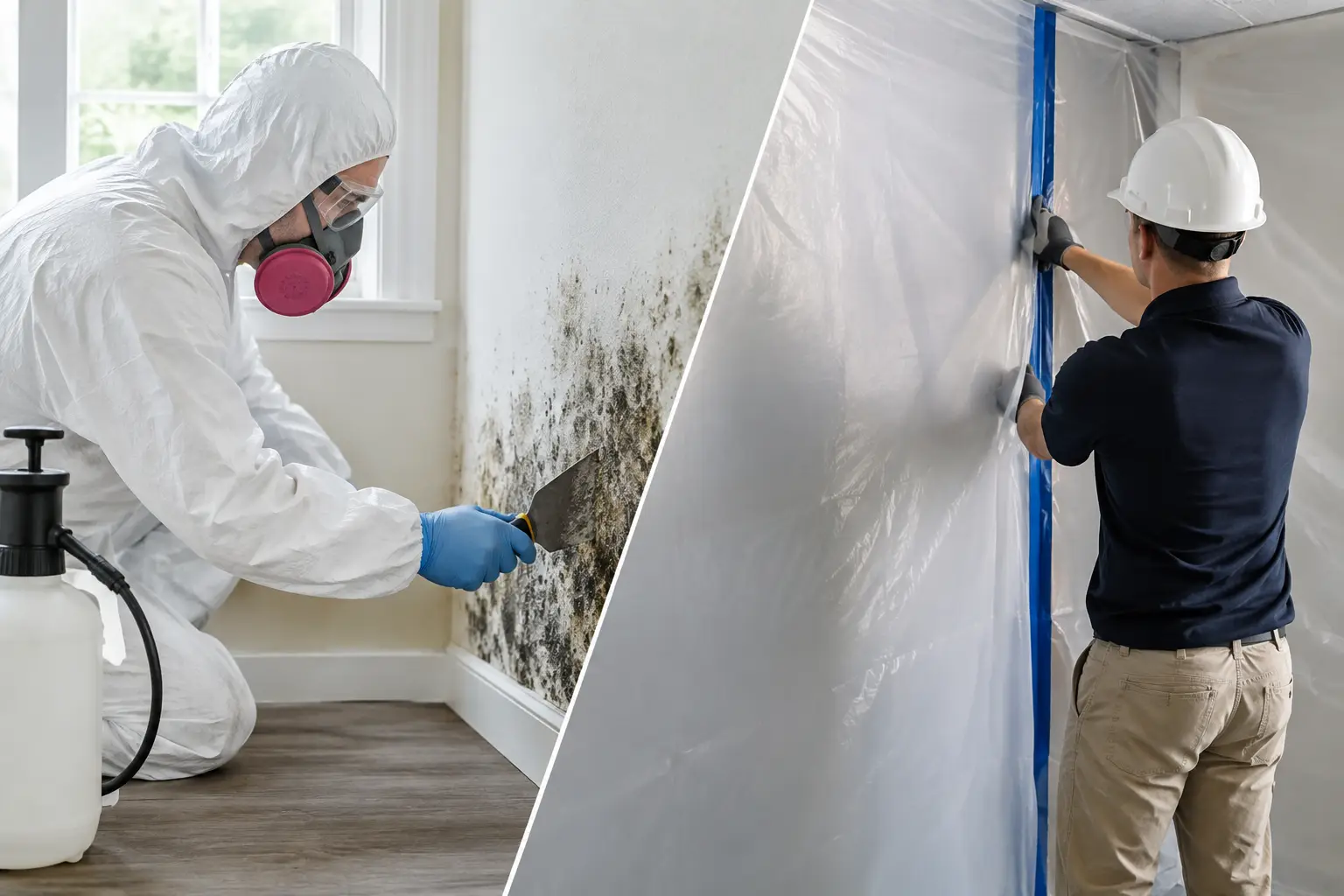
Mold removal, more accurately called mold remediation, involves containing the affected area, removing contaminated materials when needed, cleaning salvageable surfaces, and correcting the moisture condition that allowed growth. Since mold spores occur naturally in indoor and outdoor environments, the objective is not to create a completely spore-free building. It is to return indoor conditions to normal and prevent active growth from continuing.
Encapsulation is the application of a specialized coating or sealant over a properly prepared surface. It is often used on structural materials such as framing lumber in crawl spaces, attics, or wall cavities after cleaning. The coating can help lock down remaining staining and make the surface more resistant to future moisture-related growth.
The distinction matters. Encapsulation is a tool within some remediation projects. It is not a substitute for removing damaged porous materials, cleaning contamination, or repairing the water source.
When Molded Materials Need to Be Removed
Some materials cannot be reliably cleaned once mold has grown into them. Drywall, insulation, ceiling tiles, carpet padding, particleboard, and other porous building materials often fall into this category, particularly when they have been wet for an extended period or visibly deteriorated.
A coating applied over mold-damaged drywall may hide discoloration, but it does not remove the compromised material or confirm that the wall cavity is dry. If moisture remains, growth can continue out of sight. The result may be recurring odors, further structural damage, and a more disruptive repair later.
Removal is also usually the better choice when materials are soft, crumbling, warped, or heavily colonized. The remediation team may establish containment, use controlled removal practices, and clean adjacent framing or other salvageable components. Once the area is dry and verified clean, reconstruction can begin.
This is one reason a full-service restoration provider can simplify the process. Rather than leaving a property owner with an open wall after cleanup, GEM Disaster Recovery Corp can help coordinate stabilization, remediation, reconstruction, and documentation for the insurance process.
When Encapsulation Makes Sense
Encapsulation can be a practical and effective part of the repair plan when the surface is structurally sound, has been thoroughly cleaned, and can be confirmed dry. For example, wood framing may retain dark staining even after appropriate remediation. If the wood is intact and moisture has been corrected, an approved encapsulant can provide a cleanable, protective finish.
In a crawl space or attic, encapsulation may also be considered after the underlying humidity or water intrusion issue has been resolved. The coating is applied to prepared surfaces, not used as a shortcut around cleaning. Proper surface preparation is what allows the product to perform as intended.
Encapsulation may be appropriate when the affected area is limited and the material is nonporous or semi-porous, such as certain masonry or structural wood surfaces. It can also be useful where cosmetic staining remains but there is no active growth and no ongoing moisture concern.
The key phrase is after remediation, not instead of remediation. If an estimate recommends sealing without addressing cleaning, drying, or the cause of moisture, ask for a clearer explanation before authorizing work.
The Moisture Source Decides the Long-Term Outcome
No mold strategy will hold up if the property is still wet. A roof leak, plumbing failure, appliance supply-line leak, poor drainage, window intrusion, or elevated indoor humidity can restart the problem even after a careful cleanup.
In El Paso, moisture problems do not always look like a major flood. A slow leak behind a refrigerator, under a sink, or inside a wall can create enough dampness for mold growth before anyone sees visible damage. Monsoon-season rain can also expose roof, window, or exterior drainage weaknesses that were previously unnoticed.
A proper response starts with identifying the source, stopping it, and drying affected materials. Restoration professionals use moisture detection tools to look beyond the visible stain. This step helps determine whether water has traveled into insulation, subflooring, baseboards, framing, or adjoining rooms.
If a leak has just occurred, acting quickly can reduce the chance that mold develops at all. Water mitigation is not merely about extracting visible water. It involves controlled drying, monitoring moisture levels, and protecting materials that can still be saved.
Why Painting Over Mold Is Not Encapsulation
Ordinary paint and stain-blocking primer are not the same as a remediation-grade encapsulant. Paint may cover a mark temporarily, but it does not address contamination, moisture, or damaged materials. Applying it to a damp surface can trap moisture and complicate later repairs.
Even specialized products have limits. They should be selected based on the surface, location, and condition of the material. A product that may be suitable for cleaned framing lumber is not automatically appropriate for drywall, insulation, or a surface with active growth.
This is where visual appearance can be misleading. Mold may be black, green, white, gray, or nearly invisible. Likewise, a dark stain may remain after successful cleaning without indicating active mold. Decisions should be based on the material condition, moisture readings, the extent of impact, and professional evaluation rather than color alone.
What a Professional Mold Remediation Plan Should Address
A dependable remediation plan should explain what is being cleaned, what is being removed, and why. It should also identify the moisture source and outline how the work area will be protected from spreading dust or spores to unaffected portions of the property.
For a larger or more complicated loss, the plan may include containment barriers, air filtration, controlled demolition, detailed cleaning, drying verification, and post-remediation evaluation when appropriate. Contents and nearby surfaces may also need attention, especially after a long-term leak or water damage event.
Property managers and business owners should also consider operations. A thoughtful plan can help isolate the affected area, protect occupants, and reduce unnecessary downtime. For homes, clear communication matters just as much. Residents need to know which rooms are affected, whether temporary access restrictions are needed, and what reconstruction will involve once remediation is complete.
Insurance documentation can be valuable when the mold resulted from a covered sudden water event. Coverage varies by policy and cause of loss, so it is wise to document the source, the visible damage, mitigation steps, photos, and professional findings early. Waiting for the damage to become more obvious rarely makes the process easier.
Questions to Ask Before Choosing a Method
Before agreeing to removal, cleaning, or encapsulation, ask whether the moisture source has been identified and repaired. Ask which materials are porous, damaged, or unsalvageable, and which surfaces can be cleaned and retained. You should also understand how the affected area will be contained, how dryness will be verified, and whether encapsulation is being proposed as a final protective step after cleaning.
A trustworthy answer should be specific to your property. A minor area of surface growth on sound framing calls for a different response than water-damaged drywall with wet insulation behind it. The fastest proposal is not always the least disruptive or most economical option once repeat damage is considered.
If you smell persistent mustiness, see staining after a leak, or notice materials that feel soft or swollen, avoid disturbing the area unnecessarily. Keep the space as dry as possible and arrange for an inspection. A calm, informed response now can protect the building, the people who use it, and the repairs you may otherwise face later.