Kitchen Fire Cleanup Example After a Stove Fire
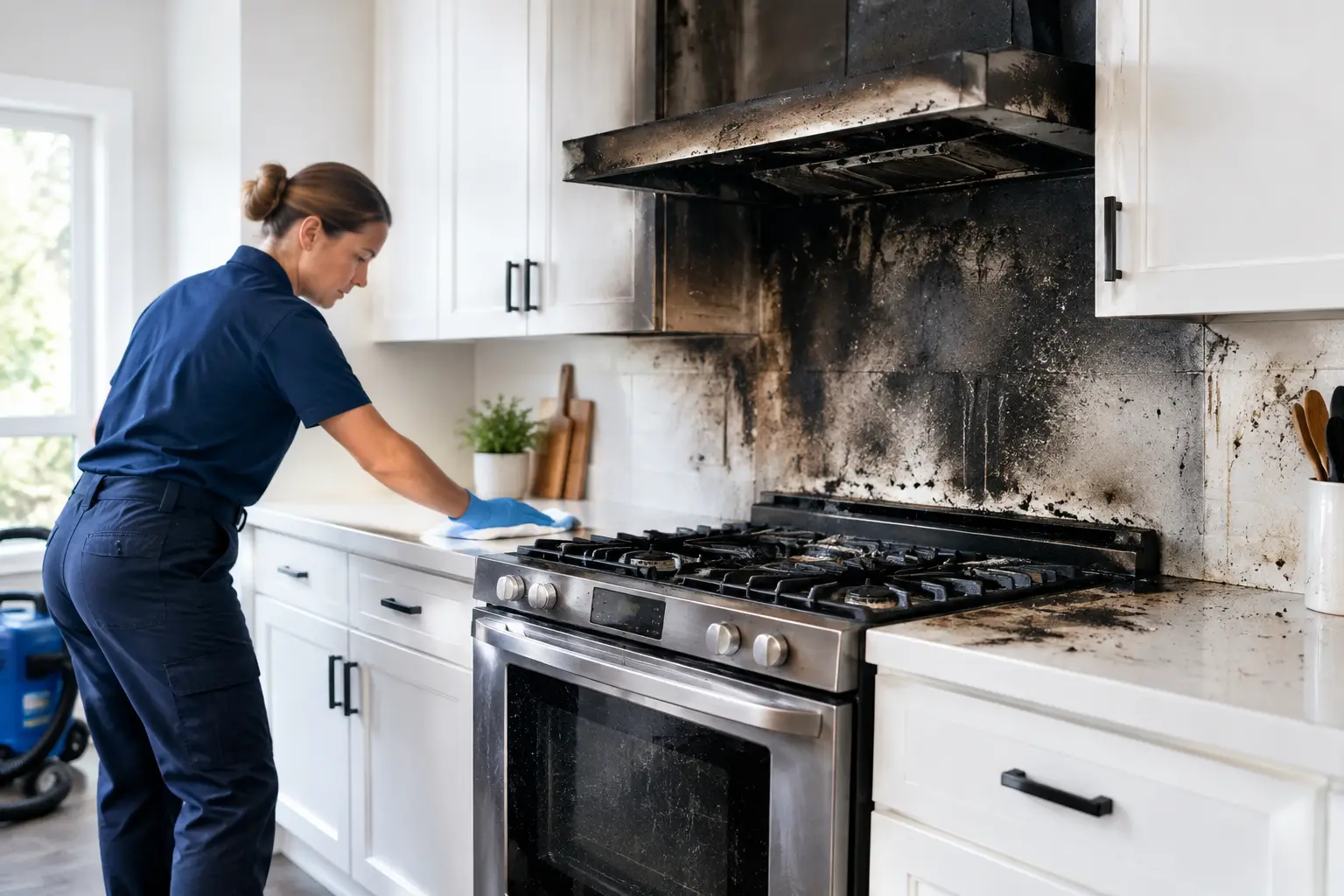
A small stove fire can leave a kitchen looking far less damaged than it actually is. In this kitchen fire cleanup example, the flames are out within minutes, but soot has traveled through nearby rooms, smoke odor is trapped in cabinets, and water from suppression efforts has reached the floor. The right response is not simply wiping down visible residue. It is stabilizing the property, identifying hidden damage, and restoring the space safely.
Consider a typical El Paso homeowner who leaves cooking oil unattended for a moment. The pan ignites, flames reach the range hood, and the homeowner uses a fire extinguisher while the fire department confirms the area is safe. The fire stays contained to the cooking area, but the cleanup process still requires professional attention.
Kitchen Fire Cleanup Example: The First 24 Hours
Once the fire department releases the property, the first priority is preventing additional damage. The kitchen may have broken glass, wet materials, chemical extinguisher residue, and surfaces coated in oily soot. Turning on the HVAC system, opening cabinets indiscriminately, or trying to scrub walls with household cleaners can spread contamination or set soot deeper into porous materials.
A restoration team begins with a safety assessment. That includes checking for structural concerns around the stove, cabinets, backsplash, ceiling, and electrical connections. If heat affected wiring, appliances, or gas lines, those systems need evaluation before they are used again. Wet flooring, especially near electrical outlets or appliances, also needs immediate attention.
In this example, the range, microwave, and range hood are disconnected for inspection. The restoration crew photographs the damage before moving materials, which helps create a clear record for the insurance claim. They also document the affected areas beyond the kitchen, including a smoke film in the adjacent living room and odor in a hallway closet.
Stabilizing the kitchen
Emergency stabilization may include placing containment barriers around the affected area, removing standing water, and setting drying equipment where needed. If the fire damaged a window, exterior door, or wall opening, emergency board-up protects the home from weather and unauthorized entry.
The team also identifies what can be saved. Some items can look ruined at first glance but may be restorable with the correct cleaning method. Solid wood cabinets, washable dishes, stainless steel fixtures, and certain hard-surface floors can often be cleaned. Heat-warped laminate, burned cabinet interiors, heavily contaminated food, and smoke-damaged insulation may need removal.
What the Damage Looked Like
The visible fire damage in this scenario is limited: a burned pan, charred range hood filters, blistered paint above the stove, and heat damage to two upper cabinet doors. But visible damage tells only part of the story.
Soot is made of tiny particles that can be acidic, oily, or dry depending on what burned. Cooking fires often create greasy residue that clings to walls, ceilings, cabinet faces, light fixtures, and textiles. It can also migrate through air returns and settle in rooms that never came into direct contact with flames.
Extinguisher residue adds another layer. Dry chemical extinguishers can leave a fine powder that spreads quickly and can corrode metal surfaces if it is not removed properly. Water used during fire suppression can seep beneath flooring, behind toe-kicks, and into lower cabinets. Without proper drying, that moisture can create a separate mold risk.
This is why a fire that appears small can still become a whole-home cleanup project. The scope depends on the fuel source, heat level, ventilation, materials burned, and how quickly the property was stabilized.
The Professional Cleaning Process
Before cleaning begins, the restoration crew creates a work plan based on the materials involved and the type of soot present. Cleaning a painted drywall ceiling requires a different approach than cleaning unfinished wood, electronics, upholstery, or stone countertops. Using the wrong product or too much moisture can make damage worse.
Removing soot without spreading it
Dry soot removal often comes first. Technicians use specialized vacuums, dry-cleaning sponges, and controlled methods designed to lift particles rather than smear them across the surface. They work from the ceiling downward so loose residue does not contaminate already-cleaned areas.
Next comes wet cleaning for surfaces that can tolerate it. Cabinet exteriors, tile, sealed counters, appliances, and fixtures may receive targeted cleaning with restoration-grade solutions. Cabinet interiors need careful inspection because odor and residue can remain behind dishes, liners, and stored items.
In this kitchen fire cleanup example, the crew removes the range hood filters, cleans the surrounding duct area as appropriate, and treats the cabinet faces and backsplash. The upper cabinets closest to the stove cannot be fully restored because heat has damaged the finish and caused the doors to warp. Those components are documented for replacement rather than repeatedly cleaned with diminishing results.
Managing smoke odor
Smoke odor is not solved by air fresheners or a quick coat of paint. Odor-causing particles settle into porous materials such as drywall, insulation, fabrics, carpet, and unfinished wood. The source must be removed or treated before deodorization can work.
Depending on the situation, odor control may involve cleaning structural surfaces, removing unsalvageable materials, cleaning HVAC components, and using professional deodorization equipment. The right method depends on where odor has traveled and which materials are affected. A contained grease fire may need focused kitchen and HVAC treatment, while a larger fire can require cleaning throughout the home.
Repairs Come After Cleanup, Not Before
Once soot, residue, moisture, and odor sources are addressed, reconstruction can begin. This order matters. Installing new cabinets or painting over smoke-stained drywall before the area is properly cleaned and dried can trap odor and lead to costly rework.
For this homeowner, repairs include replacing the damaged range hood, upper cabinet doors, backsplash section, and portions of drywall above the stove. The kitchen ceiling is sealed and repainted after cleaning confirms that the soot has been removed. The flooring dries successfully and does not require replacement, which helps control the overall claim cost.
A full-service restoration provider can coordinate this work from mitigation through rebuilding. That reduces the burden of finding separate cleaning crews, contractors, and repair specialists while trying to manage an insurance claim and keep the household functioning.
Insurance Documentation Makes a Difference
After a kitchen fire, property owners should take reasonable steps to protect the home, but they should avoid throwing away damaged items before they are documented. Photos, videos, receipts, appliance information, and a list of affected belongings can support the claim process.
A restoration company can provide detailed photos, moisture records, cleaning documentation, and an itemized scope of work. This information helps show why the project includes more than a new stove or a fresh coat of paint. It reflects the actual work needed to address soot migration, odor, water exposure, and damaged building materials.
Coverage and deductibles vary by policy, so there is no single answer for every fire loss. Still, clear documentation gives homeowners and property managers a stronger starting point when communicating with their carrier.
When to Call for Professional Fire Cleanup
A homeowner may be able to safely clean a very minor cooking splatter or smoke film from an isolated incident. However, professional help is the safer choice when there is extinguisher discharge, visible soot on walls or ceilings, smoke odor beyond the kitchen, water intrusion, electrical concerns, or damage to cabinets and appliances.
For El Paso homeowners, business owners, and property managers, GEM Disaster Recovery Corp provides 24/7 emergency response for fire and smoke damage. The goal is to protect the property quickly, explain what needs to happen next, and carry the work through cleanup and reconstruction with care.
After the fire is out, give the property the same level of attention that you gave the emergency itself. A careful cleanup protects indoor air quality, preserves what can be saved, and helps make the kitchen feel like home again.