Insurance Adjuster Versus Restoration Contractor
A burst pipe at 2 a.m. does not wait for a claim decision. That is where the difference between an insurance adjuster versus restoration contractor becomes clear: one evaluates the insurance claim, while the other works to stop damage, protect the property, and restore it. Both can be part of a successful recovery, but they have very different responsibilities.
For homeowners, property managers, and business owners in El Paso, understanding those roles can reduce confusion at a time when every decision feels urgent. You do not have to choose one over the other. You do need to know who is responsible for what, when to call them, and how to keep your recovery moving forward.
Insurance Adjuster Versus Restoration Contractor: The Core Difference
An insurance adjuster works for an insurance carrier or, in some cases, is hired independently by a policyholder. Their job is to investigate a reported loss, review the available policy coverage, estimate eligible damage, and help determine how much the insurer will pay.
A restoration contractor is responsible for the property itself. Their work may begin with emergency water extraction, roof tarping, board-up, smoke cleanup, mold remediation, or biohazard cleaning. It can continue through drying, repairs, reconstruction, and final restoration of the affected area.
Put simply, the adjuster addresses the claim. The contractor addresses the damage.
That distinction matters because an adjuster generally does not perform emergency mitigation or repairs. A contractor does not decide what your insurance policy covers. A qualified restoration company can, however, document the damage, prepare detailed estimates, communicate with the insurer, and provide the records that support a well-organized claim.
What an Insurance Adjuster Does
After you report a loss, the insurance company may assign an adjuster to inspect the property. The adjuster may photograph affected areas, ask questions about the event, review receipts or repair history, and assess the scope of visible damage. They then compare the loss with the terms, limits, deductibles, and exclusions in your policy.
The adjuster may prepare an estimate for covered repairs or request additional information before the carrier makes a payment decision. In many claims, they are an essential point of contact. Their role is not to make your home or business whole by themselves, but to evaluate what the insurer owes under the policy.
It is reasonable to ask the adjuster questions. Ask what documentation is needed, whether emergency mitigation is covered, what deadlines apply, and whether there are portions of the estimate that need clarification. Keep notes from important calls and save copies of emails, photos, receipts, and claim documents.
There is also a practical limitation to remember: an adjuster may not be available immediately after a major weather event or widespread disaster. When many properties are affected at once, inspection schedules can fill quickly. Waiting for an adjuster before taking necessary steps to prevent further damage can make a bad situation worse.
What a Restoration Contractor Does
A restoration contractor is often the first professional you need after an emergency. If water is spreading through flooring, smoke residue is settling on surfaces, or a broken window leaves the property exposed, the priority is stabilization.
For water damage, that can mean locating the source, extracting standing water, removing unsalvageable materials when appropriate, setting professional drying equipment, monitoring moisture levels, and documenting conditions throughout the process. For fire damage, it may involve emergency board-up, odor control, soot cleaning, water cleanup from firefighting efforts, and a plan for repairs.
The work is not cosmetic cleanup. Proper mitigation is meant to prevent additional loss. Moisture left behind a wall or beneath flooring can create conditions for mold growth. A damaged roof or window can expose a building to more weather damage. Smoke residue can continue to affect surfaces and indoor air if it is not addressed correctly.
A full-service restoration contractor can also manage the transition from emergency work to reconstruction. That can reduce the burden of hiring separate companies for cleanup, demolition, drywall, flooring, painting, and rebuilding. For a family already displaced from home or a business trying to reopen, fewer handoffs can mean less confusion.
Why Emergency Mitigation Should Not Wait
Many property owners worry that starting cleanup before the insurance adjuster arrives will hurt the claim. In most cases, the better approach is to take reasonable action to prevent further damage while carefully documenting everything.
Your insurance policy may include a duty to protect the property after a loss. That does not mean you should throw away damaged materials or begin major reconstruction without communication. It means you should act to make the site safe and limit additional damage.
A professional restoration contractor can help by photographing affected areas before work begins, recording moisture readings, identifying damaged materials, and providing itemized documentation. Keep damaged items when it is safe and practical to do so until the adjuster has had an opportunity to inspect them. If materials must be removed for health, safety, or drying reasons, make sure they are thoroughly documented first.
For example, if a supply line leaks behind a wall, leaving the wall closed until an adjuster can visit may allow water to travel farther and materials to deteriorate. Controlled demolition and drying may be necessary that same day. Good documentation helps explain why the work was needed.
How the Two Roles Work Together
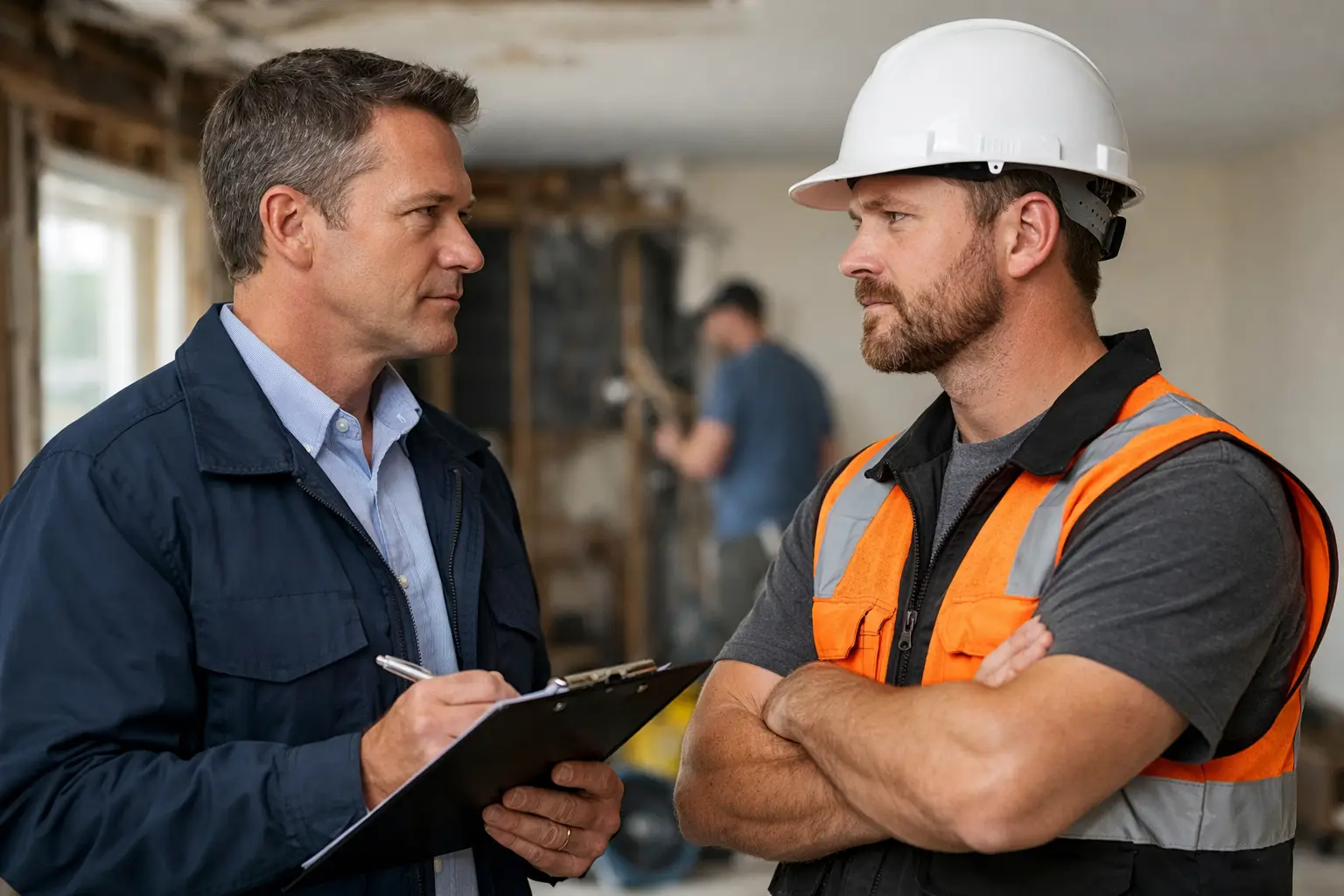
The strongest claims process is usually not adversarial. It is organized. The property owner reports the loss promptly, the restoration contractor stabilizes and documents the damage, and the adjuster reviews the claim under the policy.
A contractor may share photos, drying logs, equipment records, material measurements, estimates, and invoices. The adjuster may ask questions about the scope or request revisions based on the policy. This is normal. A difference between an initial contractor estimate and an insurance estimate does not automatically mean someone is acting improperly. Sometimes it reflects missing information, different repair assumptions, depreciation, policy limitations, or work that was not visible during the first inspection.
Clear communication is what helps close those gaps. Your contractor should be able to explain the work performed and why it was necessary. Your adjuster should be able to explain how the carrier evaluated the covered portion of the loss.
What Property Owners Should Do After Damage
Start by making sure everyone is safe. If there is a fire, gas concern, sewage backup, structural instability, or other immediate hazard, follow emergency guidance and do not enter an unsafe area.
Next, stop the source if you can do so safely. Shut off the water supply for an active leak, for example. Then contact your insurer to open a claim and call a qualified restoration company for urgent mitigation. Do not wait to seek help if water is actively spreading, smoke damage is present, or the building needs to be secured.
Before cleanup begins, take photos and short videos of the affected areas. Document contents, visible damage, and the apparent source when possible. Save receipts for emergency expenses, temporary protection, and any necessary relocation costs. Avoid signing away your claim rights or accepting a final settlement until you understand what it covers.
It also helps to ask direct questions of the contractor: What emergency work is needed now? What can wait? How will the damage be documented? Will the team monitor drying conditions? Can they assist with insurance communication? Those answers should be clear, not vague.
Choosing a Restoration Contractor With Confidence
Not every cleaning company is equipped for disaster recovery. Water, fire, mold, and biohazard losses require different safety practices, equipment, and technical knowledge. Look for a contractor with relevant training, proper licensing and certifications, insurance experience, and the ability to explain the scope in plain language.
Local availability matters, too. When damage happens, you need a team that can respond quickly and remain accountable through the next stages of the project. A company that handles both mitigation and reconstruction can provide valuable continuity, though the right fit still depends on the size and type of loss.
GEM Disaster Recovery Corp supports El Paso property owners from emergency stabilization through restoration and rebuilding, while helping organize the documentation and insurance coordination that can otherwise become overwhelming.
An insurance claim is paperwork. Property damage is personal. Call your insurer, protect the property from further harm, and work with restoration professionals who can give you a clear plan for the next right step.