How to Shut Off Water Before Damage Spreads
Water moving across a floor, dripping through a ceiling, or pooling beneath a sink can turn from a small problem into major damage in minutes. Knowing how to shut off water safely gives you time to protect your home or business, prevent further loss, and get professional help on the way.
The right valve depends on where the leak is coming from. A leaking toilet needs a different response than a burst pipe behind a wall. The goal is simple: stop the flow without creating a new problem, then document what happened and begin drying the affected area as soon as possible.
How to Shut Off Water at the Main Valve
Your main water shutoff valve stops water from entering the building from the municipal supply line. Use it when water is coming from an unknown source, a pipe has burst, a major appliance line has failed, or a leak is spreading faster than a nearby fixture valve can control.
In many El Paso homes, the main valve is near the water meter, on an exterior wall, in a utility room, garage, closet, or near the water heater. Older properties may have a valve in a meter box near the street as well. If you rent or manage a commercial property, ask the owner or facilities contact to show you its location before an emergency occurs.
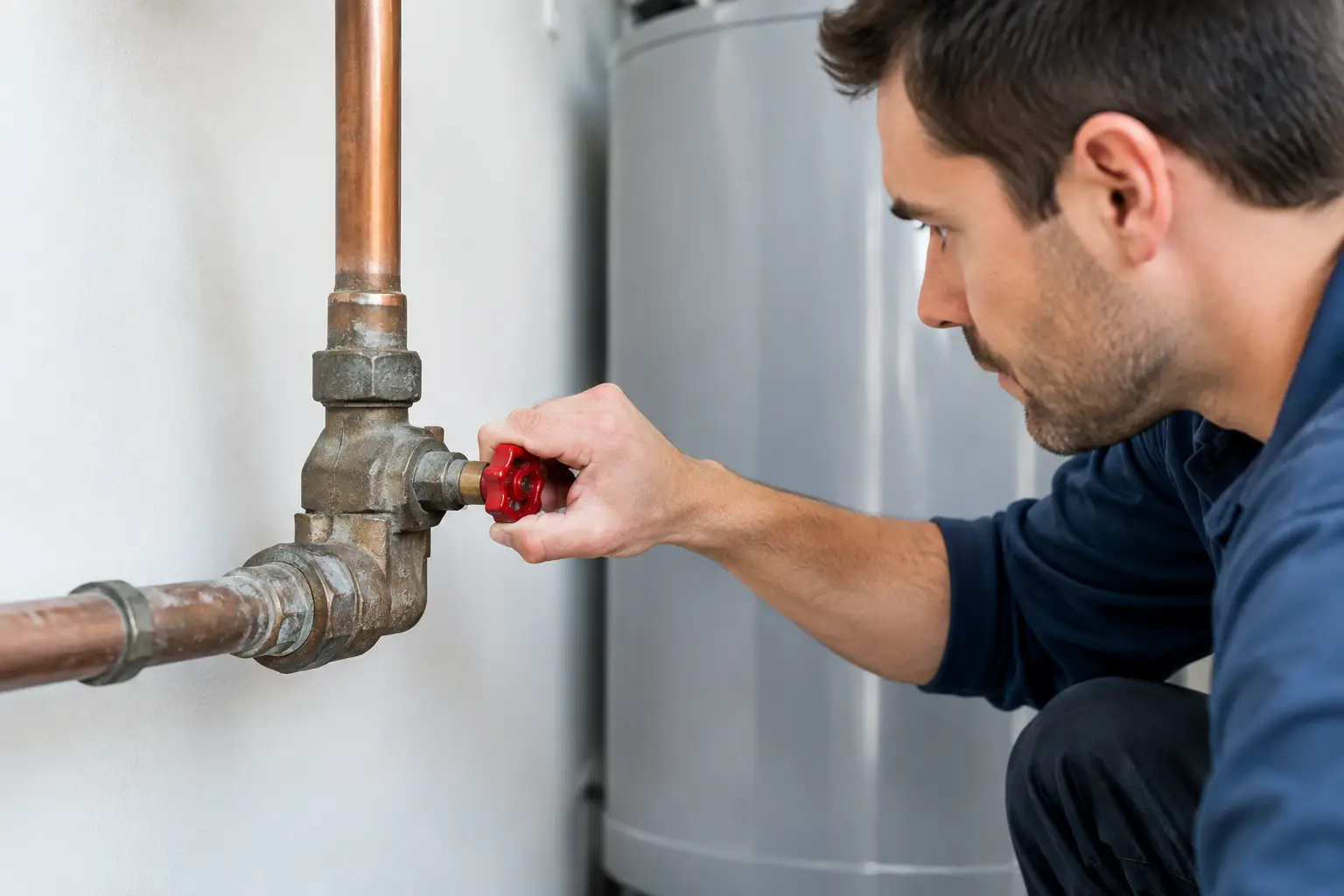
Look for one of two common valve styles. A wheel-shaped gate valve closes when turned clockwise. A lever-style ball valve closes when the handle is turned a quarter turn so it sits perpendicular to the pipe. Turn the valve slowly and firmly. Do not force a corroded or stuck valve, especially if the pipe appears aged or fragile. Breaking the valve can make a manageable leak much worse.
Once it is closed, open a cold-water faucet at the lowest practical point in the building, such as a first-floor sink or outdoor spigot. This relieves pressure and drains some water remaining in the lines. Then check whether the water has stopped. A small amount of residual dripping can continue briefly, but an active flow should not.
Shut Off Water to One Fixture When Possible
If the leak is clearly limited to one fixture, shutting off water locally may keep the rest of the property operational. Most toilets, sinks, dishwashers, washing machines, refrigerators with ice makers, and water heaters have nearby supply valves.
Under a sink or behind a toilet, look for a small oval handle or quarter-turn valve on the supply line. Turn it clockwise until it stops. For a washing machine, shut off both the hot and cold supply valves. A refrigerator water line may have a small valve behind the appliance, under the sink, or in a nearby cabinet.
Local shutoffs are often the best choice for a slow toilet supply-line leak or a dripping faucet connection. However, use the main shutoff instead if you cannot identify the source, water is coming from a wall or ceiling, the local valve does not stop the leak, or there is a risk of water reaching electrical equipment.
What to Do During a Water Emergency
After you shut off the water, the next few decisions can affect the extent of damage and the safety of everyone inside. Move quickly, but avoid rushing into standing water without considering possible electrical hazards.
- Keep people and pets away from water near outlets, extension cords, appliances, electrical panels, or ceiling light fixtures. If it is safe to reach the electrical panel without stepping through water, turn off power to the affected area. Otherwise, wait for a qualified professional.
- Move dry, valuable, and portable items out of the affected area. Place aluminum foil, wood blocks, or plastic barriers under furniture legs if you can do so safely.
- Take clear photos and short videos of the source, standing water, damaged materials, and any belongings affected. This documentation can help with insurance coordination.
- Blot or remove small amounts of clean water only when it is safe. Do not use a household vacuum on standing water, and do not assume carpet or wall materials are dry just because the surface feels dry.
If water is pouring from a ceiling, avoid puncturing or draining a bulging ceiling unless you understand the risks and can do so safely. The ceiling may contain electrical wiring, and the water source must be stopped first. Leave the room, protect the area below if possible, and call for emergency assistance.
Find Your Shutoff Valve Before You Need It
A water emergency is not the time to search through closets or guess which handle controls the house. Take a few minutes now to locate the main shutoff valve and make sure responsible family members, employees, or tenants know where it is.
Label the valve if it is not obvious. Keep the path to it clear of storage, and test it occasionally when there is no emergency. A valve that has not been moved in years may seize when you need it most. If it is difficult to turn, leaks around the stem, or is badly corroded, have a licensed plumber inspect or replace it.
For properties with irrigation systems, pool equipment, water softeners, or multiple structures, identify the separate shutoffs too. Turning off the main water supply may not stop every outdoor or stored-water system. The setup varies by property, which is why a quick walk-through with a plumber or maintenance professional can be worthwhile.
Special Situations That Need Extra Care
Not all water problems are alike. A broken supply line generally involves clean water at first, but it can still soak insulation, flooring, cabinets, and drywall rapidly. A sewer backup, overflowing toilet with contaminated water, or water affected by flooding should be treated differently. Avoid contact, keep children and pets away, and do not try to clean contaminated water with ordinary household tools.
Water near a water heater also requires caution. Shut off the cold-water supply valve above the unit if accessible, but do not turn off a gas water heater or manipulate gas connections unless you know the correct procedure. For an electric water heater, avoid the area if water is near electrical components. Call a plumber or restoration professional for guidance.
During a hard freeze, shut off water only if a pipe has already ruptured or you have been instructed to do so. In some situations, keeping faucets dripping can help reduce freezing risk. El Paso weather can change quickly, so homeowners should protect exposed pipes before cold weather arrives rather than waiting for a leak.
When a Shutoff Is Not Enough
Stopping the water is the first step, not the full solution. Moisture can move beneath flooring, behind baseboards, into wall cavities, and under cabinets long after visible water is gone. Without proper extraction, drying, and moisture testing, a small leak can lead to warped materials, odors, mold growth, and more extensive repairs later.
Call for professional water mitigation when water has affected drywall, insulation, carpet padding, hardwood, cabinets, ceilings, multiple rooms, or any contaminated area. Fast action is especially important for businesses, where downtime, inventory loss, and safety concerns can compound quickly.
GEM Disaster Recovery Corp provides 24/7 emergency response in El Paso to help stabilize water damage, document affected areas, dry the structure correctly, and guide property owners through restoration and rebuilding with care. If you are unsure whether materials are fully dry, it is better to have the area assessed than to wait for hidden damage to appear.
A clearly marked shutoff valve and a calm response can protect far more than plumbing. They give you a practical first move when your property needs immediate care.