How to Protect Property After Fire Damage
A fire can be out in minutes, yet the damage can keep growing for days. Open windows, a damaged roof, standing water from firefighting efforts, and smoke residue can quickly turn a contained loss into a much larger restoration project. Knowing how to protect property after fire helps you make calm, practical decisions while protecting your family, your building, and your insurance claim.
The first goal is not cleanup. It is stabilization. Fire-damaged homes and commercial properties can have hidden structural weaknesses, electrical hazards, contaminated debris, and moisture trapped behind walls. A careful response protects what can be saved and creates a safer path toward rebuilding.
Start With Safety and Official Clearance
Do not reenter a fire-damaged property until the fire department or another qualified authority says it is safe to do so. Even a small kitchen fire can leave behind compromised flooring, damaged wiring, sharp debris, and smoke that irritates the lungs. If the structure has visible roof damage, sagging ceilings, cracked walls, or burned support members, stay outside until a professional assessment is completed.
If you must enter after receiving clearance, wear closed-toe shoes, gloves, long sleeves, and appropriate respiratory protection. Keep children, pets, tenants, employees, and visitors away from the affected areas. Avoid turning on lights, appliances, HVAC equipment, or gas-powered equipment until utilities have been inspected. Water used to suppress the fire may have reached outlets, panels, and equipment that appear untouched.
For businesses, safety also includes controlling access. A damaged storefront, office, warehouse, or multifamily property can attract curious visitors or unauthorized entry after hours. Restricting access protects people from injury and helps preserve evidence and belongings.
Secure the Building From Weather and Trespassers
One of the most urgent answers to how to protect property after fire is to close the structure back up as soon as it is safe to do so. A burned-out window, damaged door, or hole in the roof exposes the property to rain, wind, dust, pests, and theft. In El Paso, windblown dust can spread soot and debris into rooms that were not directly affected by the fire.
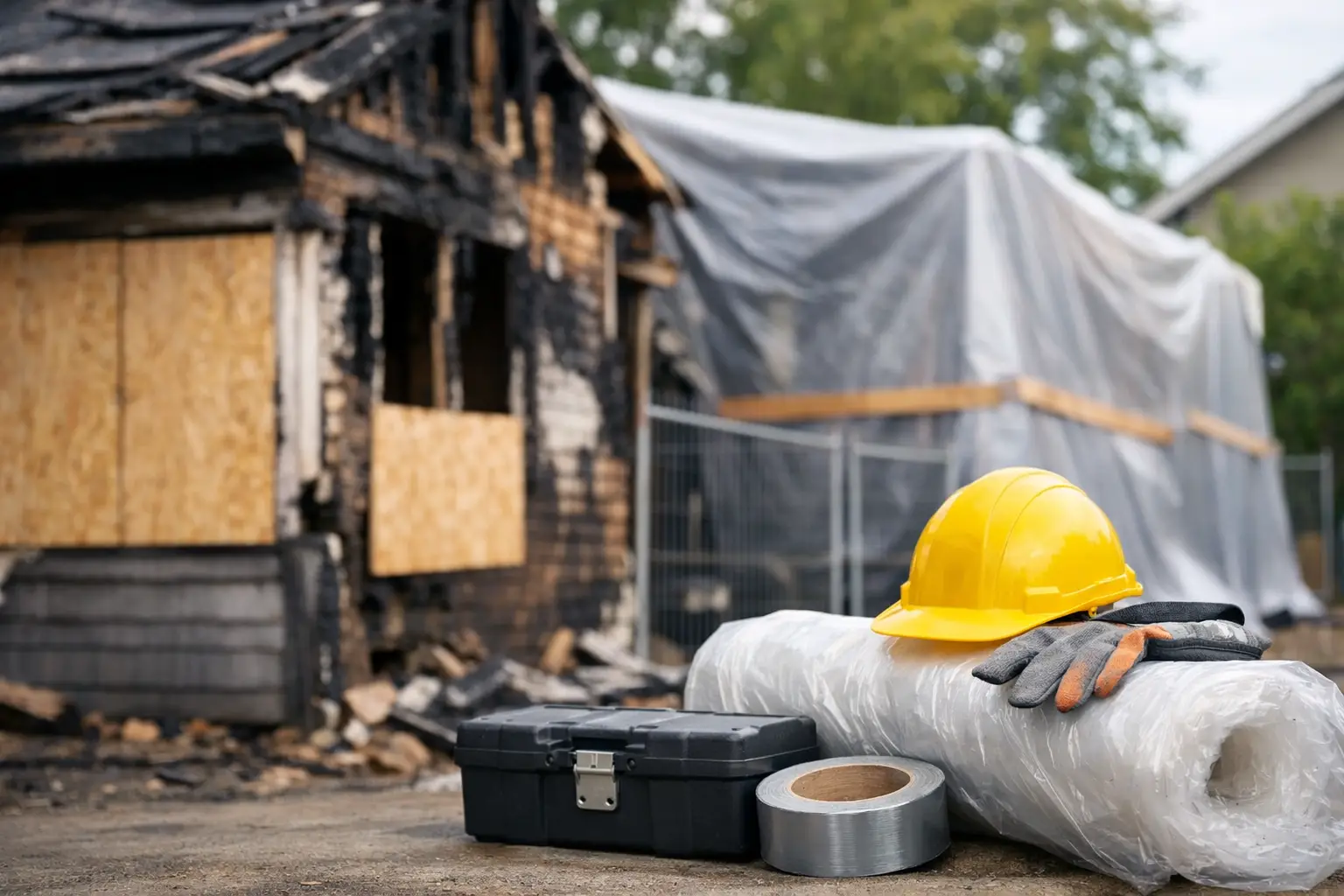
Emergency board-up and roof tarping are temporary protective measures, not cosmetic repairs. Proper board-up uses secure materials and methods that protect openings without causing unnecessary additional damage. A roof tarp should be installed to direct water away from the damaged area, not simply laid over the opening where wind can lift it.
Take clear photos of all exterior damage before temporary protection is installed, if conditions allow. Then photograph the completed board-up or tarp as well. This creates a record for your insurer and shows that you acted promptly to prevent additional loss.
Document Damage Before Moving or Cleaning Anything
After a fire, it is natural to want to start clearing debris immediately. Resist that urge until you have documented the scene and spoken with your insurance company. Detailed documentation supports the claim and helps restoration professionals determine what can be cleaned, restored, or replaced.
Use your phone to take wide photos and video of each room, then capture closer images of damaged surfaces, furniture, electronics, inventory, equipment, and personal belongings. Open drawers and cabinets only if it is safe to do so. Smoke can travel through gaps and ventilation systems, so document areas that look unaffected as well.
Create a written inventory as you go. Include the item, brand or description, approximate age, condition before the fire, and estimated value if known. For commercial properties, record damaged inventory, machinery, point-of-sale equipment, tenant property, business records, and any interruption to operations.
Do not discard damaged items before your adjuster or restoration team has had the opportunity to inspect them, unless the item presents an immediate health or safety risk. If something must be removed, photograph it thoroughly and keep any identifying information, such as serial numbers or receipts.
Prevent Water Damage From Taking Over
Firefighting water is often one of the most damaging parts of a fire loss. It can soak drywall, insulation, flooring, cabinetry, documents, and contents. If moisture is left in place, materials can swell, warp, break down, or develop mold growth.
A professional restoration team uses moisture meters, thermal imaging, extraction equipment, air movers, and dehumidifiers to identify and dry wet materials. This matters because a floor or wall can look dry on the surface while moisture remains underneath. Drying the property correctly is a technical process that protects structural materials and helps avoid a second round of damage weeks later.
Do not use household fans to blow air through heavily soot-covered or wet areas. Fans can spread fine soot particles into cleaner rooms, and improper drying can leave moisture hidden in wall cavities. Similarly, avoid using a standard household vacuum on soot. The wrong vacuum can exhaust particles back into the air and worsen contamination.
Treat Smoke and Soot as More Than a Cleaning Problem
Smoke damage is rarely limited to the room where the fire started. Hot smoke rises, cools, and settles on walls, ceilings, textiles, HVAC components, and belongings throughout the property. Depending on what burned, residue may be oily, dry, acidic, or difficult to see. Over time, soot can discolor paint, corrode metal, stain fabrics, and leave persistent odors.
Avoid wiping soot from walls, ceilings, or upholstered furniture with regular household cleaners. Rubbing can grind particles deeper into surfaces and create permanent staining. Do not wash clothing, curtains, or other textiles until a restoration professional has advised you on the appropriate cleaning method. Some items can be restored through specialized cleaning, while others may be unsafe or impractical to save.
If your HVAC system was running during the fire, keep it off until it has been inspected. Smoke residue inside ductwork can continue circulating odors and particles after the visible fire damage is cleaned.
Contact Your Insurer and Keep a Clear Record
Notify your insurance carrier as soon as possible and ask about the claim process, emergency mitigation coverage, and any preferred documentation requirements. Request a claim number and keep it available for every conversation, invoice, photo folder, and email related to the loss.
Maintain a simple log of who you speak with, when you spoke, and what was discussed. Save receipts for reasonable emergency expenses, including temporary lodging, boarding, security measures, and essential replacement items. Your policy determines what is covered, so ask questions before making major repair or replacement decisions.
Insurance coordination can feel overwhelming when you are also trying to care for your family, employees, or tenants. A qualified restoration company can provide damage documentation, detailed estimates, and communication that helps keep the project organized. The insurer makes final coverage decisions, but thorough records and professional mitigation can make the process clearer.
Choose Restoration Help That Can Handle the Full Scope
Fire recovery often involves several connected problems: emergency board-up, water extraction, structural drying, smoke and soot cleanup, odor control, contents cleaning, mold prevention, and reconstruction. Hiring separate providers for each step can create delays and confusion, especially when work must happen in the right order.
Look for a local restoration company with emergency availability, trained technicians, clear communication, and experience working with both residential and commercial losses. Ask how they will document damage, protect unaffected areas, monitor drying, and coordinate reconstruction once cleanup is complete. The lowest estimate is not always the best value if it leaves out moisture detection, smoke cleaning, or necessary containment.
For property owners in El Paso, GEM Disaster Recovery Corp provides emergency stabilization and restoration support from board-up through rebuilding, with a focus on clear communication during a stressful time.
Protect What Can Be Saved, Carefully
Once the property is safe and documented, identify high-priority items such as medications, identification, financial records, heirlooms, business documents, computers, and inventory records. Do not remove items that are heavily contaminated or structurally damaged without guidance. Some belongings need specialized handling to avoid spreading soot or causing further deterioration.
Separate items from unaffected areas from those exposed to smoke or water. If possible, place salvageable belongings in a clean, dry, secure location approved by your restoration team. Contents cleaning and pack-out services may be appropriate when the structure needs extensive work or when belongings require off-site cleaning.
Fire damage creates a long list of decisions, but the next right step is usually simple: keep people safe, secure the building, document the loss, and get qualified help before secondary damage spreads. Protecting the property early gives you a stronger foundation for restoring the place that matters to you.