How to Disinfect Biohazard Surfaces Safely
A blood spill in a hallway, bodily fluids in a rental unit, or contamination after an unattended death changes the situation immediately. Knowing how to disinfect biohazard surfaces can help you protect people from further exposure, but it also means recognizing when the work requires trained cleanup professionals. The goal is never to make an area merely look clean. It is to reduce health risks, prevent cross-contamination, and return the property to a safe condition.
For homeowners, property managers, and business owners, the first decision is often the most important: Is this a small, contained incident that can be addressed safely, or is it a professional biohazard cleanup situation? When there is any doubt, protect the area and call for help.
First, Determine Whether the Area Is Safe to Enter
Biohazards can include blood, bodily fluids, human or animal waste, drug-related contamination, and materials affected by infectious disease. Some risks are visible. Others may be absorbed into carpet padding, grout, unfinished wood, furniture, drywall, or personal belongings.
Do not rush into the area to begin wiping surfaces. Keep children, pets, employees, tenants, and visitors away. If there is a possible crime scene, an active emergency, a chemical hazard, or a threat to personal safety, contact the appropriate emergency authorities first. Cleanup should not begin until the scene has been released and it is safe to enter.
A small, fresh spill on a hard, nonporous surface may be manageable with appropriate protective equipment and an EPA-registered disinfectant used according to its label. Extensive contamination, unknown fluids, dried blood, strong odors, affected porous materials, sharps, or contamination following a death should be handled by certified biohazard cleanup technicians.
The Difference Between Cleaning and Disinfecting
Cleaning removes visible soil and organic material. Disinfecting uses an approved product for the required contact time to kill or inactivate germs on a surface. Both steps matter.
Organic material can keep a disinfectant from reaching the surface effectively. That means spraying a product over a visible spill and immediately wiping it away is not a reliable process. The surface must first be carefully cleaned, then treated with a suitable disinfectant and kept wet for the full dwell time listed on the product label.
Disinfectants are not interchangeable. Use a product labeled for the type of contamination and surface involved. Follow the manufacturer’s dilution instructions, ventilation requirements, contact time, and warnings. Never mix disinfectants, bleach, ammonia, or other cleaning chemicals. Dangerous fumes can result, even in a small room.
How to Disinfect Biohazard Surfaces: A Safe Basic Process
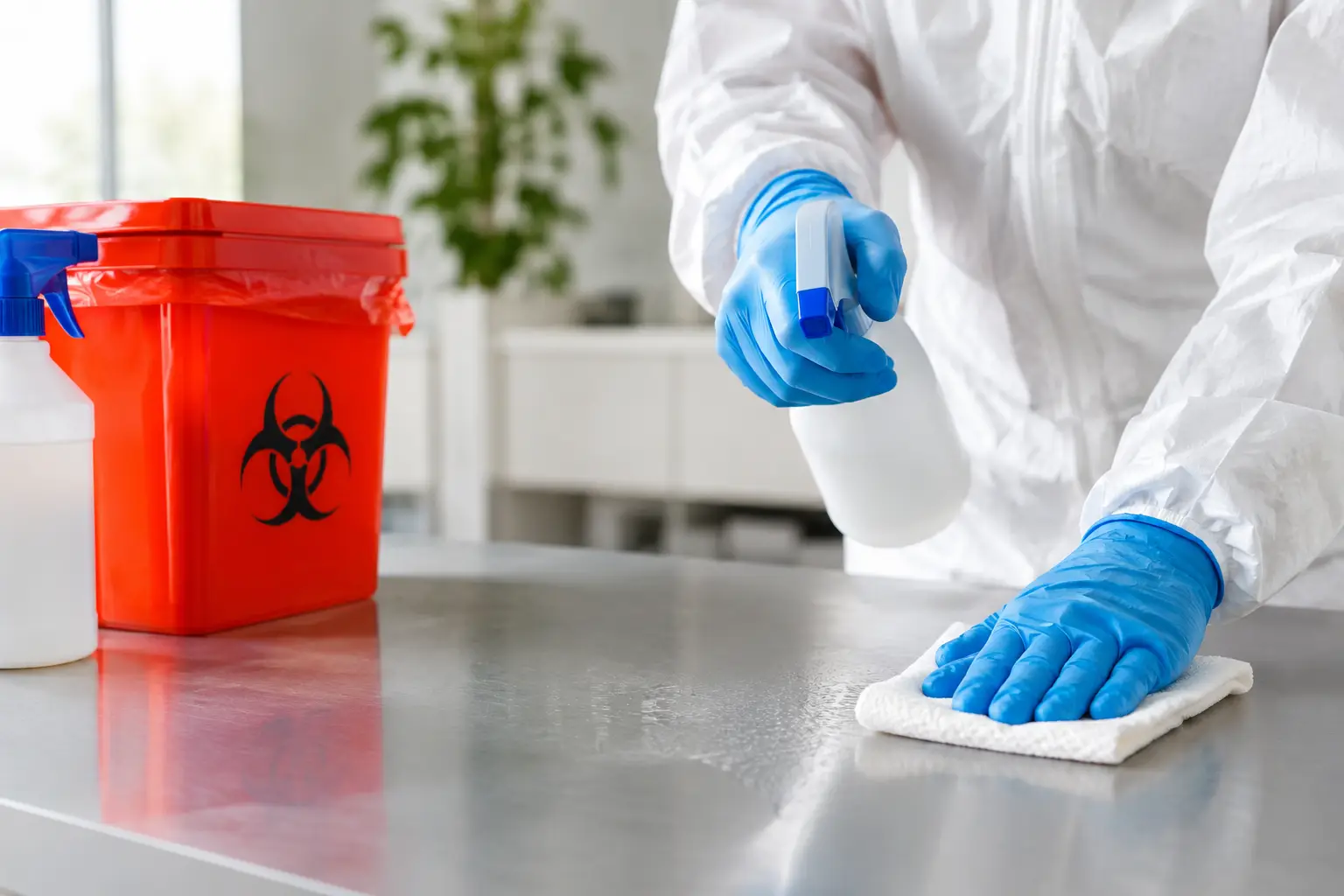
For a limited incident involving a hard, nonporous surface, begin only after putting on disposable gloves and appropriate eye protection. If there is any possibility of splashing or aerosol exposure, stop and contact a professional rather than improvising with household supplies.
Start by restricting access to the space and opening ventilation where it can be done safely. Gather disposable cleaning materials, leak-resistant waste bags, and an EPA-registered disinfectant. Avoid using reusable sponges, cloth towels, or a household vacuum. These items can spread contamination or become contaminated themselves.
Carefully remove visible material with disposable absorbent materials. Work from the outside of the affected area toward the center to avoid spreading contamination. Place used materials directly into a sturdy, properly contained bag without compressing them or handling them unnecessarily.
Once visible material has been removed, clean the hard surface using the product directions. Then apply the disinfectant evenly enough to keep the surface wet for its required contact time. A disinfectant that dries too quickly may not be effective, especially in El Paso’s dry conditions. Reapply as needed to maintain the labeled dwell time.
After the contact time is complete, wipe the surface only if the product instructions call for it. Remove gloves carefully, turning them inside out as they come off, and place them with other contaminated disposable materials. Wash hands thoroughly with soap and water. If clothing, shoes, or personal items may have contacted the affected area, isolate them until they can be assessed for safe cleaning or disposal.
Why Porous Materials Need Extra Care
Hard, sealed surfaces such as glass, metal, plastic, and finished tile can often be cleaned and disinfected effectively when contamination is limited. Porous or absorbent materials are different. Carpet, upholstery, mattresses, fabric, unfinished wood, paper products, acoustic ceiling tiles, and drywall can hold fluids below the visible surface.
Disinfecting the top layer does not guarantee that contamination has been removed from the material underneath. In many cases, affected porous materials need to be removed and disposed of through proper biohazard procedures. This is especially true when fluids have soaked through carpet into padding or subflooring, entered wall cavities, or affected contents with sentimental or business value.
Trying to save every item can increase the risk of lingering odor, staining, microbial growth, and exposure. A professional assessment helps identify what can be restored safely and what should be discarded. That judgment can also support thorough documentation for an insurance claim.
Do Not Overlook Hidden Contamination
The visible spill is not always the full extent of the problem. Contamination can be transferred to doorknobs, light switches, cabinet pulls, phones, furniture, floors, tools, and nearby personal belongings. Foot traffic can spread material well beyond the original area.
This is why professionals establish containment and use a deliberate cleaning sequence. They assess the entire affected space, not just the obvious stain. For property managers and business owners, this approach is particularly important because reopening a unit or workplace before contamination is properly addressed can put occupants and staff at risk.
Odor is another warning sign. It may indicate that fluids have reached areas that are not accessible with normal surface cleaning. Air fresheners and deodorizing sprays do not correct the underlying issue. The source must be located, removed or remediated, and the area properly disinfected.
When to Call a Professional Biohazard Cleanup Team
Professional help is the right choice when the contamination is extensive, has dried, involves an unknown substance, or affects porous building materials. It is also strongly recommended after an unattended death, suicide, violent incident, sewage backup involving waste, animal hoarding conditions, or any event with needles or other sharps.
Trained technicians use specialized protective equipment, containment practices, commercial-grade disinfectants, and proper disposal methods. Just as important, they understand how to document the work, evaluate hidden damage, and coordinate the next steps if reconstruction is needed.
For a property owner already dealing with shock, grief, or an urgent operational disruption, this removes a heavy burden. You should not have to choose between protecting your family, staff, or tenants and trying to manage a difficult cleanup alone.
GEM Disaster Recovery Corp provides compassionate biohazard cleanup support in El Paso, with a focus on stabilizing affected properties and helping owners move forward with care. When contamination reaches flooring, walls, or building materials, a single experienced team can also coordinate the restoration work that follows.
Protect the Property Without Putting Yourself at Risk
The most responsible answer to how to disinfect biohazard surfaces is not always a bottle of disinfectant and a pair of gloves. It depends on the size of the incident, the materials affected, and whether contamination may have spread beyond what you can see.
If you are facing a small, contained spill, use the proper product, follow its label exactly, and do not take shortcuts with protective equipment or contact time. If the situation is larger, uncertain, emotionally difficult, or involves absorbed fluids, step away from the area and seek trained assistance. Protecting people comes first, and a careful response now can prevent a much larger property and health problem later.