Fire Cleanup Safety Guide for El Paso Properties
The fire is out, but the danger may not be. Smoke residue, weakened building materials, standing water, damaged utilities, and airborne particles can remain long after firefighters leave. This fire cleanup safety guide helps El Paso homeowners, property managers, and business owners make safe decisions during the first hours and days after a fire.
Fire Cleanup Safety Guide: Start Outside the Property
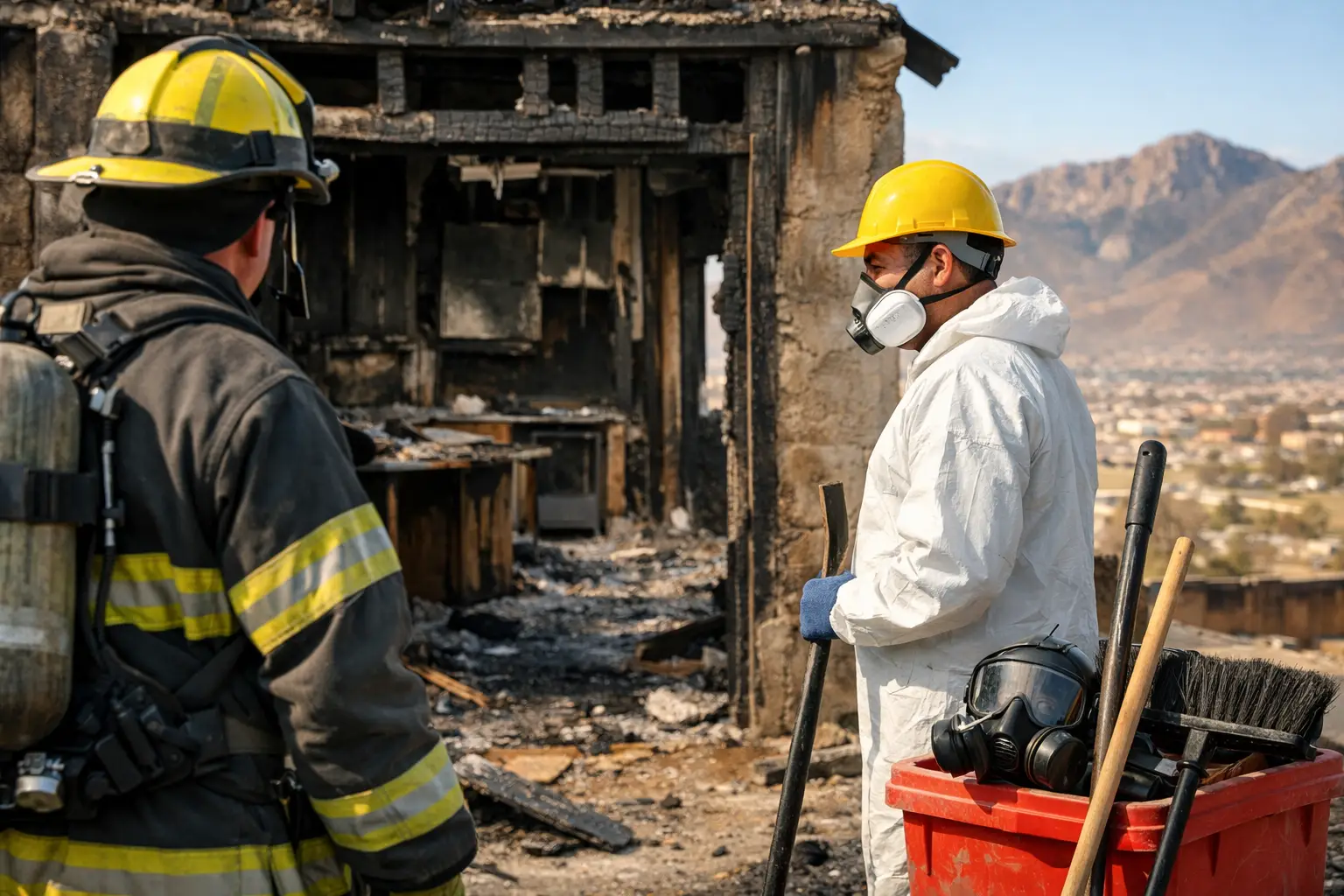
Do not reenter a fire-damaged home or business until the fire department or another qualified authority says it is safe. A building can look stable from the street while ceilings, floors, roof framing, or stairs have been weakened by heat and water. If a structure has visible sagging, cracked walls, broken windows, or exposed framing, stay out and keep others away.
Before anyone enters, watch for downed power lines, the smell of gas, damaged electrical panels, and pooled water near outlets or appliances. Call the appropriate utility provider if you suspect a gas leak or electrical hazard. Never attempt to turn utilities back on yourself after a fire.
If the property is accessible, limit entry to essential documentation or emergency tasks only. Keep children, pets, tenants, and unprotected visitors outside. One unnecessary trip through a damaged building can spread soot through unaffected rooms or expose someone to contaminants that are not obvious at first glance.
Understand What Makes Fire Damage Hazardous
Fire cleanup is not simply sweeping up ash. Soot is made up of fine particles that can irritate the eyes, skin, and respiratory system. Depending on what burned, residue may also contain chemicals from plastics, insulation, electronics, paint, cleaning products, or building materials.
Smoke often travels farther than flames. It can settle inside cabinets, HVAC ducts, closets, upholstered furniture, and rooms that appear untouched. In El Paso, dry, windy conditions can also carry ash and fine debris around an exposed property, especially when windows, doors, or roof areas are damaged.
Water used to extinguish the fire creates a second set of concerns. Wet drywall, carpet, insulation, and wood can begin to support mold growth if they are not dried correctly. The trade-off is clear: moving too quickly without proper containment can spread contamination, while waiting too long can make smoke, water, and mold damage more extensive.
Protect Yourself Before Handling Anything
For a brief, approved entry into a lightly damaged area, wear protective clothing that covers your skin, closed-toe boots with slip-resistant soles, safety glasses, and gloves. A properly fitted respirator rated for fine particles is safer than a basic dust mask when soot is present. However, protective gear does not make a severely damaged building safe to enter.
Avoid touching ash or soot with bare hands, eating or drinking inside the property, or rubbing your eyes while cleaning. Wash exposed skin promptly after leaving. If you experience coughing, shortness of breath, dizziness, chest discomfort, eye irritation, or nausea, leave the area and seek medical guidance.
People with asthma, COPD, heart conditions, compromised immune systems, or young children should not participate in cleanup. The same applies to anyone who is unsure whether the damage includes hazardous materials. A cautious decision early on can prevent a much more serious health issue later.
Secure the Property Without Creating More Damage
Once authorities approve access, the first priority is stabilization. Open gaps in the roof, broken windows, damaged doors, and exposed walls allow weather, dust, animals, and unauthorized entry to make an already difficult situation worse. Emergency board-up and roof protection can help preserve what remains while the full restoration plan is developed.
Do not use household tape, plastic sheeting, or improvised tarps near unstable walls or electrical hazards unless conditions are clearly safe. These temporary measures may help in a minor incident, but they are not a substitute for professional securing when the structure has fire, water, or roof damage.
Take photos and video from a safe distance before moving belongings. Document every affected room, visible damage, and any items that need immediate attention. Keep a written record of conversations with your insurer, fire officials, and restoration providers. Good documentation supports the claim process and helps establish what was present before cleanup began.
What You Can Do and What Should Wait
Some actions are reasonable after a small, contained fire and official clearance. You can remove personal documents, medications, valuables, and clean clothing from unaffected areas if there is no visible soot, water, or structural concern. Place salvageable items in clean boxes or bags, and keep them away from the damaged area.
Avoid do-it-yourself cleaning when there is widespread soot, heavy smoke odor, water saturation, or damage to walls, ceilings, insulation, or HVAC equipment. Do not vacuum soot with a standard household vacuum. It can push tiny particles back into the air and damage the machine. Do not wipe soot with a wet rag, either. Water can smear residue deeper into porous surfaces.
Certain items require special handling or disposal. Refrigerated food, medicines exposed to heat or smoke, cosmetics, baby products, and open food packages are generally not worth the risk. When in doubt, do not use an item that may have been contaminated by smoke, soot, fire-suppressant chemicals, or extreme heat.
Be Careful With Water, Electricity, and HVAC Systems
Fire hoses can leave behind substantial moisture, even when the visible fire damage seems limited. Do not walk through standing water if power may still be active. Do not plug in appliances, operate electronics, or reset circuit breakers until a qualified electrician has inspected the system.
Keep the HVAC system off until it has been evaluated. Running a contaminated system can distribute smoke particles and odor throughout the property, including rooms that were initially clean. Ductwork, filters, coils, and air-handling equipment may need specialized cleaning before normal use resumes.
If water has reached carpeting, drywall, cabinets, or insulation, drying needs to begin quickly. Professional moisture monitoring matters because surfaces can feel dry while moisture remains trapped underneath. That hidden moisture can lead to material deterioration and mold growth after the immediate fire cleanup appears complete.
Work With Your Insurance Carrier, But Do Not Delay Stabilization
Contact your insurance carrier as soon as you can, but do not wait for an adjuster before taking reasonable emergency steps to protect the property from further damage. Save receipts for emergency lodging, board-up, temporary repairs, and other approved loss-related expenses. Avoid signing contracts you do not understand or authorizing full reconstruction before the scope of work is clear.
A qualified restoration team can document damage, identify urgent hazards, create a detailed cleanup plan, and coordinate information needed for the claim. This is especially useful for commercial properties, multi-unit buildings, and homes with significant smoke or water damage, where one overlooked area can delay reopening or rebuilding.
GEM Disaster Recovery Corp provides 24/7 emergency response in El Paso, helping property owners stabilize fire-damaged spaces, address smoke and water damage, and move from cleanup toward reconstruction with clear communication at every stage.
When Professional Fire Cleanup Is the Safer Choice
Professional help is warranted whenever fire or smoke affected more than a very small area, firefighting water entered the property, the building has structural concerns, or smoke odor persists. It is also the right choice when occupants have health sensitivities, the fire involved electrical equipment or chemicals, or the property is a workplace that must meet safe operating conditions before people return.
Certified restoration professionals use containment, specialized filtration, moisture detection, odor treatment, and proper cleaning methods for different surfaces. Not every item can be restored, and not every surface should be cleaned the same way. The right approach depends on what burned, how long smoke was present, the type of materials affected, and whether water damage is also involved.
After a fire, the safest next step is rarely to clean faster. It is to protect people first, secure the property, document the damage, and bring in qualified help before hidden hazards turn a recoverable loss into a larger one.