Emergency Water Restoration in El Paso: Act Fast
A burst supply line can soak drywall before breakfast. A roof leak can turn a quiet El Paso rainstorm into a ceiling collapse by morning. When water enters your home, business, or rental property, the first few hours shape the cost, the cleanup timeline, and whether mold becomes part of the problem.
For emergency water restoration in El Paso, fast response matters because visible water is only part of the damage. Moisture can travel under flooring, behind baseboards, into insulation, and through wall cavities. The goal is not simply to remove puddles. It is to stabilize the property, dry it properly, document the loss, and restore the space with care.
What to Do First After Water Damage
Start with safety. If water is near outlets, electrical panels, appliances, or damaged ceilings, stay clear of the area and do not enter standing water. Turn off the water source only if it is safe to do so. For a supply-line failure, this may mean shutting off the fixture valve or the main water supply. If the source is outside, such as stormwater or a roof leak, contain what you safely can with buckets or towels and move valuables away from the affected area.
Do not use a household vacuum on standing water, and do not attempt to lift wet carpeting or open walls without understanding what is underneath. Wet materials can be heavy, electrical hazards may be present, and contaminated water requires different handling than a clean plumbing leak.
If you are able, take clear photos and short videos before moving items. Capture the source of the leak, the affected rooms, damaged belongings, and any visible staining or swelling. This documentation can help support an insurance claim and gives the restoration team a clearer picture of how the loss began.
Then call a qualified restoration company. Emergency service is not only about arriving quickly. It is about arriving prepared to extract water, assess hidden moisture, protect unaffected areas, and begin a drying plan before damage spreads.
Why Emergency Water Restoration in El Paso Needs a Local Response
El Paso properties face conditions that can complicate water losses in different ways. Intense storms can expose roof or window weaknesses. Older plumbing components can fail without warning. Commercial buildings may have larger roof areas, shared plumbing systems, or equipment that makes downtime especially costly. In desert climates, people can also assume dry outdoor air will solve an indoor water problem. It will not reliably dry moisture trapped beneath flooring or inside building materials.
Professional emergency water restoration in El Paso focuses on the actual moisture condition of the structure, not just how dry a room appears. Technicians use moisture meters and other assessment tools to identify wet materials and track drying progress. That matters because wood framing, subfloors, drywall, cabinets, and insulation all hold moisture differently.
The right response also depends on the type of water involved. Clean water from a broken supply line may allow for a more straightforward mitigation process if addressed promptly. Water from a washing machine overflow can become more problematic if it sits. Sewer backups, toilet overflows involving waste, and outdoor floodwater are contaminated and require specialized cleaning, removal, and safety measures. Treating all water losses the same can put occupants and workers at risk.
What a Professional Water Restoration Team Does
A thorough restoration process begins with emergency stabilization. The crew identifies the source, assesses safety concerns, and determines the extent of the water migration. If needed, they may move or protect contents, place containment around the affected area, and remove materials that cannot be dried or safely restored.
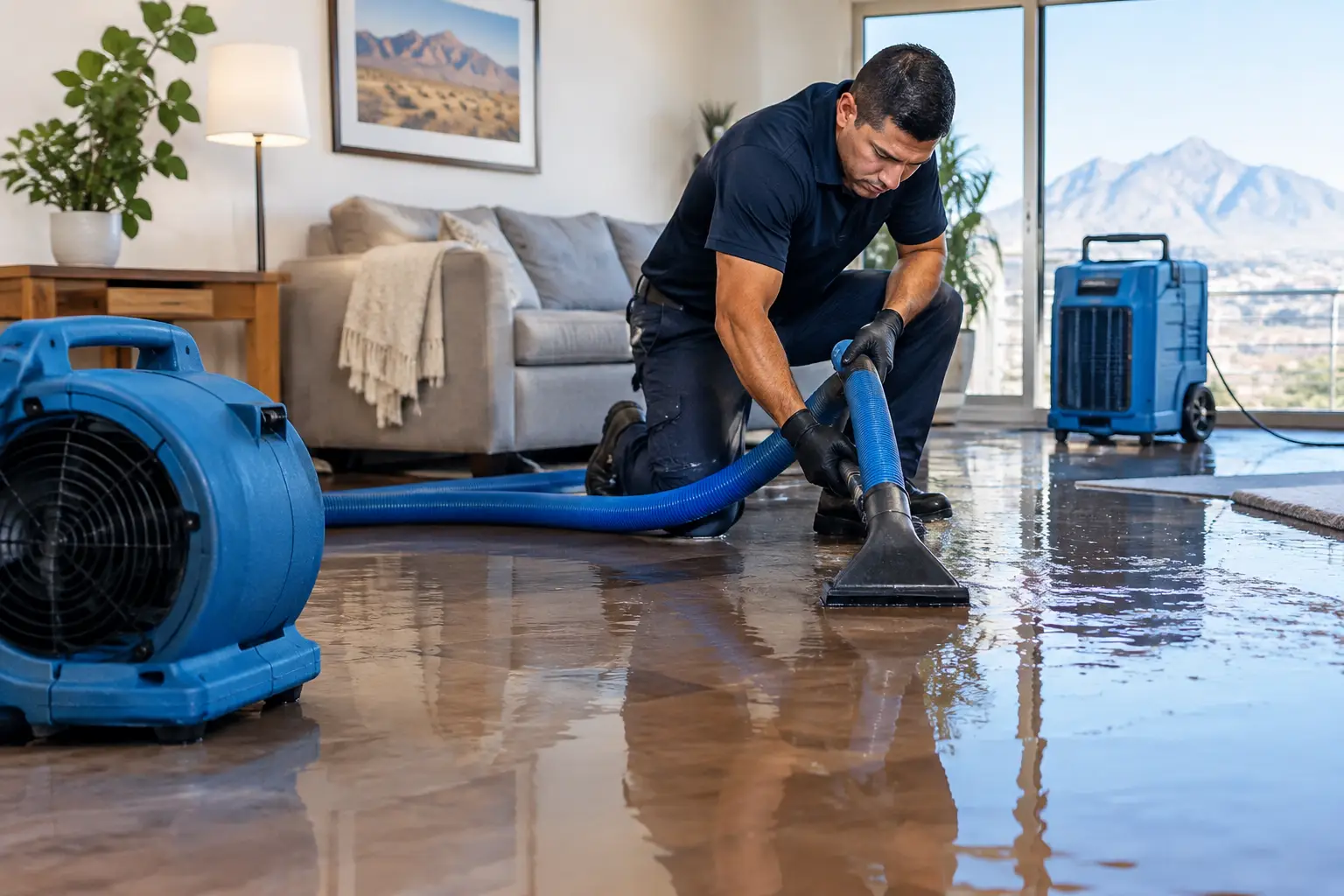
Next comes water extraction. Powerful professional equipment removes standing water from floors, carpeting, padding, and other affected materials far more effectively than towels or consumer-grade equipment. Prompt extraction reduces the amount of moisture that has time to absorb deeper into the building.
Drying is the phase many property owners underestimate. Air movers and dehumidifiers are positioned strategically to create the conditions needed for moisture to leave materials and be removed from the air. The equipment is not placed at random. Effective drying requires an understanding of airflow, humidity, temperature, material types, and the boundaries of the affected area.
Throughout the process, technicians should monitor moisture levels rather than guessing based on surface dryness. Some materials can be saved when drying begins early and is carefully managed. Others, including saturated padding, swollen particleboard cabinets, or heavily affected drywall, may need removal. That decision depends on the water category, the time involved, the material's condition, and whether it can be returned to a safe, dry state.
Once drying is complete, the work may continue with cleaning, repairs, and reconstruction. A company that can manage the project from mitigation through rebuilding helps avoid the confusion of coordinating separate cleanup crews, contractors, and insurance conversations while your property is already disrupted.
The First 24 Hours: Avoid These Costly Mistakes
Waiting to see if the area dries on its own is one of the most expensive choices after a water loss. Moisture can remain out of sight while materials weaken and microbial growth conditions develop. Running ceiling fans may help slightly in a small, clean-water spill, but it is not a substitute for professional extraction and structural drying when water has reached walls, flooring, or multiple rooms.
Be careful about moving damaged belongings too quickly. Wet photographs, documents, electronics, upholstered furniture, and area rugs may be recoverable, but improper handling can make them worse. If a ceiling is sagging, leave the area and call for help. A water-filled ceiling can fail suddenly.
It is also wise to avoid signing broad repair agreements before you understand the scope of the damage and the restoration plan. Emergency mitigation should begin quickly, but you deserve clear communication about what is being done, why it is necessary, and what the next steps will be.
How Insurance Coordination Can Reduce Stress
Water damage is disruptive enough without trying to interpret policy language while managing a wet property. Insurance coverage depends on the cause of loss and the details of your policy. A sudden pipe break may be handled differently than long-term seepage, deferred maintenance, or floodwater from outside the property.
A restoration team can help by documenting moisture readings, equipment use, affected materials, photos, and the work completed. That documentation gives your insurer a clear record of the emergency response. It does not replace your role in communicating with your carrier, but it can make the process more organized and reduce back-and-forth questions.
For property managers and business owners, documentation is especially valuable. It supports communication with tenants, owners, adjusters, and internal teams while helping establish a record of the steps taken to protect the property and limit further damage.
Choosing the Right Restoration Partner
During an emergency, look for a company that offers true 24/7 response, trained and certified technicians, clear communication, and the ability to handle both mitigation and reconstruction. Ask how they determine whether materials can be dried, how they monitor progress, and how they document the work for insurance purposes.
Local experience also matters. You want a team that understands the needs of El Paso homeowners, property managers, and businesses, and that treats your property as more than a job site. GEM Disaster Recovery Corp brings a family-owned approach to emergency response, helping clients stabilize, restore, and rebuild without feeling left alone in the process.
Water damage is urgent, but it does not have to become overwhelming. A calm, informed response in the first hours can protect your property, preserve more of what matters, and give you a clear path back to a safe, usable space.