Emergency Water Extraction Service Fast Guide
Water on the floor changes the day fast. A burst pipe before sunrise, an overflowing washer in the middle of a workday, or storm water pushing into a building can go from manageable to overwhelming in minutes. That is when an emergency water extraction service matters most - not just to remove visible water, but to stop further damage, protect the structure, and give you a clear path forward.
For homeowners, property managers, and business owners in El Paso, the first few hours often decide how large the repair becomes. Water moves quickly into carpet, baseboards, drywall, cabinetry, and subflooring. Even when the surface looks only slightly wet, moisture may already be spreading behind walls or under flooring. Fast extraction buys time, reduces loss, and makes the next steps far more manageable.
What an emergency water extraction service actually does
Many people hear the term and assume it simply means vacuuming up standing water. Professional extraction is much more than that. The goal is to stabilize the property first, then begin the drying process in a controlled, documented way.
A trained crew starts by identifying the water source and helping stop it if it is still active. From there, technicians assess how far the water has traveled, what materials are affected, and whether the situation involves clean water, gray water, or contaminated water. That distinction matters because a broken supply line is handled differently than sewage backup or storm intrusion.
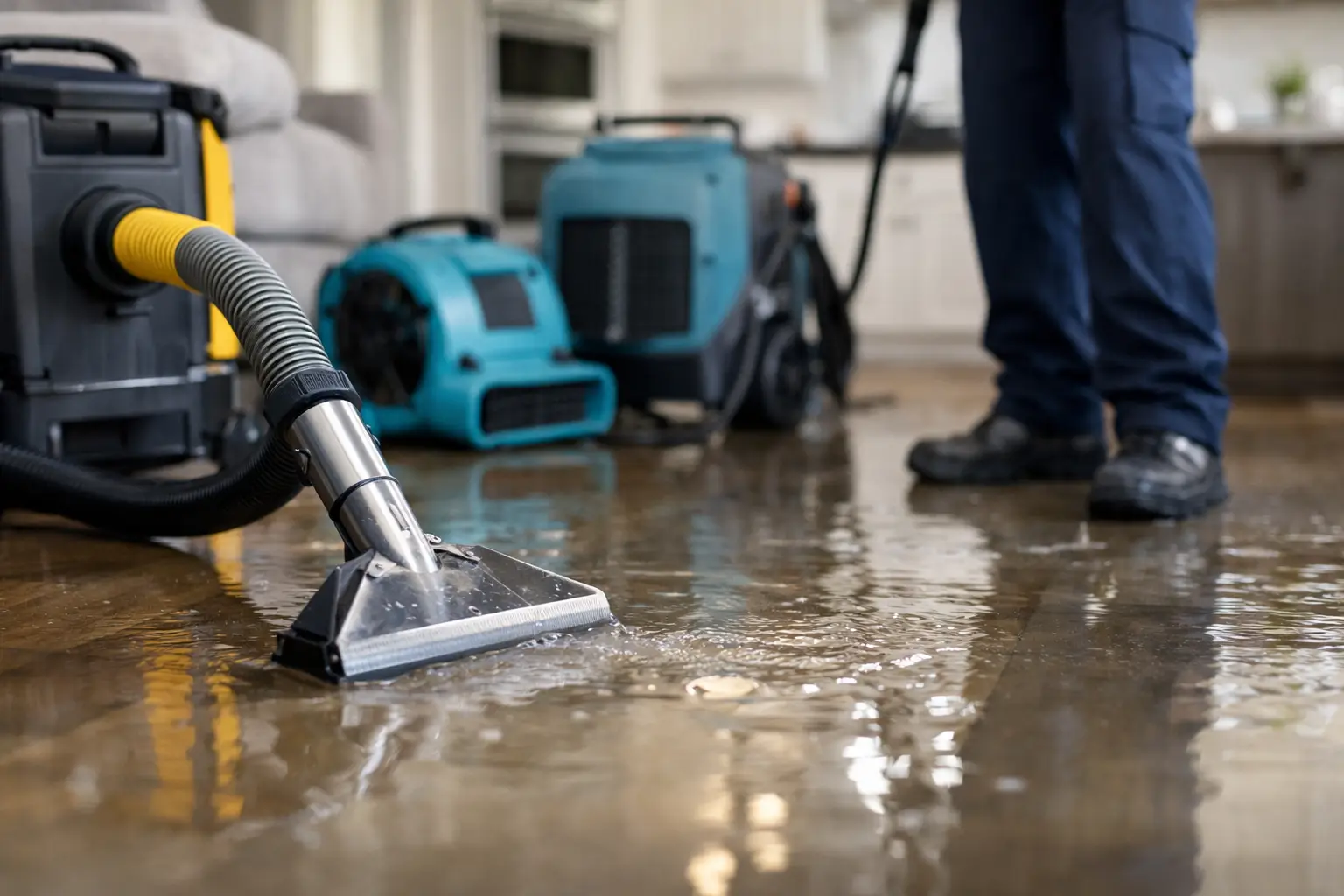
Once conditions are safe, commercial-grade pumps and extraction equipment remove standing water. After extraction, the work shifts into moisture mapping, targeted removal of unsalvageable materials when needed, and placement of drying equipment. Air movers and dehumidifiers are not there to make the room feel dry. They are there to pull moisture out of building materials and the air so hidden damage does not continue.
Why speed matters more than most people realize
The damage you see is only part of the problem. Water keeps moving after the initial event, and porous materials absorb it fast. Carpet pad can hold a surprising amount of moisture. Drywall wicks water upward. Wood can swell, warp, or begin to cup. If the space stays damp long enough, odors and microbial growth can follow.
That is why delaying cleanup often costs more than people expect. A room that might have needed extraction and drying on day one can turn into demolition, mold remediation, flooring replacement, and reconstruction a few days later. The exact timeline depends on the source of water, indoor temperature, humidity, and material type, but the pattern is consistent: the faster the response, the better the chance of saving materials and limiting disruption.
For commercial properties, speed also affects operations. Water in an office, retail space, or facility can interrupt business, create slip hazards, damage inventory, and affect tenants or customers. Quick extraction helps reduce downtime, but it also creates documentation that is often useful during the insurance process.
Emergency water extraction service for homes and businesses
Residential and commercial jobs share the same basic principles, but the priorities can look different. In a home, families usually want to know whether the space is safe, what can be saved, and how long normal life will be disrupted. In a business setting, there may be added concerns around employee safety, customer access, equipment protection, and continuity of operations.
A good restoration team adjusts to those realities. In a home, that may mean protecting unaffected rooms, removing wet carpet pad, and explaining each step clearly so the situation feels less chaotic. In a commercial setting, it may mean working in phases, isolating impacted areas, coordinating after-hours work when possible, and documenting conditions in more detail.
That flexibility matters because no two losses are identical. A slab leak in a single-family home is not the same as a sprinkler discharge in a multi-unit property. The right response depends on the source, the extent of spread, and how the building is used.
What to do before the crew arrives
If it is safe to do so, a few early steps can help limit further damage. Shut off the water source when possible. If electrical systems may be affected, avoid standing water and do not enter unsafe areas. Move small valuables, paper items, electronics, and loose contents away from the wet zone. If furniture legs are sitting in water, lifting them onto blocks or foil can sometimes help reduce staining or transfer.
That said, this is not the time for aggressive do-it-yourself cleanup. Household fans, shop vacs, and open windows may help in minor situations, but they are not a substitute for professional extraction and drying in a true emergency. In some cases, they can make things worse by spreading humidity or masking deeper moisture that remains trapped in materials.
If the water is contaminated, the risk changes completely. Sewage backup, toilet overflow with waste, and some types of storm water require specialized handling, protective equipment, and sanitation protocols. The safest move is to keep people out of the affected area and wait for trained professionals.
How professionals decide what can be saved
One of the most common questions after a water loss is whether materials need to be removed. The honest answer is: it depends. Not every wet material has to be torn out, and not every damp-looking surface is actually salvageable.
Technicians look at the category of water, the length of exposure, and the type of material affected. Non-porous and semi-porous materials can often be cleaned and dried successfully if addressed quickly. Highly absorbent materials may be harder to save, especially if contaminated water is involved or saturation has been prolonged.
This is where experience matters. Removing too much creates unnecessary cost and disruption. Removing too little can leave hidden moisture behind and lead to ongoing issues. A dependable restoration company aims for the balance - save what can be restored, remove what cannot be safely or effectively dried, and document the reasoning along the way.
The insurance side of an emergency water loss
Most property owners are not dealing only with water. They are also dealing with questions, deadlines, and paperwork. Photos, moisture readings, equipment logs, and clear notes from the mitigation phase can make a real difference when an insurance claim is involved.
That does not mean every claim unfolds the same way. Coverage depends on the policy, the source of loss, and whether the damage was sudden or tied to a maintenance issue. A supply line break may be treated very differently than long-term seepage. It is one more reason why fast professional documentation matters.
Many property owners appreciate working with one team that can handle emergency stabilization, drying, cleanup, and the rebuild if needed. It reduces handoffs, lowers the chance of missed details, and makes the process less stressful during an already difficult time.
Choosing the right emergency water extraction service
In an emergency, people often call the first company they find. That is understandable, but a little discernment still matters. You want a provider that responds quickly, explains the process clearly, uses professional drying equipment, and understands both mitigation and what comes next.
Look for a team with hands-on restoration experience, proper licensing and certifications, and the ability to document the job thoroughly. Local knowledge helps too. El Paso properties face a mix of plumbing failures, appliance leaks, roof issues, and storm-related intrusion, and each calls for a slightly different approach. A family-owned company with a strong local reputation often brings something else that matters in a crisis: steady communication and real accountability.
GEM Disaster Recovery Corp serves El Paso with 24/7 response and a full restoration approach, which means property owners do not have to piece together extraction, drying, repairs, and reconstruction through multiple vendors while dealing with an emergency.
After the water is gone, the job is not over
The room may look better once standing water is removed, but appearance is not the finish line. Drying, monitoring, sanitation when needed, and repairs are what bring a property back to a safe, usable condition. Skipping those steps can leave behind moisture damage that shows up later as warping, odors, staining, or hidden growth.
The good news is that a fast, professional response can change the outcome significantly. Water emergencies feel personal because they disrupt comfort, routines, and peace of mind. The right team does more than extract water. They bring order to a stressful situation, protect what can be saved, and help you move from emergency to recovery with a little more confidence.