Commercial Property Restoration Services
A burst pipe can close a retail store before the first customer arrives. Smoke can make an office unsafe long after the fire is out. When damage interrupts your operations, commercial property restoration services provide more than cleanup - they help protect people, limit business interruption, document the loss, and move the property toward a safe reopening.
For business owners and property managers in El Paso, the right response starts with fast stabilization. The longer water sits, smoke residue remains, or a compromised building is left exposed, the more difficult and expensive recovery can become. A qualified restoration team brings the equipment, trained technicians, and project coordination needed to address the emergency without creating a second problem later.
What Commercial Restoration Really Covers
Commercial restoration is a coordinated process that begins at the scene of the loss and continues until the affected space is ready for normal use. It may involve a small water loss in one office suite, extensive fire damage across a warehouse, or contamination that requires specialized cleaning and controlled removal.
The first priority is always safety. Depending on the situation, that can mean shutting off a water source, securing electrical hazards, installing emergency board-up, isolating contaminated areas, or assessing structural concerns. Restoration should not begin with demolition alone. The property needs a clear plan based on the source of damage, the materials affected, occupancy needs, and the possibility of hidden moisture or contamination.
A full-service provider can manage emergency mitigation, cleaning, drying, odor control, repairs, and reconstruction under one plan. That matters because commercial properties often have multiple systems and stakeholders involved: tenants, employees, customers, building owners, insurers, maintenance teams, and sometimes local inspectors. Coordinating separate vendors can slow down decisions when every day of downtime affects revenue and relationships.
The First Hours Can Shape the Entire Recovery
The first 24 to 48 hours after a loss are often the most important. Water can travel beneath flooring, behind walls, and into insulation. Fire and smoke residue can spread through HVAC systems and settle on inventory, electronics, and finished surfaces. A broken window, damaged roof, or unsecured entry can expose a property to weather, theft, and additional damage.
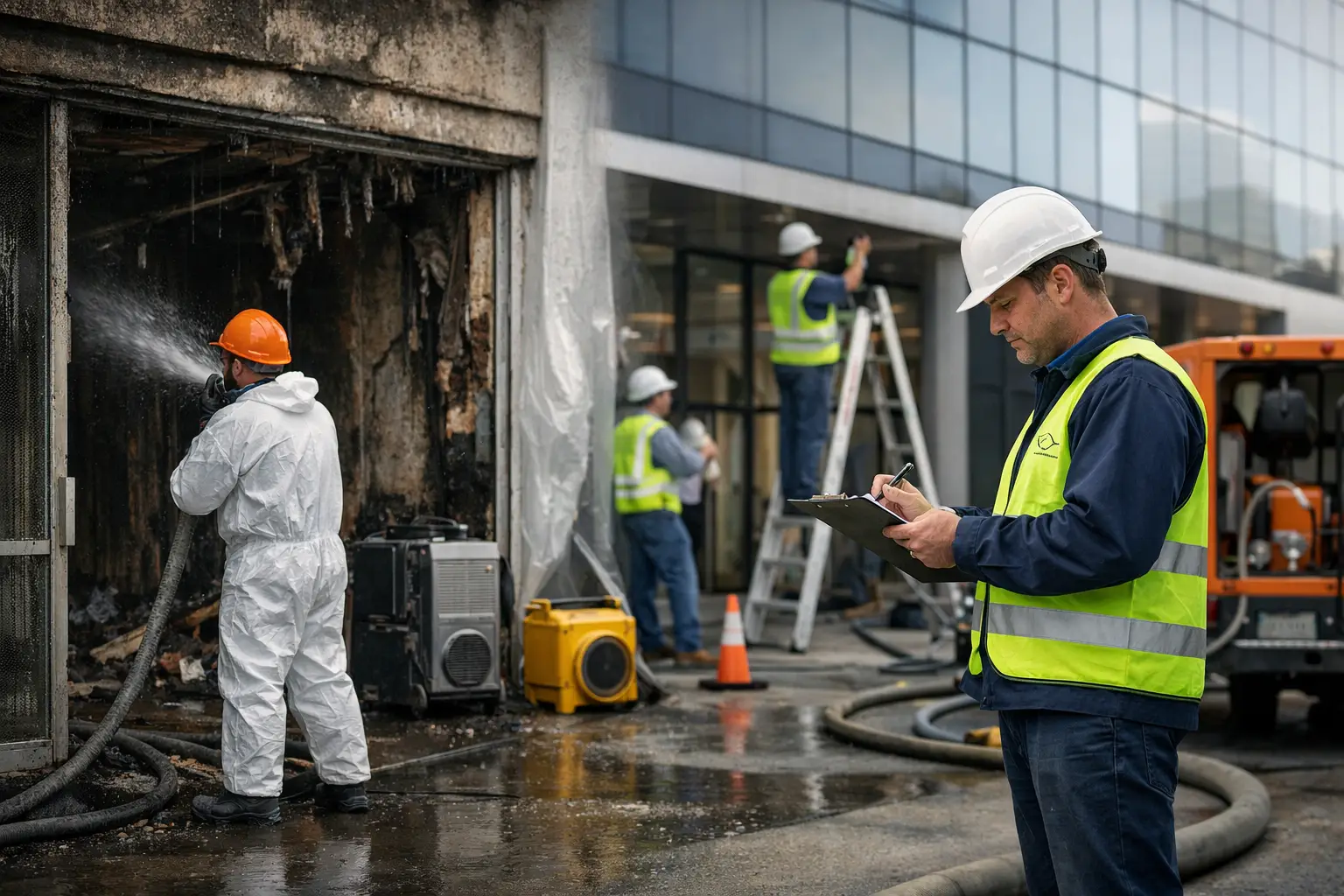
Emergency restoration work focuses on stopping that progression. Water extraction, targeted structural drying, dehumidification, temporary protection, debris removal, and odor control may all be needed. The exact approach depends on the source and category of water, the construction of the building, how long materials were wet, and whether the affected area must remain partially operational.
For example, a restaurant with water damage in a back storage area may need a different plan than a medical office with water near records, flooring, and treatment rooms. A warehouse fire may require smoke cleaning and roof protection before reconstruction can even be scoped. There is no responsible one-size-fits-all response.
Documentation Is Part of the Work
Commercial losses require clear documentation from the beginning. Photos, moisture readings, equipment logs, damaged-material inventories, and written scope details help show what happened and what work was necessary to stabilize the property.
This documentation can also support insurance coordination. While a restoration company does not decide coverage, organized records can help property owners communicate with adjusters and keep the project moving. It is especially useful when the loss involves hidden damage, specialty materials, tenant spaces, or a phased reopening plan.
Common Situations That Require Professional Help
Water damage is one of the most frequent commercial emergencies. It can come from supply-line breaks, roof leaks, overflowing fixtures, appliance failures, sprinkler discharges, or storm-related intrusion. Even when surfaces appear dry, moisture can remain trapped in wall cavities, under flooring, and inside building materials. Professional moisture detection and drying are critical to reducing the risk of mold growth and material deterioration.
Fire and smoke damage require a different level of assessment. Smoke residue is not simply dust, and cleaning methods must match the type of residue and the affected surface. Improper cleaning can smear residues, damage finishes, or leave odors behind. A careful restoration plan may include debris removal, detailed cleaning, odor treatment, content handling, HVAC evaluation, and rebuilding of damaged areas.
Mold concerns should also be handled with care. Mold can be connected to a past leak, ongoing humidity issue, roof failure, or plumbing problem. Effective remediation addresses both the visible growth and the moisture condition that allowed it to develop. Cleaning a surface without correcting the underlying source can lead to repeat problems and continued disruption.
Biohazard and crime scene cleanup call for specialized protocols, protective equipment, and compassionate handling. These events can be emotionally difficult for employees, tenants, and families. The goal is to restore a safe, sanitary environment while treating everyone affected with respect and discretion.
Choosing Commercial Property Restoration Services
Speed matters, but fast service should also be organized service. Before choosing a restoration company, ask whether it can respond around the clock, explain the immediate priorities, document the damage, and manage the project through repairs. A provider that only handles extraction may leave you searching for another contractor when it is time to rebuild.
Experience with commercial spaces is equally important. Businesses may have specialized flooring, equipment, inventory, security requirements, tenant obligations, or limited windows for repair work. Restoration planning should consider how to protect those assets and whether sections of the property can remain in use safely.
Look for a team that communicates directly and clearly. During a loss, property owners should not have to chase updates or guess what happens next. You should understand what has been found, what work is underway, what decisions are needed, and what conditions could affect the schedule.
Certified and licensed technical expertise provides another layer of confidence, particularly for water mitigation, mold work, and biohazard cleanup. The right training supports safe practices, accurate assessment, and work that is appropriate for the type of damage rather than based on assumptions.
From Emergency Cleanup to Reconstruction
Restoration is often described as cleanup, but cleanup is only one phase. Once the property is stabilized and dried or cleaned, the next step is deciding what can be restored and what needs replacement. This may include drywall, insulation, flooring, ceilings, cabinets, electrical components, paint, roofing materials, or structural elements.
Keeping mitigation and reconstruction under one project team can reduce handoffs and confusion. The same team that documented the initial damage understands the scope, the affected materials, and the priorities for returning the space to service. That continuity can be particularly valuable when a business needs phased work to stay open, protect customers, or accommodate tenants.
Still, the fastest route is not always the best route. Some materials need sufficient drying time before repairs begin. Some areas may require inspection or testing. In other cases, temporary repairs can help reopen a space while permanent reconstruction is scheduled. A dependable restoration partner explains those trade-offs honestly and recommends the path that protects the building over the long term.
A Local Partner When Operations Cannot Wait
Property damage creates pressure from every direction: employee safety, customer expectations, lost revenue, insurance questions, and the condition of the building itself. The right restoration team brings calm to that pressure by taking immediate action and providing a clear plan.
GEM Disaster Recovery Corp helps El Paso businesses move from emergency stabilization through complete restoration and reconstruction, with 24/7 response and insurance-friendly documentation. Whether the loss involves water, fire, mold, or a sensitive cleanup situation, the focus remains the same: protect the property, communicate clearly, and restore the space with care.
If your commercial property has been damaged, do not wait for visible problems to become larger ones. Secure the site, address the source, and bring in experienced help early. A thoughtful first response gives your business a stronger path back to safe, dependable operations.