Commercial Fire Damage Cleanup for El Paso
A fire can shut down a business long after the flames are out. Smoke can travel through offices, storage areas, HVAC systems, and neighboring suites. Water used to extinguish the fire can soak flooring, drywall, inventory, and electrical components. Commercial fire damage cleanup is the work that brings order to that confusion - protecting the property, documenting the loss, and moving the business toward a safe reopening.
For El Paso business owners and property managers, the first priority is not making the building look normal. It is making sure people are safe, the site is secure, and further damage is stopped before it spreads.
What Commercial Fire Damage Cleanup Really Involves
Fire restoration is more than removing visible debris and wiping soot from walls. Every commercial property has different risks based on its layout, materials, equipment, occupancy, and the cause of the fire. A restaurant may have grease residue and kitchen equipment concerns. An office may have smoke-contaminated electronics, files, and HVAC ducts. A retail space may have damaged merchandise, display fixtures, and neighboring tenants to consider.
The cleanup process must address fire, smoke, soot, water, odor, and structural damage together. Treating only the most obvious issue can leave behind corrosion, persistent odor, hidden moisture, or unsafe materials that create larger problems later.
Professional restoration also gives owners and managers a clear record of what happened. Thorough documentation supports insurance coordination, helps establish the scope of repairs, and reduces confusion when decisions need to be made quickly.
The First Hours After a Commercial Fire
Once the fire department releases the property, avoid rushing employees or vendors back inside. The building may have weakened materials, contaminated surfaces, standing water, compromised utilities, or air-quality concerns. Even a small fire can leave smoke residues that should not be handled without the right protective measures.
A qualified restoration team begins with emergency stabilization. This can include emergency board-up, roof tarping when needed, securing openings, assessing water intrusion, and identifying immediate safety hazards. Stabilization matters because an unsecured building is vulnerable to weather, theft, unauthorized entry, and additional damage.
It is also a critical time to preserve evidence of the loss. Take photos and video when it is safe to do so, but do not discard damaged materials before they are documented and reviewed. Keep records of emergency expenses, temporary relocation costs, inventory losses, and communications related to the incident. Your insurance carrier will have its own requirements, and organized records can make the claims process easier to manage.
Do Not Start Cleaning Soot Without a Plan
Soot is not ordinary dust. Depending on what burned, it can be oily, dry, acidic, or mixed with water and chemical residues. Using the wrong cleaning product or scrubbing technique may drive soot deeper into porous surfaces, spread contamination, or permanently damage finishes.
Smoke residue can also begin affecting metal, electronics, and other sensitive contents soon after the event. Fast professional assessment gives you a better chance of saving furniture, documents, equipment, and building materials that might otherwise be written off.
A Practical Commercial Fire Restoration Process
The best recovery plan is tailored to the property and business operations. Still, most commercial fire cleanup projects follow a clear sequence.
First comes inspection and damage assessment. Restoration professionals identify affected areas, inspect for smoke migration and moisture, evaluate structural conditions, and determine what can be cleaned, restored, or replaced. In a multi-tenant property, this assessment should include common areas and adjacent spaces, not just the room where the fire began.
Next comes water mitigation if firefighting efforts left moisture behind. Water extraction, drying equipment, moisture monitoring, and removal of unsalvageable wet materials help prevent secondary damage. In El Paso's dry climate, it can be tempting to assume moisture will simply evaporate. It may not dry evenly or fast enough inside wall cavities, beneath flooring, or in insulated materials.
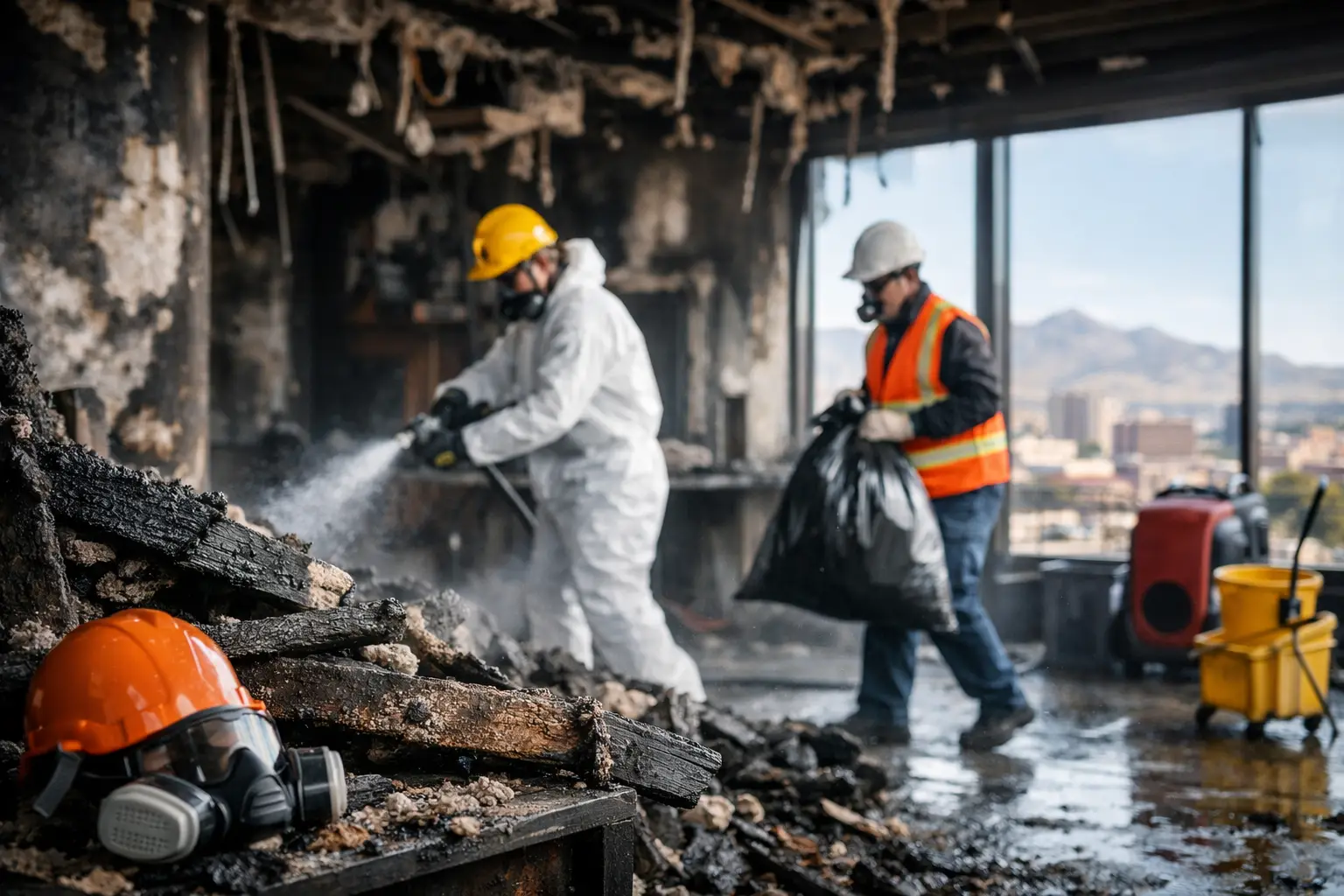
Once the site is stabilized, crews begin debris removal and soot cleanup. This may involve specialized vacuuming, dry cleaning methods, wet cleaning, and careful treatment of hard surfaces, textiles, contents, and equipment. The method depends on the residue and the material being restored.
Odor removal is another essential step. Smoke odor is carried by microscopic particles that settle into carpets, fabrics, wall cavities, and HVAC systems. Covering it with fragrance does not solve the problem. Effective deodorization requires removing the odor source and treating affected materials with the appropriate process.
Finally, reconstruction restores the property to working condition. That can range from replacing insulation and repainting a damaged office to rebuilding walls, flooring, ceilings, cabinetry, or major sections of the building. Working with one provider from emergency response through reconstruction can reduce handoffs and give the owner one accountable point of contact.
Decisions That Affect How Fast You Reopen
Business interruption is often one of the hardest parts of a commercial fire. Every day of closure can affect employees, customers, tenants, revenue, and long-term relationships. Still, reopening too early can expose people to unsafe conditions or force the business to close again when overlooked damage appears.
A restoration plan should consider which areas can safely operate, whether inventory or equipment can be isolated, and whether temporary relocation is realistic. A small office might resume work from another location while repairs continue. A medical, food service, or child care facility may face stricter sanitation, licensing, or inspection requirements before reopening.
It depends on the extent of damage, but the goal is usually to separate recovery work from essential operations whenever possible. Clear communication with employees, tenants, customers, and vendors also helps protect trust during a difficult interruption.
Protect Equipment, Records, and Inventory
Do not assume electronic equipment is safe because it was not directly burned. Smoke residue can corrode internal components and cause failures weeks or months later. Computers, servers, point-of-sale systems, security equipment, manufacturing controls, and communications systems may need specialized evaluation and cleaning.
Paper records, product inventory, furnishings, and specialty contents also require a case-by-case decision. Some items can be restored through professional contents cleaning. Others may be too contaminated, too heat-damaged, or too costly to repair. A detailed inventory and evaluation supports informed decisions rather than rushed disposal.
Why Insurance Documentation Matters
Insurance coordination should support recovery, not become another full-time job for a business owner already dealing with employees and operations. Accurate documentation helps show the condition of the property, the emergency measures taken, the work performed, and the scope of restoration needed.
A professional restoration company can provide photos, moisture readings, equipment records, estimates, and itemized information that supports communication with the insurance adjuster. This does not mean every claim is identical or that coverage decisions are guaranteed. Policy limits, deductibles, exclusions, business interruption coverage, and cause of loss all matter.
What does remain consistent is the value of timely, organized information. Waiting to document conditions or delaying mitigation can make a loss more complicated than it needs to be.
Choose a Partner That Can Handle the Full Recovery
Commercial properties need more than a cleaning crew after a fire. They need a team that understands emergency stabilization, smoke and soot removal, water mitigation, contents care, reconstruction, and the communication required to keep a project moving.
Ask whether the company is available 24/7, whether it has experience with commercial losses, how it documents work, and whether it can manage reconstruction after cleanup. You should also know who will communicate with you, your property manager, and your insurance representative throughout the project.
GEM Disaster Recovery Corp brings a family-owned, local approach to commercial restoration in El Paso, helping businesses stabilize, restore, and rebuild with care. The objective is simple: reduce uncertainty, protect what can be saved, and give you a workable path back to business.
After a fire, the next step does not have to be perfect. It needs to be timely, safe, and guided by people who understand what is at stake for your property and the people who depend on it.