Biohazard Cleaning for Businesses Explained
A biohazard incident can stop a business without warning. A blood spill in a workplace, a traumatic event at a rental property, discarded needles in a restroom, or sewage contamination in a commercial space requires more than surface cleaning. Biohazard cleaning for businesses is about protecting people, limiting exposure, documenting conditions, and returning the property to a safe, usable state with care.
For an owner, facility manager, or property manager, the first hours can feel overwhelming. Staff may be shaken, customers may need to be redirected, and the property may need immediate stabilization. A calm, professional response helps protect everyone involved while reducing unnecessary disruption to operations.
What Counts as a Business Biohazard?
A biohazard is any biological material that may carry pathogens or create a health risk. In commercial settings, this commonly includes blood, bodily fluids, human or animal waste, sharps such as needles, and sewage backups. It may also involve contamination following an unattended death, accident, assault, or crime scene.
The visible portion of the problem is not always the full problem. Fluids can travel beneath flooring, into baseboards, behind equipment, or through porous materials such as carpet, drywall, insulation, and upholstered furniture. Odors can persist when affected materials are not properly removed or treated. Simply wiping down a surface may leave behind contamination that is not obvious to the eye.
The correct approach depends on the incident, the affected materials, the size of the area, and whether the space serves employees, tenants, patients, students, or the public. A small, contained spill may follow an established workplace exposure protocol. A larger event, unknown contamination, or any situation involving significant blood or bodily fluids calls for trained biohazard cleanup professionals.
The First Steps After a Biohazard Incident
Your priority is not to clean quickly. It is to prevent further exposure and preserve a safe path toward recovery. If there is an active threat, injury, or criminal matter, call 911 and follow directions from emergency personnel before anyone enters or alters the area.
Once the scene is secure, restrict access. Close the affected room, block off the immediate area, and keep employees, visitors, and vendors away. Avoid moving contaminated items, using standard vacuum equipment, or allowing untrained staff to handle sharps or bodily fluids. These actions can spread contamination and may make proper cleanup more difficult.
A practical initial response includes four actions:
- Secure the area and limit entry to essential personnel.
- Document what you can from a safe distance for internal and insurance records.
- Notify the appropriate property owner, management contact, or insurer.
- Contact a qualified biohazard cleaning company for assessment and cleanup.
Communication matters during this stage. Employees do not need graphic details, but they do need clear instructions about where not to go, whether operations are affected, and when they can expect an update. For tenant-occupied or customer-facing properties, discretion is equally important. Professional cleanup should restore the space without adding attention or stress to an already difficult event.
Why Standard Janitorial Cleaning Is Not Enough
Janitorial teams perform essential work, but routine commercial cleaning is different from biohazard remediation. Biohazard cleanup requires specific training, personal protective equipment, containment practices, disinfectants, disposal procedures, and an understanding of how pathogens can spread.
There is also a human factor. Asking employees or janitorial staff to clean up after a traumatic event can place them in an unsafe position and cause unnecessary emotional harm. Even when someone is willing to help, willingness does not replace appropriate training and protective protocols.
Professional crews evaluate which materials can be cleaned and disinfected and which must be removed. Nonporous surfaces may be disinfected when properly treated. Porous materials that have absorbed contamination may need to be carefully removed and disposed of. The goal is not just to make the room look clean. It is to address the contamination at its source and help the property meet safe occupancy expectations.
What Professional Biohazard Cleaning for Businesses Includes
A qualified cleanup team begins with an assessment of the affected area and develops a plan based on the type and extent of contamination. In some cases, cleanup can be limited to one room. In others, fluids may have reached subflooring, wall cavities, adjacent spaces, or HVAC-related components. The scope should follow the actual conditions rather than assumptions.
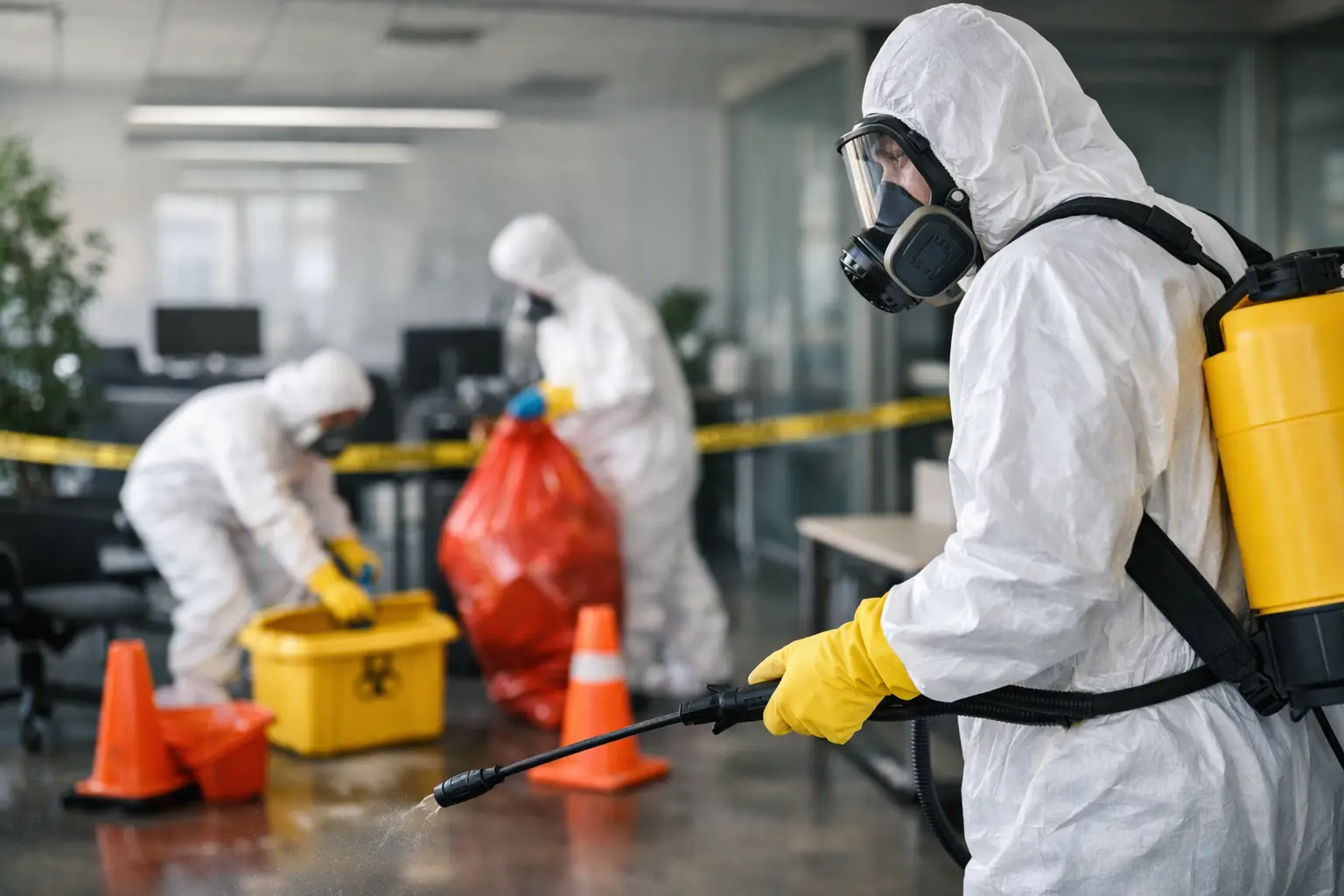
The work typically includes containment to prevent cross-contamination, removal of affected materials when necessary, detailed cleaning and disinfection of salvageable surfaces, odor control, and regulated handling of biohazardous waste. Technicians use appropriate protective equipment and specialized methods designed for the incident.
For businesses, documentation can be especially valuable. Clear records, photos, and a defined scope of work can support communication with insurance carriers, property owners, and internal stakeholders. Insurance coverage varies by policy and cause of loss, so a cleanup provider should never promise coverage before the carrier reviews the claim. However, organized documentation can make the process easier to manage.
At GEM Disaster Recovery Corp, the focus is on helping El Paso businesses stabilize the situation, restore safe conditions, and coordinate the next steps with as little confusion as possible. When cleanup also requires repairs, the ability to move from remediation into reconstruction can reduce delays and the burden of coordinating multiple vendors.
Protecting Operations Without Rushing the Decision
Every hour of closure can affect revenue, employee schedules, and customer trust. That pressure is real, especially for restaurants, offices, retail locations, medical facilities, schools, and multifamily properties. Still, reopening before cleanup is complete can create a larger problem than a brief, controlled interruption.
The best plan balances safety with business continuity. If the incident is isolated, it may be possible to contain the area and continue operating in unaffected portions of the building. If contamination affects restrooms, common areas, food-service spaces, or high-traffic corridors, temporary closure may be the responsible choice.
Consider what your people need as well as what your building needs. A traumatic event can affect employees who witnessed it, discovered it, or work near the affected area. Share factual updates, allow managers to answer questions, and consider whether team members need time away from the location. A professional, compassionate response supports retention and helps people feel respected during a stressful moment.
Building a Better Response Plan Before You Need It
No business wants to plan for a biohazard event, but having a short response procedure can prevent confusion. Identify who has authority to close an area, who contacts emergency services, who notifies ownership or management, and who can approve emergency cleanup. Keep after-hours contact information current, particularly for property managers and multi-location businesses.
Your plan should also define boundaries. Employees should know they are not expected to clean blood, bodily fluids, needles, or unknown substances unless their role, training, and equipment specifically support that work. Clear boundaries protect workers and help management respond consistently.
Review vendor relationships before an emergency occurs. A local restoration company with 24/7 response can help assess conditions promptly, secure the area when needed, perform biohazard cleanup, and address related water, odor, demolition, or reconstruction needs. That continuity is valuable when one incident creates several property concerns at once.
A biohazard incident is not a routine cleaning task, and no business owner should have to face it alone. Acting quickly, protecting the area, and bringing in trained help gives your employees, customers, tenants, and property the respectful care they deserve.