Best Mold Prevention Practices for El Paso Homes
A small water stain beneath a sink, a musty smell after a monsoon storm, or an air conditioner that keeps dripping may not feel like an emergency. But moisture left in place can create the conditions mold needs to grow, often behind walls, under flooring, or inside cabinets before anyone sees it. The best mold prevention practices come down to one consistent priority: find moisture early, remove it quickly, and correct the condition that allowed it inside.
For homeowners, property managers, and business owners in El Paso, prevention is not just about keeping a building clean. It protects indoor air quality, limits disruption, and helps avoid more extensive restoration work later. Our dry climate can create a false sense of security, but plumbing failures, roof leaks, HVAC condensation, evaporative coolers, and sudden heavy rain can all introduce enough water for mold growth.
Why Moisture Control Is the Foundation of Mold Prevention
Mold spores are naturally present indoors and outdoors. They become a property problem when they land on damp materials such as drywall, carpet padding, wood framing, insulation, paper-backed flooring, or ceiling tile. Given moisture and a food source, mold can begin growing within 24 to 48 hours.
That timeline is why waiting to see visible mold is not a reliable plan. By the time discoloration appears, moisture may have traveled farther than expected. Water can wick up drywall, move beneath baseboards, soak into subflooring, or collect in wall cavities.
The goal is not to make a home or commercial building sterile. The goal is to keep building materials dry and address water intrusion at its source. A dehumidifier can help in a damp room, for example, but it will not solve a leaking pipe hidden behind a wall. Effective prevention always starts with the cause.
Best Mold Prevention Practices After a Leak or Spill
A fast, measured response after water enters the property makes the greatest difference. Do not assume a small amount of water is harmless simply because the surface looks dry a few hours later. Carpeting, padding, cabinets, drywall, and insulation can retain moisture long after standing water disappears.
First, stop the source if it is safe to do so. Shut off a fixture valve for an active plumbing leak, turn off the main water supply if necessary, or place a container under a minor drip while arranging repairs. If water is near electrical outlets, appliances, or a breaker panel, keep clear of the area and seek qualified help.
Next, remove standing water and begin drying immediately. Lift wet rugs, move furniture away from affected surfaces, and use fans only when the space can be ventilated safely. Air conditioning can help reduce indoor moisture, but a serious loss often requires professional extraction and commercial drying equipment. Do not close up a wet room and hope it dries on its own.
Porous materials need careful judgment. A washable item may be cleaned and dried thoroughly, while wet carpet padding, soaked insulation, or water-damaged drywall may need removal. The right decision depends on how long the materials were wet, how far the water traveled, and whether the water was clean, gray, or contaminated. Water from a toilet overflow, sewage backup, or outdoor floodwater requires a different level of safety and cleanup.
Document the damage with photos before removing materials when possible. This can support insurance coordination and provide a clearer record of what happened. Most importantly, do not delay drying while waiting for an insurance decision. Mitigation is what keeps a manageable water event from becoming a larger mold problem.
Control Humidity Where It Builds Up
El Paso properties can still develop indoor humidity issues, especially in bathrooms, laundry rooms, kitchens, utility closets, and poorly ventilated areas. Swamp coolers and HVAC systems also deserve attention because they introduce or manage moisture as part of normal operation.
Use bathroom exhaust fans during showers and allow them to run afterward until moisture has cleared. If a bathroom has no working fan, opening a window may help when outdoor conditions allow, but mechanical ventilation is usually the more dependable solution. Wipe down persistent condensation on mirrors, windows, and cold pipes rather than allowing it to drip onto surrounding materials.
In kitchens, use the range hood while cooking and inspect beneath the sink regularly. In laundry rooms, make sure the dryer vents outdoors and that the vent connection is secure. A loose or blocked dryer vent adds warm, humid air to the building and can also create a fire concern.
Evaporative coolers require routine care. Check for water leaks at connections, inspect the pan and drain system, and make sure the unit is maintained before and during the cooling season. A cooler that drips into an attic, ceiling, or wall can cause hidden damage well before it becomes obvious indoors.
Keep Water Away From the Building
Mold prevention begins outside as well. Roofs, gutters, flashing, exterior seals, and grading all determine whether rainwater stays outside or finds a route into the structure. This matters during El Paso's intense seasonal storms, when a short period of heavy rain can expose a weak point quickly.
Inspect the roof after storms and watch for missing shingles, damaged flashing, or stains on ceilings. Keep gutters and downspouts clear so water does not back up near the roofline. Downspouts should direct water away from the foundation, not dump it beside the building.
Walk around the property after rainfall. Look for pooling water near exterior walls, soil that slopes toward the foundation, cracked caulk around windows, and gaps around utility penetrations. For commercial properties, include roof drains, scuppers, loading areas, and mechanical rooms in routine inspections. Small drainage corrections are generally far less disruptive than repairing water-damaged interiors.
Make Inspections Part of Property Care
The most reliable prevention plan is a regular inspection habit, not a once-a-year reaction. Property managers may want to include moisture checks in turnover and maintenance procedures, while homeowners can build them into seasonal upkeep.
Pay close attention to these common trouble spots:
- Under sinks, behind refrigerators, around dishwashers, and near water heaters
- Around toilets, tubs, shower doors, and bathroom flooring
- HVAC drain lines, air handlers, condensate pans, and evaporative coolers
- Attics, crawl spaces, roof penetrations, and ceilings below plumbing
- Exterior windows, doors, foundations, and areas where water collects after rain
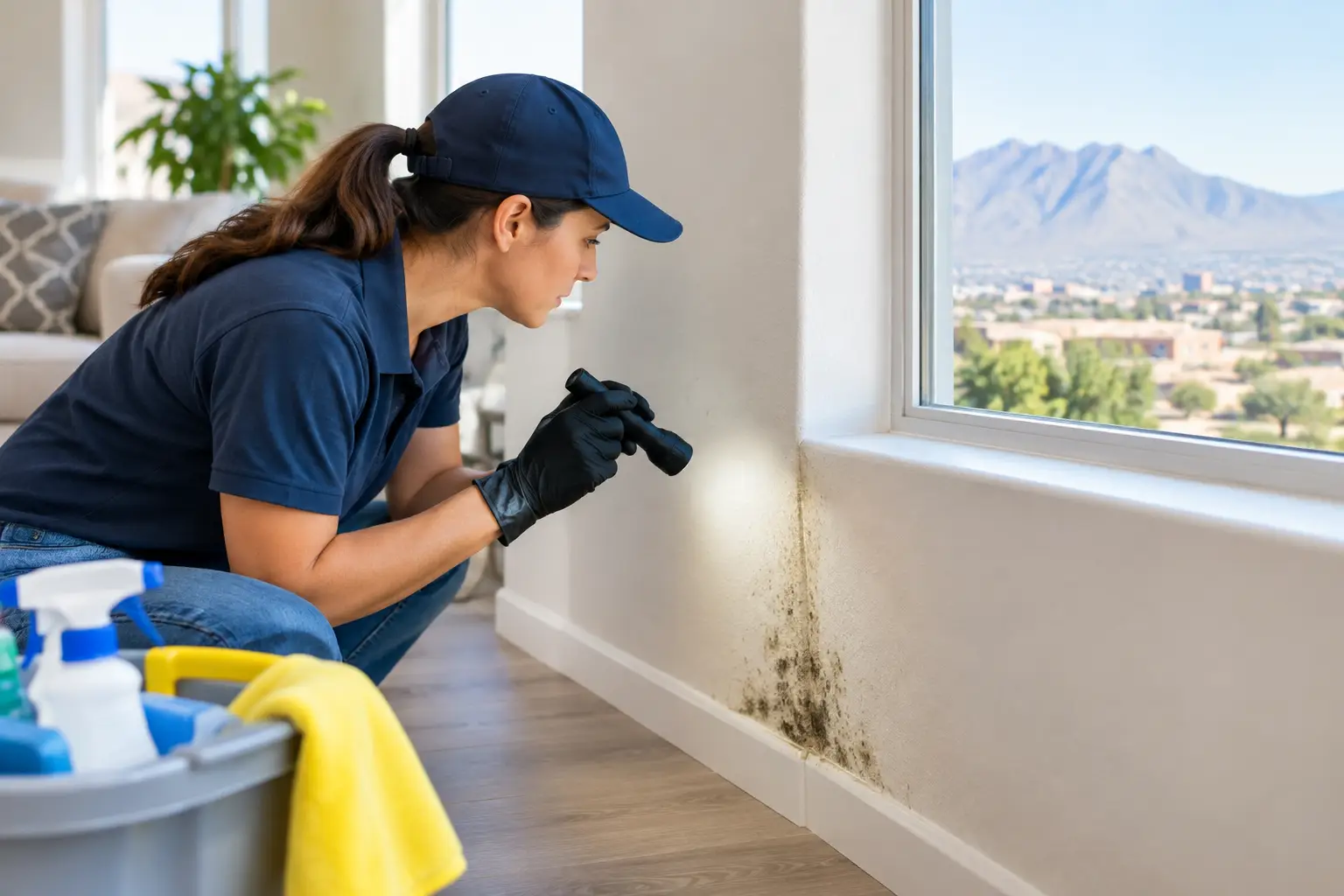
Look for peeling paint, warped flooring, soft drywall, rusted pipe fittings, staining, condensation, or musty odors. These signs do not always mean mold is present, but they do mean moisture should be investigated. A moisture meter or thermal imaging assessment can help identify wet materials that are not visible from the surface.
Know When a Professional Assessment Is the Safer Choice
There is a reasonable line between routine cleanup and a situation that needs trained restoration support. A small, contained area of surface mildew caused by bathroom condensation may be cleaned after the moisture issue is corrected. Large areas of visible growth, recurring odors, water-damaged building materials, or mold following a flood or sewage event call for a more thorough evaluation.
Professional help is also wise when the affected area is hidden, such as behind cabinets, inside walls, beneath flooring, or above ceilings. Simply spraying a visible spot does not confirm that the materials behind it are dry or that the source has been repaired. Improper cleanup can disturb spores without resolving the moisture problem.
For El Paso property owners facing active water damage or suspected hidden mold, GEM Disaster Recovery Corp can help stabilize the property, assess affected materials, document conditions, and guide the restoration process with care. Quick action protects more than the building. It gives the people responsible for it a clearer path forward.
A dry, well-maintained property is built through small decisions made early: repair the drip, clear the drain, ventilate the room, and investigate the odor before it becomes a larger disruption. When moisture cannot be fully addressed right away, treat that uncertainty as a reason to act, not a reason to wait.