Apartment Water Loss Response Guide for Managers
A leaking supply line on the third floor can become a ceiling collapse, electrical hazard, and resident displacement issue downstairs within hours. This apartment water loss response guide gives property managers, owners, and on-site teams a clear path for protecting people and property before hidden moisture turns a manageable event into a larger restoration project.
First priority: protect residents and stop the spread
Water loss response starts with safety, not cleanup. If water is near outlets, electrical panels, appliances, or light fixtures, keep residents away from the affected area and do not allow anyone to enter standing water. Shut off power to the impacted area only if it can be done safely. If there is any doubt, wait for a qualified electrician or emergency restoration professional.
Next, stop the source if possible. A unit-level shutoff valve may control a failed toilet supply line, washing machine hose, or sink connection. A major pipe break, fire sprinkler discharge, or water intrusion affecting multiple units may require shutting off the building's main water supply. That decision has consequences for residents, but allowing water to continue flowing usually creates far greater damage.
Call emergency restoration support promptly when water has reached walls, ceilings, flooring, insulation, or more than one unit. Surface water can be removed quickly, but moisture often travels behind baseboards, beneath flooring, through wall cavities, and into lower apartments. What looks dry by morning may still support mold growth or weaken building materials days later.
Apartment water loss response guide: assess the source
Not all water losses require the same response. Identifying the source helps determine the appropriate safety measures, cleaning requirements, insurance documentation, and restoration scope.
Clean water from a supply line or appliance
A broken water line, overflowing sink with clean tap water, or appliance leak generally begins as a clean-water event. Even so, it should be addressed quickly. Clean water becomes more contaminated as it contacts carpet, drywall, dust, and building materials. Delayed drying can also lead to mold growth, especially in warm El Paso conditions or enclosed areas with limited airflow.
Gray water from fixtures and appliances
Water from a washing machine discharge, dishwasher, or toilet overflow without solid waste may contain contaminants. Residents should not attempt extensive cleanup without proper protective equipment. Porous materials, such as carpet padding, insulation, and some damaged contents, may need more than drying to be safely restored.
Sewage, stormwater, or unknown water
A sewer backup, toilet overflow containing waste, groundwater intrusion, or water of unknown origin requires a more controlled response. Keep residents and pets out of the area, especially children and anyone with respiratory conditions. Do not use household fans to spread contaminants through the apartment. Professional extraction, cleaning, disinfection, and removal of unsalvageable materials may be necessary before rebuilding begins.
Document early without delaying mitigation
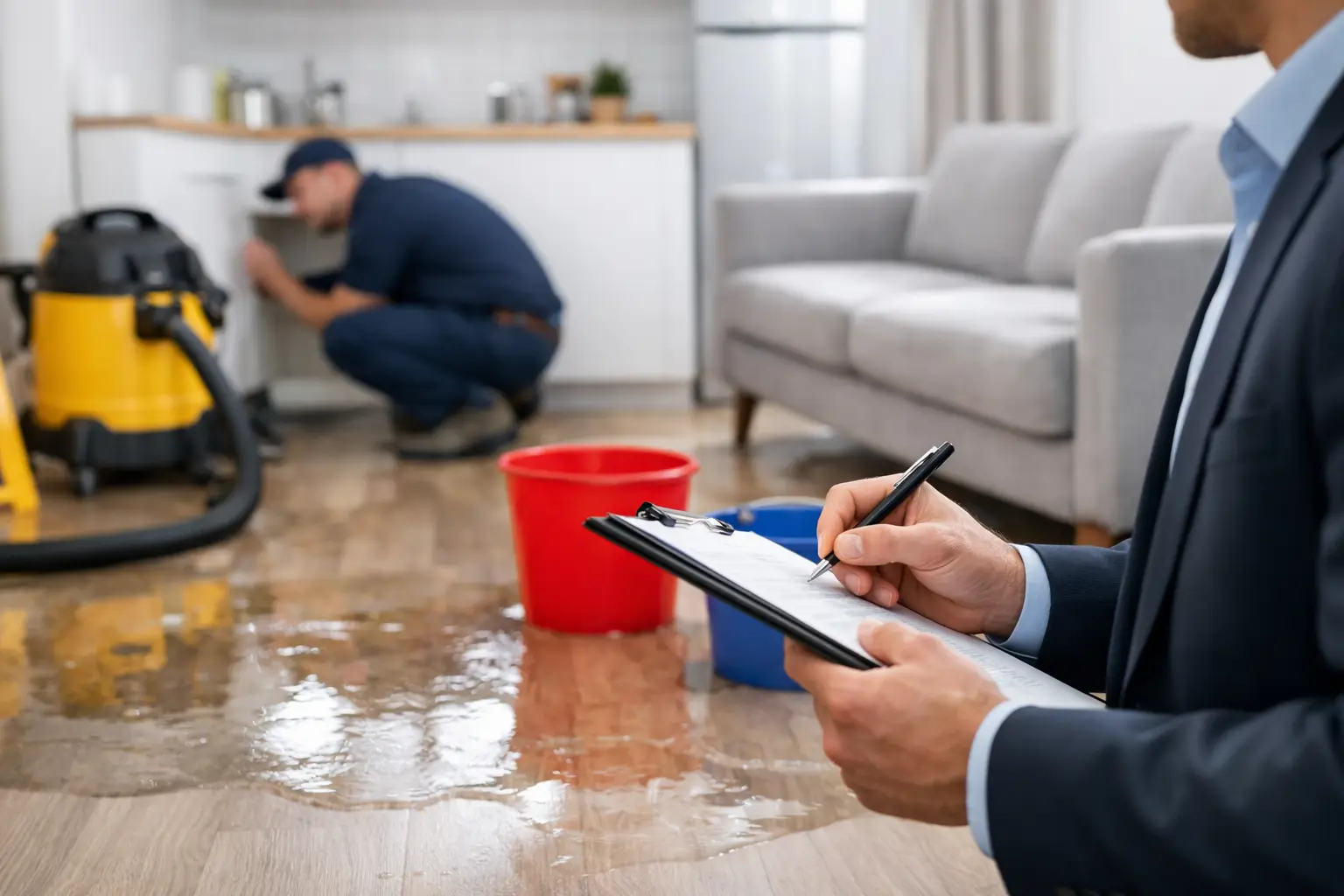
Property managers often feel caught between acting fast and preserving information for an insurance claim. The answer is to do both at the same time. Take clear photos and video of the source, affected rooms, visible water lines, damaged finishes, contents, and any unit below the loss. Record the date, time discovered, units involved, and immediate actions taken.
Ask maintenance staff and residents to write down what they observed, including when the leak may have started and whether water was seen coming from a fixture, ceiling, wall, or appliance. Save relevant work orders, invoices, and communication records. This documentation can clarify the event and support a more accurate claim.
Do not wait for an adjuster before beginning emergency mitigation. A property owner has a responsibility to take reasonable steps to prevent additional damage. Extraction, moisture inspection, controlled demolition when needed, and professional drying are protective measures, not cosmetic repairs. Waiting can increase claim complexity and leave residents in unsafe conditions.
Get a complete moisture inspection
Visible water is only part of the problem in apartment buildings. Water follows gravity, but it also spreads sideways through framing, flooring systems, utility penetrations, and shared walls. A leak from one upstairs bathroom can affect a hallway, lower-unit bedroom, adjacent wall, and insulation without obvious staining in every area.
A qualified restoration team uses moisture meters, thermal imaging, and targeted inspection methods to identify affected materials. The goal is not simply to make the apartment look dry. The goal is to return materials to an appropriate moisture level and confirm that concealed spaces have been addressed.
This is where an apartment loss differs from a small, contained household spill. Removing wet carpet from one unit may be appropriate, while opening a section of ceiling below may be needed to dry the assembly safely. The right approach depends on the water category, the length of exposure, the materials involved, and whether moisture can be accessed and dried without demolition.
Communicate clearly with residents
Residents need timely, factual information. They do not need speculation about fault, coverage, or repair timelines before the scope is known. Let affected tenants know what happened, what areas they should avoid, whether utilities are impacted, and when they can expect the next update.
For a loss affecting multiple units, designate one point of contact for resident communication. This reduces conflicting messages and helps your team track access needs, temporary accommodations, pet concerns, medical equipment, and scheduling constraints. Document all notices and conversations in your incident file.
Be especially careful when ceilings are sagging, flooring is buckling, or drywall feels soft. These conditions can worsen unexpectedly. Residents should not move heavy furniture, pull down wet ceiling material, or attempt to open walls themselves. Restrict access until the area has been evaluated.
Start professional drying before repairs
Drying equipment is not a substitute for a plan. Proper mitigation may include water extraction, removal of saturated materials, containment, air movement, dehumidification, and regular moisture monitoring. Equipment placement and monitoring matter because drying too aggressively or without managing humidity can create secondary issues, while insufficient drying leaves moisture trapped in the structure.
Avoid rushing directly into paint, flooring replacement, or reconstruction. Repairs should begin after the affected area has been cleaned as needed, dried to appropriate targets, and documented. Covering wet materials can trap moisture and create odor, mold, and future repair issues that cost more than the original loss.
For larger apartment events, an experienced restoration provider can coordinate the work from emergency stabilization through reconstruction. GEM Disaster Recovery Corp helps El Paso property owners manage that process with 24/7 response, detailed documentation, mitigation, cleanup, and rebuilding support so the work does not fall across multiple vendors during an already stressful event.
Common mistakes that make apartment losses worse
The most costly mistakes tend to happen in the first day. Avoid these four:
- Turning on fans before confirming the water is clean and safe to spread.
- Letting residents reoccupy areas with electrical concerns, sagging ceilings, or contaminated water.
- Removing damaged materials without documenting conditions for ownership and insurance records.
- Assuming a dry surface means the wall, floor, ceiling cavity, or lower unit is dry.
Another frequent issue is treating every resident complaint as separate from the original loss. A musty odor in the unit below, a newly stained ceiling, or a buckling baseboard in an adjacent apartment may all be part of the same moisture path. Reinspect promptly rather than closing the incident too early.
Plan for recovery, not just the emergency
Once the immediate water is controlled, the focus shifts to restoring safe, functional housing. That may include cleaning and sanitizing affected areas, replacing insulation or drywall, repairing plumbing, restoring flooring, repainting, and coordinating access around resident schedules. The scope should be based on documented damage and drying results, not guesses about what can be covered up.
A water event also creates an opportunity to prevent the next one. Review the cause after the emergency: aging supply hoses, failed shutoff valves, neglected roof penetrations, overflowing HVAC condensate lines, or delayed maintenance requests often provide useful warning signs. Targeted repairs and routine inspections can reduce repeat losses across the property.
A calm, organized response protects more than drywall and flooring. It protects resident confidence, limits disruption, and gives your property a stronger path back to normal. When water enters an apartment building, move quickly, document carefully, and bring in qualified help before hidden damage gets the final say.